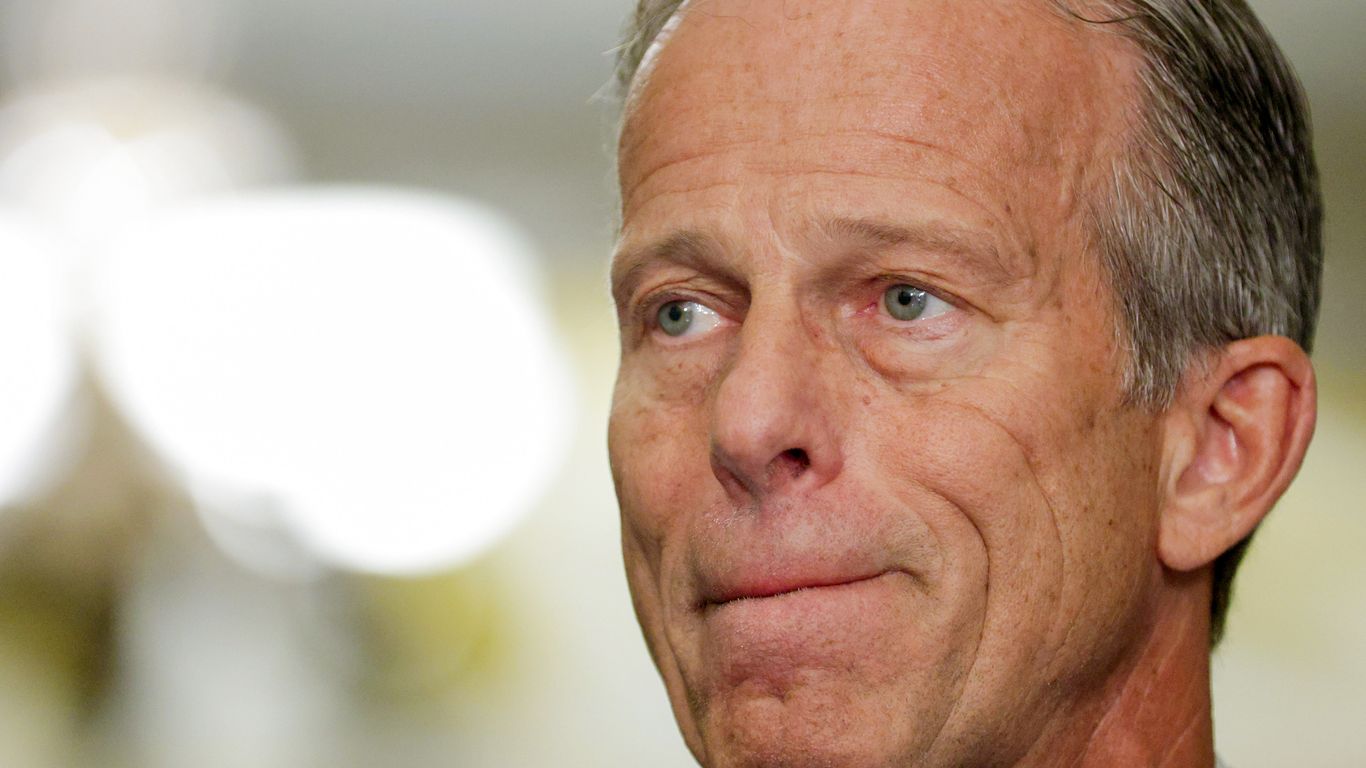
The Department of Homeland Security has been shut down for 40 days; Senate Majority Leader John Thune is pushing Republicans to fund most DHS components through the regular appropriations process while using reconciliation to address ICE and Border Patrol. Republicans are considering a high-risk fallback to fund DHS via reconciliation, which could include up to $200 billion for the Pentagon tied to Iran and the SAVE America Act, but faces a perilous path, especially in the House. TSA staffing and long airport lines remain the political linchpin and a key driver of urgency and public attention.
The market is mispricing the policy path as a single linear outcome; there are two cleanly different regime outcomes with distinct winners. A stopgap unanimous-consent package that funds non-TSA DHS components can be cleared in days–weeks and will concentrate cash flows into FEMA, Coast Guard and services contractors, while leaving airline operational risk unresolved for months. Conversely, a reconciliation route that survives both chambers (low probability given slim House margins) would turbocharge defense primes and any contractor tied to an Iran-related Pentagon tranche within 3–9 months.
Operationally, TSA staffing volatility is a high-frequency, high-visibility shock: even a multi-day escalation of screening delays compresses booking conversion in the near term and pushes some discretionary travel into later quarters. That creates a non-linear demand shock for airlines and airports — expect 1–3% downward pressure on monthly revenue for major carriers during a prolonged disruption, with much larger downside concentrated in regional/low-cost players who have thinner liquidity buffers.
Second-order winners are DHS services and IT integrators that can be moved onto appropriated funds quickly (contractors with existing DHS task orders can invoice and receive cash sooner). Equipment OEMs and large-cap defense names are conditional winners — their upside is binary, tied to reconciliation passage and any attached Pentagon add-ons, so their implied option value rises if the Senate signals reconciliation is likely. The key catalyst timeline: unanimous consent votes in days–weeks, House reconciliation calculus over months, consumer demand elasticity visible within 30–90 days if travel disruptions persist.
AI-powered research, real-time alerts, and portfolio analytics for institutional investors.
Request DemoOverall Sentiment
neutral
Sentiment Score
0.00
