Get deeper insights with the AllMind AI
The research terminal for institutional investors
The FDA issued a refusal-to-file for Moderna’s application for a new mRNA-based influenza vaccine, citing methodological objections to its 40,000-person clinical trial — specifically that it did not compare the candidate to the "best-available standard of care" for older adults. Moderna says it provided additional data versus a licensed high-dose senior vaccine, that the FDA identified no safety or efficacy concerns, and has requested an urgent meeting while pursuing parallel filings in Europe, Canada and Australia amid heightened regulatory scrutiny under Health Secretary Robert F. Kennedy Jr.
Datadog reported Q4 adjusted EPS of $0.59 on revenue of $935 million, beating analyst EPS estimates by $0.04 and sales by $34.8 million, with revenue up roughly 29% year-over-year. Gross profit was $776 million (81.4% margin) and adjusted operating income was $230 million (24% margin). Management guided Q1 revenue to $951–$961 million (roughly 25.5% YoY growth at the midpoint) and full-year revenue to $4.06–$4.10 billion (about 19% growth at midpoint), prompting a 13.7% intraday jump in the stock as investors reacted to stronger-than-expected results and constructive forward visibility.
Alphabet set a dramatically higher 2026 capex budget of $175–185 billion (versus $91 billion in 2025), allocating roughly 60% to servers—much of it semiconductor-related—and 40% to long-duration assets such as data centers and networking. Broadcom, as co-developer and supplier of IP for Alphabet’s TPUs and a leader in data-center networking (Tomahawk switches and optical interconnects), stands to benefit materially: Citigroup estimates Alphabet drove about $13 billion of Broadcom ASIC revenue in fiscal 2025, Broadcom booked roughly $63.9 billion revenue in fiscal 2026, and it also has a reported $21 billion TPU order from Anthropic; the article projects substantial upside to Broadcom’s ASIC and networking revenue on Alphabet’s spending shift to TPUs.
NBC reported that Super Bowl 60, in which the Seattle Seahawks defeated the New England Patriots 29-13, averaged 124.9 million viewers and peaked at a U.S. record 137.8 million across NBC, Peacock and Telemundo (down from last year's 127.7M average). The halftime performance by Bad Bunny averaged 128.2 million viewers and generated over four billion social views, underscoring unusually strong live-sports and streaming engagement. These metrics support ad-rate resilience and subscriber/engagement narratives for NBC/Peacock and Spanish-language distribution, with potential downstream implications for near-term advertising revenue and platform monetization ahead of NBC's Olympic programming.
President Trump threatened to prevent the opening of the new Gordie Howe International Bridge linking Detroit and Windsor, prompting sharp rebukes from major cross-border business groups; Sandy K. Baruah of the Detroit Regional Chamber warned blocking the project would have “tremendous consequences” for the region. The dispute raises the risk of disruption to U.S.-Canada automotive supply chains and regional trade flows, creating operational and political uncertainty for automakers, suppliers and logistics firms tied to the corridor.
LuxExperience reported fiscal Q2 net sales nearly tripled year-over-year to just under €647 million (~$770M) and topped consensus, while the net loss widened to €9.1M (€0.05/share) versus €7.7M a year earlier but was slightly better than analysts' deeper loss forecast. Mytheresa drove strength with sales up ~9% to ~€243M, offsetting declines at Net-a-Porter/Mr Porter (-1%) and Yoox (-7%). The company raised the low end of FY26 GMV guidance to €2.5–2.7B and tightened adjusted EBITDA margin guidance to -1% to 1% (from -2% to 1%), prompting a >21% intraday share rally; however, the persistent net loss leaves profitability concerns for investors.
The European Parliament approved tighter asylum rules that would enable fast-track rejections, establish a list of ‘safe’ third countries (including Egypt and Tunisia) for returns, and pave the way for offshore “return hubs,” subject to final approval by the 27 EU governments. The changes, part of the 2023 Migration Pact implementation, reflect rising anti-immigration political pressure since the 2015–16 migrant influx and have drawn sharp criticism from human rights groups for heightening legal and humanitarian risks; investors should view this as a political/regulatory development that increases geopolitical and sovereign-risk uncertainty rather than an immediate market-moving economic event.
On Feb. 3 the Canadian government warned of worsening electricity, fuel and basic-goods shortages in Cuba, prompting several Canadian airlines to wind down flights as Havana’s José Martí airport faces a jet-fuel shortfall. The shortages follow a halt in Venezuelan crude and refined product shipments since mid-December after U.S. actions limiting exports; demand from Canadian travellers has fallen with many rebooking elsewhere, creating refund and commission pressures for travel agents and posing a sharp near-term shock to Cuba’s tourism-dependent economy that some locals compare to the impact of COVID-19.
Oscar Health reported a GAAP fourth-quarter loss of $352.61 million (−$1.24 per share) versus a loss of $153.55 million (−$0.62) in the year-ago quarter, while revenue increased 17.3% to $2.805 billion from $2.392 billion. The substantial widening of the loss despite solid top-line growth signals continued margin and cost pressures in the business and is likely to weigh on the stock and investor sentiment.
President Volodymyr Zelenskiy convened top military leaders to address shortcomings in Ukraine's air defences, saying regional air-defence teams, interceptors and mobile fire units are being practically rebuilt, and reiterated appeals to Western allies for more weapons to counter missiles and drones. He also criticized local officials over failures to restore power and heating after strikes—highlighting outages in Kyiv, Kharkiv, Poltava and parts of Odesa—and warned officials will be held personally accountable, underscoring persistent civilian infrastructure strain and likely continued demand for defence and energy-recovery support.
Wasserman Group founder and CEO Casey Wasserman was identified in DOJ-released Epstein files via emails with Ghislaine Maxwell from 2003, prompting public condemnation and a string of artists — including Chappell Roan, Dropkick Murphys and others — to sever or threaten to sever ties with the agency. While the Justice Department has not accused Wasserman of wrongdoing and he has apologized for the correspondence, the fallout has led to potential staff spin-offs, political pressure over his LA 2028 Olympics role, and reputational risk that could translate into revenue and contractual disruptions for the firm and its agents.
A jury was told that Meta and Google built an "addiction machine" that harmed children, advancing allegations that the platforms engineered engagement in ways that caused cognitive and behavioral damage. The testimony heightens legal and regulatory risk for both companies and could lead to reputational damage, larger damage awards or stricter oversight; there are no revenue or earnings figures in the report, so investors should track litigation developments and potential regulatory action that could affect advertising revenues and valuations.
Amazon shares closed at $206.90, down 0.84% on Tuesday with volume of 66.3 million shares (~47% above its three‑month average), as investors weighed the company’s roughly $200 billion planned capex through 2026—largely directed to AWS data centers, custom chips, networking, robotics and satellite infrastructure—against continued strong cloud growth. AWS is also investing in AI initiatives including an AI content marketplace and industry partnerships (e.g., autonomous vehicles), but the scale of near‑term spending has raised concerns about cash flow and whether the investments will translate into sustained revenue growth and improved operating leverage amid regulatory headwinds in retail.
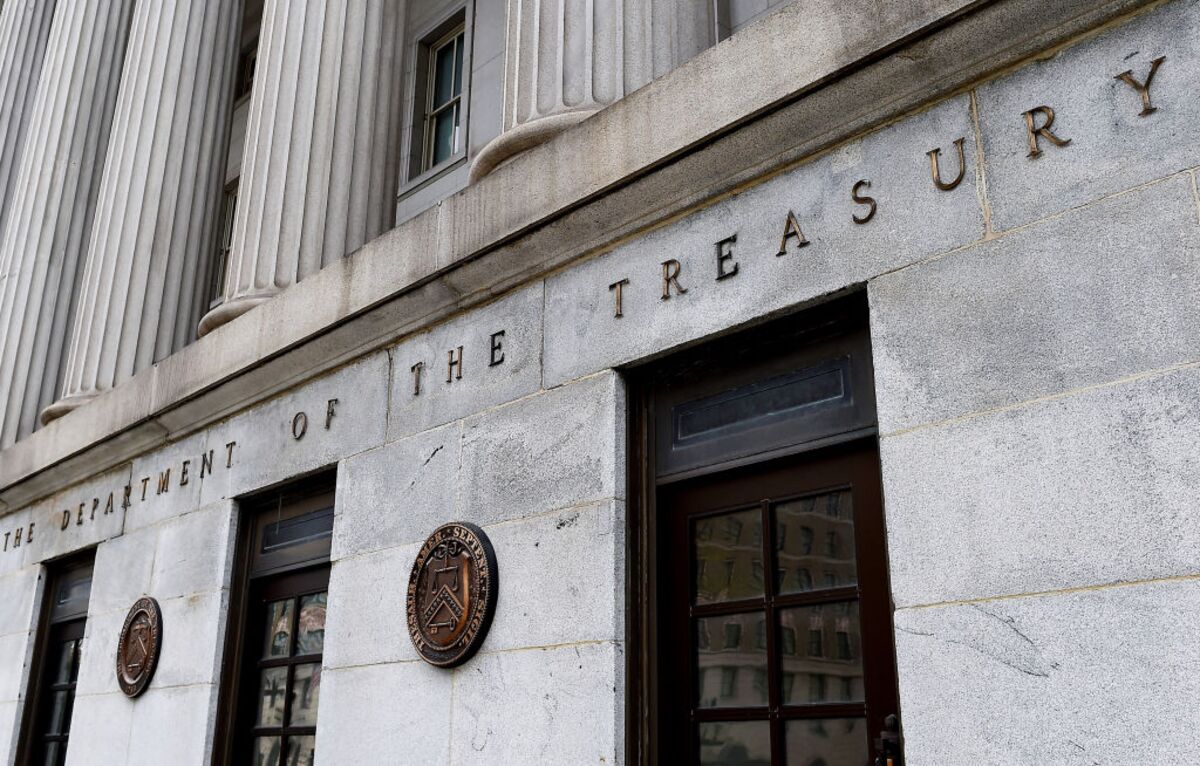
The U.S. Treasury sanctioned Lebanon-based gold exchange Jood SARL and an AQAH-run international procurement and commodities shipping network it says converts Hezbollah's gold reserves into cash and sells commodities (including gold and fertilizer) to fund arms purchases, reportedly including procurements from Russia. The action names AQAH officials Mohamed Nayef Maged and Ali Karnib as Jood co-owners, requires reporting of U.S.-located or controlled assets (and those with >=50% ownership), and carries potential criminal penalties, creating heightened compliance risk for banks, shippers and commodity traders with Middle East exposure and the prospect of disrupting illicit commodity and financing flows.
Palantir reported a blowout Q4 2025 with revenue of $1.41 billion, accelerating year‑over‑year growth to 70% and adjusted EPS rising to $0.25 from $0.14. U.S. commercial revenue surged 137% to $507 million, net revenue retention hit 139%, customer count grew 34%, and government revenue climbed 60% to $730 million (U.S. government $570 million). Management guided Q1 revenue to $1.532–$1.536 billion (≈74% growth at the midpoint) and full‑year revenue to $7.182–$7.198 billion (~61% growth at the midpoint). The results reinforce Palantir's position in AI software but the stock trades at an elevated ~59x 2026 forward P/S, leaving valuation stretched despite strong fundamentals.
Disney has appointed veteran casting executive Tricia Wood as EVP and Head of Casting reporting to David Greenbaum; Wood joins from Paramount where she was EVP of Casting since 2020 and has prior credits including Twilight, La La Land and CODA. She will oversee casting across Walt Disney Pictures, 20th Century Studios and Searchlight Pictures and is already attached to upcoming projects including the Tangled remake. The hire follows recent corporate leadership moves at Disney — Josh D’Amaro named CEO-designate and Dana Walden promoted to President and Chief Creative Officer effective March 18 — while Bob Iger will remain as Senior Advisor and board member through his retirement on Dec. 31, 2026.
National Assembly President Jorge Rodríguez said Venezuela will not hold elections in the short term, citing a required period of "stabilization" and a process of re-institutionalization following the reported capture of President Nicolás Maduro by the United States. The announcement accompanies a politically fraught episode in which opposition leader Juan Pablo Guanipa was released after 261 days in pretrial detention, intercepted and re-detained within 12 hours, and transferred to house arrest in Maracaibo amid government claims he violated release conditions; the opposition says 644 people remain detained for political reasons. These developments increase political and geopolitical risk for investors with exposure to Venezuela and raise uncertainty over any credible electoral timeline or institutional normalization.
The dollar staged a modest rebound (DXY +0.01%) after hawkish comments from Fed officials even as weaker US data — Q4 employment cost index +0.7% q/q (vs. +0.8 expected) and Dec retail sales 0.0% m/m (vs. +0.4 expected) — had initially pushed the currency lower. EUR/USD slid -0.12% and USD/JPY tumbled -1.00% as the yen rallied on Japan's machine tool orders (+25.3% y/y) and supportive fiscal comments; swaps price a ~20% chance of a -25bp Fed cut in mid-March while markets see differing 2026 rate paths for the Fed, BOJ and ECB. April gold (-0.95%) and March silver (-2.25%) fell on hawkish Fed signals and margin hikes despite structural support from PBOC reserve buying and safe-haven flows; these cross-asset signals suggest elevated FX and precious-metals volatility and positioning risks for macro portfolios.
US equity indices finished mixed as weaker-than-expected December retail sales (0.0% m/m vs. +0.4% exp.) and a softer Q4 employment cost index (+0.7% q/q vs. +0.8% exp.) pushed Treasury yields lower (10-year at ~4.13%, a 3.5-week low) and briefly supported rate-cut expectations; Cleveland and Dallas Fed officials signaled caution on cutting policy. Q4 earnings remain broadly constructive — 78% of the 319 S&P reporting companies beat estimates and Bloomberg forecasts +8.4% S&P EPS growth in Q4 (ex-Magnificent Seven +4.6%) — but notable guidance misses (e.g., S&P Global) and idiosyncratic movers (WDC, RJF, TOL, SPOT, DDOG) produced sector dispersion. Strong demand at the Treasury 3-year auction (bid-to-cover 2.62) and lower yields buoyed homebuilders, while AI-driven concerns dented wealth-management stocks; markets are positioned for upcoming payrolls, CPI and further earnings cadence that could drive near-term volatility.
The EPA has submitted a proposed rule to the Office of Management and Budget to revoke the 2009 'endangerment finding' that underpinned U.S. greenhouse-gas regulation under Section 202(a) of the Clean Air Act, effectively removing EPA authority to regulate vehicle emissions and enabling rollbacks of rules affecting power plants, vehicles and household appliances. The White House signaled imminent deregulatory action aimed at 'unleashing' energy production, a move that could favor fossil-fuel producers and emission-intensive manufacturers while increasing regulatory and policy uncertainty for clean-energy and ESG-focused investments until a future administration potentially reinstates the finding.
San Francisco Unified School District is facing an active teachers' strike that began Feb. 9, shuttering all 120 schools and affecting roughly 50,000 students as union and district negotiators return to the table. The United Educators of San Francisco seek a package including fully funded dependent healthcare via the district's Kaiser plan, a 9% salary increase over two years, more special-education staffing and protections for sanctuary policies and a homeless “Stay Over” program; partial agreements have been reached on sanctuary language, the Stay Over program and AI regulations. District Superintendent Maria Su warned negotiations must respect a $100 million district deficit, signaling increased labor costs could force budgetary trade-offs absent new revenue or concessions.
Zimbabwe's cabinet has approved draft legislation that would allow President Emmerson Mnangagwa to extend his stay in office until at least 2030 by switching presidential selection to MPs and lengthening terms to two seven-year terms instead of current five-year terms. The bill will undergo public consultations before heading to a parliament dominated by the ruling Zanu-PF, but constitutional experts say a referendum is required and that amendments cannot legally benefit a sitting president, making legal challenges likely. The move raises political-risk for investors and could undermine institutional checks ahead of Mnangagwa's current term expiry in 2028, with implications for foreign investment, aid, and regional stability.
S&P Global reported Q4 revenue of $3.92 billion, up 9% year-over-year, and GAAP net income of nearly $1.3 billion ($4.30/share), while its adjusted EPS narrowly missed the $4.32 consensus. All revenue streams grew, with indices revenue up 14% to $498 million and ratings up 12% to about $1.19 billion, but full-year guidance—organic constant-currency revenue growth of 6–8% and GAAP EPS of $19.40–$19.65—came in shy of the $19.96 analyst consensus, triggering a roughly 10% share-price sell-off. The results highlight continued top-line momentum across businesses but a profitability guide below expectations that materially influenced investor positioning.
The FDA issued a refusal-to-file for Moderna's seasonal mRNA flu vaccine mRNA-1010, saying the trial's control arm using Fluarix did not reflect the "best-available standard of care" and therefore was not an "adequate and well-controlled" study, though the agency did not cite specific safety or efficacy concerns. Moderna ran an over 40,000-person trial and previously reported mRNA-1010 was 26.6% more effective than an FDA-approved annual shot; the company has requested a meeting with regulators to clarify next steps. The action compounds regulatory and political risk to Moderna's vaccine program amid HHS moves to wind down mRNA development and policy shifts under Health Secretary Robert F. Kennedy Jr., potentially delaying commercialization and pressuring near-term outlook.
USA Rare Earth agreed to issue 16.1 million common shares and ~17.6 million warrants to the U.S. Department of Commerce and closed a $1.5 billion PIPE with Inflection Point (69.8 million shares at $21.50) to fund commercialization of the Round Top heavy rare-earth deposit, giving the company access to roughly $3.1 billion in capital. The Round Top deposit and planned Hydromet separation of heavy elements such as dysprosium and terbium underpin strategic importance for domestic defense, EV, and renewable supply chains, but the government equity stake and large share issuances materially dilute existing holders and introduce political/regulatory risk ahead of commercial production targeted for 2028.
The FDA has launched a comprehensive post-market review of the preservative butylated hydroxyanisole (BHA), which was previously recognized as safe in 1958 and approved as a food additive in 1961, after the National Toxicology Program identified it as "reasonably anticipated to be a human carcinogen" based on animal studies. HHS Secretary Robert Kennedy Jr. framed the reassessment as part of the "Make America Healthy Again" initiative and warned BHA could be removed from the food supply if it fails to meet modern safety standards; BHA remains in products containing oils and fats (frozen meals, breakfast cereals, meat products, snacks) including items marketed to children. The review increases regulatory risk for food manufacturers and packaging suppliers that use BHA, creating potential reformulation costs and product-restriction exposure pending the FDA's findings.
Upexi, Inc. reported a GAAP loss of $178.92 million in Q2, or -$2.94 per share, versus a loss of $1.30 million (-$1.24 per share) a year earlier, while revenue doubled 100.7% to $8.05 million from $4.01 million. The company’s results show substantial deterioration in net income despite top-line growth, signaling significant expense or one-time charge pressure on profitability that investors should scrutinize.
Iradimed reported Q4 2025 revenue of $22.7 million, up 17% year-over-year, and non-GAAP net income of just under $7.0 million ($0.54 per share), a 23% increase that beat the consensus $0.48 per share. Management began shipments of the new 3870 MRI-compatible infusion pump, raised the quarterly dividend from $0.17 to $0.20 (record Feb. 23, payable Mar. 6), and issued 2026 guidance of $91–$96 million in revenue and $2.06–$2.21 in adjusted net income per share versus 2024’s $73 million and $1.66. The results and outlook drove a near-10% intraday share rally, underscoring meaningful company-specific upside for investors focused on niche MRI-compatible medical devices.
Britney Spears sold her music catalog to publisher Primary Wave, according to legal documents dated December and reported Feb. 10; the catalogue includes hits such as "Toxic" and "...Baby One More Time." Financial terms were not disclosed; Primary Wave — a buyer known for acquiring legacy artist catalogs — expands its holdings while Spears monetizes her intellectual property following the end of her conservatorship. No material financial details were provided, limiting the transaction's immediate relevance to public market investors.
Britney Spears has reportedly sold her entire music catalog to music investment firm Primary Wave, a deal confirmed to The Hollywood Reporter and dated December 30, 2025. The sale includes rights to major hits such as “...Baby One More Time,” “Oops!... I Did It Again!” and “Gimme More,” and TMZ sources characterize it as a landmark transaction potentially in the ballpark of Justin Bieber’s roughly $200 million catalog sale to Hipgnosis. Representatives did not comment; the transaction shifts future royalty streams into upfront capital and expands Primary Wave’s owned catalog assets.
Conservative MPs moved a motion urging the federal government to bar foreign nationals convicted of serious crimes — and those with active court cases — from claiming refugee status amid a spike in extortion-related crimes in British Columbia. The party says deportations of at least 14 suspects were paused after they claimed asylum, and Surrey reported 35 suspected extortion incidents in January, prompting municipal calls for emergency measures. Ottawa’s Justice Minister acknowledged the crisis and pointed to existing laws and proposed bail and sentencing changes, while Conservatives press broader immigration and justice reforms that could alter enforcement and removal processes.
The provincially appointed supervisor of the Ottawa-Carleton District School Board has listed the former Grant Alternative School at 2625 Draper Ave. for private sale via Avison Young, part of a push to divest unused facilities identified in a consultant report that includes three vacant schools and two parcels. The move, enabled by a regulation effective last June that increases Minister of Education control over surplus-school dispositions, has drawn criticism from local elected officials over lack of community consultation and concerns municipalities cannot competitively bid; any sale proceeds are to be placed into capital reserves for reinvestment in schools.
Robinhood reported Q4 net income of $605 million, or $0.66 per share, down from $916 million, or $1.01 per share a year earlier, while revenue grew 26.5% to $1.283 billion from $1.014 billion. The results highlight strong top-line growth offset by a significant year-over-year decline in profitability, a mixed outcome that will focus investor attention on margin drivers and sustainability of revenue momentum.
President Trump threatened to block the opening of the Canadian‑financed $4.7 billion Gordie Howe International Bridge—nearing completion and expected to open this year—using the delay as leverage in trade negotiations with Canada. Michigan political leaders are split, with Republicans defending the move as leverage against Canada’s dealings with China and recent Canadian‑China vehicle trade terms (a quota of up to 49,000 EVs at a 6.1% MFN tariff), while Democrats warn a stoppage would harm Michigan’s auto sector, cross‑border commerce and toll revenue competition with the privately owned Ambassador Bridge. The dispute injects operational and political uncertainty into cross‑border logistics and auto supply chains, with potential localized economic downside if the opening is delayed.
With a Friday deadline to fund the Department of Homeland Security, Senate Democrats rejected a GOP counterproposal and maintained a 10-item package of ICE reforms that would impose warrants for entry, ban face masks for agents, require body cameras and tighten use-of-force standards. Republicans have not disclosed detailed legislative text and say they will press for their own law-enforcement-friendly measures; leaders warn a failure to reach agreement could trigger a partial DHS shutdown affecting TSA, Coast Guard, CBP, Secret Service, CISA and FEMA (ICE operations are noted as separately funded). Lawmakers are discussing a short-term stopgap while negotiations continue, leaving elevated political and operational risk near-term for travel, security and related sectors.
Saks Global Enterprises, parent of Saks Fifth Avenue and Neiman Marcus, filed for Chapter 11 in mid-January after missing a $100 million interest payment and announced plans to close nine full-price stores (eight Saks Fifth Avenue and one Neiman Marcus) as it shifts to more profitable locations. The company secured an approximately $1.75 billion financing commitment backed by senior secured bondholders and asset-based lenders to support operations during restructuring, will seek court approval for the closures at an upcoming hearing, and has already been curtailing Saks Off 5th with dozens of locations closed or in liquidation.
The European Commission unveiled an EU-wide action plan to combat cyberbullying, including a blueprint for a confidential reporting app for children that member states can adapt and roll out across the 27-nation bloc; the plan cites that as many as one in six children aged 11-15 are affected. The initiative signals stepped-up enforcement of the Digital Services Act and targeted use of the AI Act to address deepfakes and 'addictive' design features, increasing regulatory pressure on social media platforms such as TikTok and potentially shaping future compliance costs and product constraints for tech companies operating in Europe.
Thousands of opposition supporters staged a third major protest in central Tirana, where riot police used tear gas and water cannon against demonstrators throwing Molotov cocktails and flares, after calls for Prime Minister Edi Rama’s resignation over corruption allegations tied to Deputy Prime Minister and energy/infrastructure minister Belinda Balluku. Anti‑corruption prosecutors allege Balluku interfered in public procurement and have asked parliament to lift her immunity; the unrest and recurring violence have prompted deployment of more than 1,300 police and raise short‑term political risk. Continued instability could delay Albania’s EU accession progress and weigh on investor sentiment toward Albanian sovereign and corporate assets, especially in construction and infrastructure sectors.
Health Canada has approved OraSure's OraQuick oral HIV self-test for sale in Canada, the first oral at-home HIV test authorized nationally; the MAP Centre for Urban Health Solutions is the exclusive Canadian distributor and will begin online sales with a retail price of roughly $15–$20. The approval opens a consumer-facing market that could reach an estimated 7,000 undiagnosed Canadians and address rising regional incidence, but uptake may be limited by the need for confirmatory lab testing, stigma and out-of-pocket costs, so near-term revenue impact for OraSure is likely modest while distribution expansion and potential public funding could lift adoption over time.
Robinhood Markets (NASDAQ: HOOD) reported a material slowdown in growth to roughly 27% year-over-year at the end of 2025 after earlier triple-digit gains, a deceleration the company attributes largely to a stalled crypto market; the shares fell about 8% on the earnings release. Management emphasized strong operating leverage and that the business is now highly profitable, with rapid increases in Gold subscribers and larger account sizes, leaving investors to reassess how much future growth is already priced into the stock.
Paramount has sweetened its hostile $30-per-share cash bid for Warner Bros. Discovery — a $77.9 billion equity purchase (roughly $108 billion enterprise value including debt) — by pledging to fund Warner’s $2.8 billion breakup fee to Netflix and adding a “ticking fee” of $0.25 per share (approximately $650 million per quarter in aggregate) for each quarter after Dec. 31. The tender offer deadline was extended to March 2 (the third extension) even as valid tenders have fallen to ~42.3 million shares versus ~2.48 billion outstanding, Paramount has signaled a proxy fight, and the Justice Department is reviewing both the Paramount and Netflix deals amid antitrust concerns. Netflix’s competing all-cash studio-and-streaming offer values the transaction at roughly $27.75 per share (about $83 billion enterprise value including debt) with a sliding-scale valuation the companies say could range $21.23–$27.75 depending on the networks spinoff.
Cameco and Centrus Energy stand to benefit from a renewed push for nuclear capacity and tightening uranium supplies following geopolitical disruptions: Cameco, a major North American uranium producer with high-grade assets (MacArthur River, Cigar Lake) and a 49% stake in Westinghouse, has seen its stock rise ~395% since the start of 2023. Policy drivers include the May 2024 Prohibiting Russian Uranium Imports Act (waivers expire Jan. 1, 2028) and a U.S. government commitment tied to an $80 billion reactor build agreement; Centrus won a $900 million DOE task order to expand enrichment at Piketon and is the only NRC-licensed HALEU producer. Both names trade at elevated multiples (projected 2026 P/E ~74x for Cameco and ~66x for Centrus), implying high upside if the nuclear buildout proceeds but significant valuation-driven volatility risk.
Paramount escalated its hostile bid to block Warner Bros. Discovery’s $83 billion sale of studios and streaming assets to Netflix by offering to pay WBD shareholders about $650 million for each quarter the Netflix deal is not closed beginning in 2027 and pledging to promptly cover the $2.8 billion breakup fee, while keeping its $30-per-share all-cash takeover offer intact. Netflix has mounted a PR counteroffensive — warning that Paramount’s cited $6 billion of synergies imply job cuts — and WBD says over 93% of shareholders are rejecting Paramount’s plan; a special shareholder vote is expected in late March or early April, leaving significant regulatory, proxy and execution risk for investors.
Clear Channel Outdoor agreed to a $6.2 billion all-cash go-private acquisition by Mubadala Capital and TWG Global at $2.43 per share, driving the stock to close at $2.37, up 8.22% on 63.9 million shares traded (about 1,819% above its three-month average of 3.3 million). There is a 45-day go-shop period and market participants are watching closing conditions and shareholder responses; the company — which IPO'd in 2005 and has fallen roughly 88% since then — will cease being publicly traded if the deal completes, leaving investors to consider peers such as Boston Omaha, Lamar Advertising and OUTFRONT Media.
Astera Labs reported Q4 revenue of $270.58M, up 91.8% from $141.09M a year earlier, GAAP net income of $44.98M ($0.25/share) versus $24.71M ($0.14/share) last year, and adjusted EPS of $0.58 (or $104.76M). Management guided Q1 revenue of $286M–$297M and EPS of $0.53–$0.54, indicating continued strong top-line momentum and an upbeat near-term outlook that could warrant reassessment of the company’s growth trajectory and valuation by investors.
Calgary is seeking public feedback through March 3 on a functional plan for an elevated downtown alignment of the multibillion-dollar Green Line LRT, following a province-driven shift away from tunnelling that is intended to cut roughly $1 billion and extend the first phase farther south. The first phase (southeast and downtown) is budgeted at $6.248 billion with provincial and federal contributions of $1.7 billion and $1.64 billion respectively, leaving the city responsible for about $2.9 billion; the functional plan will advance design, validate cost estimates and assess impacts ahead of a council review by year-end. Construction has begun on the 16 km southeast segment (10 stations, maintenance facility, park-and-ride lots and two river crossings), while the downtown elevated guideway design — including noise, vibration, traffic and property impact assessments — will be informed by public engagement and an AECOM-revised alignment.
Ford disclosed an unexpected $900m incremental tariff hit last year after a late change to the Trump administration's tariff relief program, bringing tariff costs to roughly $2bn in 2025 (about double prior expectations). The company also recorded a previously announced $19.5bn charge tied to scaling back large-EV plans, contributing to a fourth-quarter net loss of $11.1bn though quarterly revenue beat estimates; management expects profit improvement and smaller EV losses this year. The tariff volatility, supply disruption from an aluminium supplier fire, and policy uncertainty underscore near-term downside risks to margins even as Ford shifts toward hybrids, smaller EVs and forecasts a rebound in profitability.
Ford closed flat at $13.59 with volume of 69.6M shares, roughly 21% above its three‑month average, as investors positioned ahead of Q4 earnings and a 2026 outlook focused on margins and warranty trends. Analyst previews and ongoing supply disruptions — including last year’s F‑Series supplier fire — have highlighted margin and warranty risks, while elevated options activity and a higher put‑to‑call ratio indicate traders expect heightened volatility around the report. Peers showed mixed performance (GM down, Stellantis up), underscoring sector dispersion into the print.
The SaaS sector is undergoing a deep sell-off—iShares Expanded Tech Software ETF (IGV) is down 24.6% year-to-date while the broader tech sector is down 5.8%—driven in part by generative-AI competition that can replicate enterprise software functions. Anthropic’s recent releases (a legal plugin for Claude Cowork and Claude Opus 4.6) are cited as accelerating erosion of SaaS moats and user-based revenue, prompting caution that beaten-down software names can fall further. The piece flags valuation and execution risk across large software firms (e.g., Salesforce, Adobe, ServiceNow) while identifying Microsoft as the most attractive risk/reward at about 24.6x earnings given its diversified cloud, AI, and consumer exposures. Investors are urged to avoid buying solely on price declines and to weigh operational risks, competitor automation, and recent M&A spend when reassessing positions.
Corn futures were steady to a few cents higher with the national average cash corn at $3.95 1/4 and nearby March futures at $4.28 3/4. The USDA February WASDE trimmed US ending stocks by 100 mbu to 2.117 bbu driven entirely by a 100 mbu increase in exports, while world ending stocks fell to 288.98 MMT (down 1.93 MMT year-over-year); Brazil and Argentina production estimates were unchanged. Brazilian February exports were revised up to an estimated 953,217 MT (up 159,953 MT), leaving a modestly bullish but contained market reaction given the limited magnitude of revisions.
European Parliament political groups agreed on legislation to implement the EU‑US trade deal struck in July 2025, specifying US tariffs of 15% on EU exports while the EU would cut tariffs on US goods to zero. The package — which includes a sunset clause expiring end‑March 2028, a suspension clause for violations, a safeguard mechanism, and automatic reintroduction of tariffs if the US fails to cut tariffs to 15% on a list of 400+ steel‑related products — will be voted by the International Partnership Committee on Feb. 24 and in Plenary as early as March and still requires negotiation with EU member states for final terms.
Nova Scotia is funding a new Institute of Skilled Trades at NSCC with a $25 million provincial commitment over five years to modernize training, purchase tools and equipment, and align programming with industry needs across construction, manufacturing, motive power and service trades. An industry-led council will guide curriculum updates as program reviews underway since January aim to close a looming skills gap highlighted by Statistics Canada, which projects more than 245,100 construction-sector retirements by 2032, a shortfall that could affect defence, infrastructure and clean-energy projects.
Commerce Secretary Howard Lutnick admitted under questioning to visiting Jeffrey Epstein’s private island in 2012 and documents released by the Justice Department indicate he maintained ties with Epstein as late as 2018, contradicting prior public statements that he had cut off contact. White House Press Secretary Karoline Leavitt abruptly ended a briefing after reporters pressed about the matter and reiterated President Trump’s support for Lutnick; the episode raises governance and political-risk questions that could draw further congressional scrutiny and create modest reputational and policy continuity risks for affected stakeholders.
Britney Spears has sold her song catalog and an unspecified number of additional rights to music investment firm Primary Wave in a transaction first reported by TMZ and confirmed to Variety, with TMZ estimating the deal in the low nine figures. The sale reportedly transfers Spears’ ownership share of the catalog and likely includes artist royalties and publishing for nearly 40 songs on which she has credits, while name-and-likeness rights appear unlikely to be part of the deal. For investors, the transaction highlights continued appetite for music IP and royalty-bearing assets and adds predictable cash-flow potential to Primary Wave’s portfolio, though material terms remain undisclosed and subject to NDAs.
Southern England councils reported a marked uptick in pothole and highway defect reports in January 2026, with East Sussex recording over 3,700 reports versus about 2,310 in January 2025 and Brighton & Hove logging 950 pothole reports compared with 308 highway defect reports the prior January, attributed to freeze–thaw cycles and heavy rainfall. Councils say repairs are being prioritised because of constrained budgets; the Department for Transport rated Kent and Sussex councils amber and directed use of £1.5bn of government funding for road maintenance, implying near-term pressure on local authority budgets and potential increases in resurfacing procurement.
An FBI interview summary released in the latest Epstein files records that the then-Palm Beach police chief (identified as Michael Reiter) said Donald Trump called in July 2006 telling him 'everyone' knew about Jeffrey Epstein’s behavior, that Epstein had been thrown out of Mar-a-Lago, and that Ghislaine Maxwell was his 'operative.' The Department of Justice says it has no corroborating evidence of Trump contacting law enforcement; the White House offered equivocal comments. The disclosure adds political and legal risk narratives around Trump and key Epstein associates, though it is unlikely to have direct market implications.
At Salesforce’s annual CKO meeting in Las Vegas, CEO Marc Benioff joked that ICE agents were in the building while asking international employees to stand, prompting strong internal backlash on Slack given Salesforce’s controversial contracts with ICE. Employees described the comment as tone-deaf and offensive, posting memes and calling for some form of acknowledgement; the episode raises short-term reputational and employee morale risks for Salesforce but is unlikely to materially affect near-term financials. Investors should monitor any management response, possible internal unrest, and potential PR fallout that could influence retention, customer perception, or activist attention.
Advanced Micro Devices reported record fiscal Q4 revenue of $10.3 billion and forecasted fiscal Q1 revenue of about $9.8 billion (guided ~32% above prior-year $7.4 billion), while Alphabet posted Q4 sales of $113.8 billion (+18% YoY) and topped $400 billion in 2025 revenue with Google search revenue of $63.1 billion (up from $54 billion). Despite strong top-line results driven by AI demand, both stocks fell after Wall Street reacted to AMD's guidance versus expectations and Alphabet's surge in capex (Q4 capex $27.9 billion, 2025 capex >$91 billion, and 2026 capex guidance of $175–$185 billion); forward P/E multiples for the two names are now comparable, Alphabet yields 0.25% while AMD pays no dividend, and the piece concludes Alphabet has the edge for income and scale in AI.
ICE cocoa futures plunged, with March NY cocoa down 297 points (-7.24%) and March London cocoa down 206 points (-6.97%), sending nearest-futures to multi-year lows amid a six-week freefall. The selloff is driven by abundant supplies and weak demand—Nigeria’s Dec exports rose 17% y/y to 54,799 MT, ICE inventories hit a 3.5-month high at 1,836,511 bags, and ICCO and private forecasters flag rising stocks and multi-hundred-thousand-tonne surpluses—while grinding and corporate volume data (Barry Callebaut -22% cocoa volume; Q4 European grindings -8.3% y/y) underline demand softness, partially offset by localized supply risks in West Africa and mixed producer forecasts.
Spotify shares surged ~18% after a strong quarter driven by solid revenue growth, higher user numbers and margin expansion that boosted the bottom line and produced strong free cash flow. Management signaled improving pricing power, noted that January price hikes should not harm long-term demand, and expects further price increases in 2026, which investors have rewarded despite the company's high valuation. The print highlights a shift toward profitable unit economics for the streaming business and underscores investor willingness to prioritize margin and cash-flow improvement over valuation concerns.
Amazon disclosed a planned $200 billion spending program for the year with AWS as a focal point, signaling aggressive investment in AI; the announcement spurred a roughly 7% intraday decline in AMZN shares. The Direxion Daily AMZN Bull 2x Shares (AMZU) — designed to deliver 200% of Amazon's daily moves — plunged about 14% on volume exceeding six times the daily average, underscoring leveraged ETFs' amplified daily volatility and the risks of holding them beyond short-term horizons.
Former Michigan Governor Rick Snyder rebutted President Trump’s threat to halt the opening of the Gordie Howe International Bridge, noting Canada financed the project and Canada and Michigan are 50/50 owners (Canada to be repaid from tolls) and that a Buy America waiver was applied because half the bridge lies in Canada. Snyder argues stopping the bridge would chiefly harm U.S. companies, workers and consumers by perpetuating bottlenecks solved by the new crossing, while benefiting the Moroun family/ Ambassador Bridge owner that has spent millions (including $30 million in 2012) to block the project; he also flagged Canada’s dairy tariffs as a separate bilateral issue to be negotiated.
US equities were mixed: the S&P 500 slipped 0.36% to 6,939.78 and the Nasdaq fell 0.59% to 23,102.47 while the Dow closed at a record 50,188.15, up 0.10%. Notable movers included Datadog, whose shares jumped ~14% after reporting Q4 revenue growth of 29%, and S&P Global, which plunged ~10% after guidance missed analysts' expectations; Costco and Walmart declined ~3% and ~2%, respectively, after disappointing December retail figures. The price action and month-to-date performance indicate a rotation toward lower-volatility, lower-risk names versus high-beta/growth stocks, a dynamic investors should monitor alongside AI/data-center driven thematic upside.
London Marathon Events has placed the RideLondon mass-participation cycling festival on an 'indefinite pause' following operational and financial reviews; the event, launched in 2013, staged its tenth edition in May 2024 and has historically engaged up to 500,000 participants and raised over £85 million for charity. Organisers said they will redirect efforts toward widening access to cycling and active travel, a strategic shift that removes a recurring platform for local economic activity, sponsors and charity fundraising and may have localized economic and stakeholder implications.
Two US citizens, Alex Pretti and Renee Nicole Good, were shot and killed during recent ICE enforcement actions in Minneapolis, prompting a tense congressional hearing where ICE acting director Todd Lyons and CBP commissioner Rodney Scott defended operations and the administration's immigration agenda. Officials said more than 3,000 ICE officers have received body-worn cameras with another 6,000 being deployed (out of ~13,000 ICE field agents) and roughly 10,000 of ~20,000 CBP agents have cameras; ICE training hours were accelerated from five 8-hour days to six 12-hour days. The episode has generated significant political backlash and heightened oversight risk for DHS agencies, creating reputational and regulatory uncertainty but likely only limited direct market impact.
U.S. equities traded mixed as a disappointing retail-sales report (December spending roughly flat versus November, below expectations) pushed Treasury yields lower—10-year Treasury yield fell to 4.14% from 4.22%—and increased bets on Fed rate cuts later this year. The S&P 500 slipped 0.3% to 6,941.81 while the Dow rose 52.27 points to a record 50,188.14 and the Nasdaq fell 0.6% to 23,102.47. Corporate results were uneven: Coca-Cola missed revenue estimates and fell 1.5%, S&P Global plunged 9.7% on a weak profit outlook, Hasbro jumped 7.5% after beats and announced up to $1 billion in buybacks, and DuPont beat and raised 2026 profit guidance; Warner Bros. Discovery rallied on an increased Paramount takeover offer and related deal payments. The combination of weak consumer data and mixed earnings creates uncertainty for Fed timing and near-term market direction.
Edwards Lifesciences reported a sharp GAAP earnings decline in Q4 to $91.2 million, or $0.16 per share, versus $385.6 million, or $0.65 per share, a year ago, while adjusted earnings were $337.9 million ($0.58/share). Revenue grew 13.0% year-over-year to $1.56 billion. Management issued Q1 guidance of $0.70–$0.76 EPS and $1.55–$1.63 billion revenue, and provided a 2026 outlook calling for 8–10% sales growth and EPS of $2.90–$3.05, leaving investors weighing one-off impacts to GAAP results against underlying revenue growth and forward guidance.
Micron and Broadcom are positioned to benefit materially from surging AI hardware demand: Micron reported fiscal Q1 revenue up 57% YoY to $13.6 billion with shares up >300% year-over-year and trades at a forward P/E of ~12, while memory shortages are expected to persist through 2027 supporting reinvestment or buybacks. Broadcom posted Q4 revenue up 28% YoY to $18 billion and said AI semiconductor revenue rose ~74%, and it has strategic engagements including a pact with OpenAI to deploy accelerators; Broadcom trades at a forward P/E near 31. Goldman Sachs projects >$500 billion of AI-related capex by big tech in 2026, underpinning continued demand for AI accelerators, HBM memory and networking gear and favoring pick-and-shovel suppliers.
Infleqtion, the company set to merge into Churchill Capital Corp X, was selected to collaborate with NASA on the Quantum Gravity Gradiometer Pathfinder mission to design and integrate the quantum core of a sensor that will measure Earth's gravitational field and gradients; operating in microgravity is expected to improve sensor sensitivity. Churchill Capital X shares rallied, closing roughly 15% higher on the announcement, though Infleqtion did not disclose expected revenue from the contract. The tie-up enhances Infleqtion's credibility as a quantum partner, providing a reputational catalyst for the pending SPAC deal but without immediate financial details to quantify long-term impact.
Microsoft's February 2026 Patch Tuesday delivers fixes for 58 vulnerabilities, including six actively exploited zero-days (CVE-2026-21510, -21513, -21514, -21519, -21525, -21533) and five rated Critical; three of the actively exploited flaws were publicly disclosed. The updates also begin a phased rollout of updated Secure Boot certificates ahead of 2011-certificate expiry in June 2026, and the bulletin notes coordinated discovery at Microsoft, Google, CrowdStrike and external researchers; CISA issued a separate directive to remove unsupported network edge devices. While this raises near-term operational risk for enterprises and may accelerate patching demand, it is unlikely to be a material market-moving event for equity markets in isolation.
Kojamo will acquire a Varma-owned Finnish housing portfolio of 60 properties (4,761 apartments), primarily in the Helsinki, Tampere and Turku metro areas, in a debt-free transaction valued at ~EUR 900m and representing a stabilised net yield of ~4.9%. Kojamo estimates stabilised annual rental income of EUR 63.0m (current occupancy 83%), expects accretion to FFO per share and EPRA cost ratio improvement, and has issued 24,666,667 special rights allowing Varma to subscribe new shares at EUR 11.8090 (total EUR 291.29m to be covered by portfolio transfer) while securing a EUR 600m 12-month senior unsecured acquisition facility with Goldman Sachs, Nordea and SEB; closing is subject to customary conditions including competition approval and targeted by 1 April 2026.
Indie title Mewgenics launched at 6am PT and sold roughly 152,000 copies within its first 5.5 hours, with the developer reporting that approximately seven years of development costs were recouped in under three hours. The game reached more than 63,000 concurrent Steam players (approaching The Binding of Isaac: Rebirth’s all-time peak of 70,701), attracted ~85,000 Twitch viewers, and received strong critical reception (Metacritic 89, Steam 96% positive with ~1,700 reviews; IGN 9/10), indicating significant near-term revenue and engagement for its creators despite limited broader market implications.
BP reported 2025 profits of $7.5bn, down from $8.9bn a year earlier, with Q4 profits falling 30% to $1.54bn amid roughly a 20% decline in oil prices and Brent dipping below $60/bbl. Management suspended the share buyback, raised its structural cost‑savings target to $5.5bn–$6.5bn by end‑2027 (from up to $5bn), is cutting spending and pursuing non‑core disposals including a 65% Castrol stake sale to repair a roughly $22bn debt position. New CEO Meg O'Neill takes over in April as BP pivots back toward oil & gas from renewables, prompting shareholder scrutiny and a pension‑fund resolution challenging the upstream spending strategy.
Lyft reported a materially improved full-year GAAP profit of $2.844 billion, or $6.81 per share, versus $22.78 million, or $0.06 per share, a year earlier. Revenue rose 9.2% year-over-year to $6.316 billion from $5.786 billion, signaling stronger top-line growth alongside a substantial swing to profitability that could prompt re-rating or renewed investor interest in the stock.
The FDA has moved to ban BHA (butylated hydroxyanisole) — a preservative long classified as GRAS in 1958 — after the National Toxicology Program identified it as “reasonably anticipated to be a human carcinogen,” prompting HHS Secretary Robert F. Kennedy Jr. to order removal from the food supply. Commissioner Marty Makary signaled follow-on regulatory reviews of other preservatives including BHT and azodicarbonamide. Food manufacturers and ingredient suppliers with exposure to BHA in products such as breakfast cereals, frozen meals and processed meats face potential reformulation costs, labeling changes and supply-chain disruptions, creating downside pressure on near-term margins and regulatory risk for packaged-food companies.
Taiwan Semiconductor reported January sales up nearly 37% year‑over‑year, a readout that propelled its stock to record levels and is being interpreted as evidence of robust demand for Nvidia-made AI chips ahead of Nvidia's Feb. 25 earnings. Taiwan export data also showed ADP equipment exports (excluding laptops) rose 8% month‑over‑month in January and ADP exports grew 25% quarter‑over‑quarter, while UBS models an 18% quarterly increase in Nvidia's data‑center revenue; Nvidia trades under 25x forward earnings versus a ~35x five‑year average. The prints materially reinforce a favorable demand backdrop for Nvidia but the piece notes uncertainty over how markets will react to Nvidia’s actual quarterly results.
Multiple airlines, led by Air Canada, suspended flights to Cuba after Cuban authorities warned aviation fuel would be unavailable at airports until at least March 11, prompting Air Canada to run empty repatriation flights to retrieve roughly 3,000 customers and Air Transat to suspend service through April 30 with refunds. The disruption follows a Jan. 29 U.S. executive order and related tariff/threatened measures that have prompted third‑party oil suppliers to halt shipments, creating immediate operational and routing implications for carriers (with U.S. carriers noting limited disruption on short Miami–Havana routes). The situation highlights near‑term fuel supply and geopolitical risk implications for carriers with Cuba exposure and underscores broader trade/sanctions spillovers into aviation logistics.
Advanced Energy Industries reported Q4 GAAP earnings of $52.5 million ($1.31 per share) versus $49.0 million ($1.29) a year ago, and adjusted earnings of $75.1 million ($1.94). Revenue rose 17.8% year-over-year to $489.4 million from $415.4 million. Management provided Q1 guidance of $1.69 to $2.19 EPS and revenue of $480 million to $520 million, signaling continued demand strength and a constructive near-term outlook for the business.
U.S. Ambassador to Israel Mike Huckabee publicly rejected British proposals to allow Hamas to retain personal small arms or to store other weapons in secured caches in Gaza, arguing such arrangements would create a dangerous power imbalance and risk the weapons falling into the wrong hands. His remarks signal U.S. opposition to compromise measures on armed disarmament in the Gaza peace process and could heighten diplomatic friction and regional security uncertainty, factors that investors may treat as incremental geopolitical risk.
Barclays reported a pre-tax profit of £9.1bn for 2025, up from £8.1bn in 2024 and slightly ahead of City estimates, as rising rates aided bank performance. Management announced plans to return over £15bn of surplus capital by end-2028 and launched a new £1bn buyback, while increasing the staff bonus pool 15% to £2.2bn and awarding most full-time staff (ex-MDs) roughly £500 in shares; CEO C.S. Venkatakrishnan received a large award following the UK’s 2023 removal of the EU bonus cap. Analysts highlighted improved capital allocation and refocusing on retail and commercial banking, supporting shareholder confidence in sustainably higher returns.
Congressional Democrats have rejected Republicans' counterproposal to fund the Department of Homeland Security as “incomplete and insufficient,” prolonging negotiations tied to Immigration and Customs Enforcement and raising the prospect of a partial government shutdown this week. Democrats have issued a 10-point reform list including warrant requirements, bans on indiscriminate arrests and racial profiling, mandatory identification and body cameras, and limits on paramilitary equipment; Republicans have provided an outline without published legislative text. Separately, TRAC reports a 3.38 million immigration court backlog as of December, with 130,642 new fiscal‑year 2026 cases and 193,858 closures, and roughly 1.64% (~2,100) of new cases alleging criminal activity beyond illegal immigration.
Soybean futures firmed Tuesday, with front-month contracts up roughly $0.11–0.13: March closed $11.225, May $11.375 and July $11.495; the national average Cash Bean rose to $10.5625 (up $0.1175). Soymeal gained $2.10–$3.20 and soy oil rose 50–58 points. USDA WASDE left US ending stocks at 350 mbu, while raising Brazil production to 180 MMT and world ending stocks to 125.51 MMT; ANEC boosted February Brazilian export estimates to 11.71 MMT. The data and export flows underpin near-term price strength despite a slightly larger global stocks figure.
Cisco unveiled the Silicon One G300, a 102.4 Tbps switch ASIC with 512 200 Gbps SerDes supporting up to 128,000 GPUs with 750 switches or aggregated port speeds to 1.6 Tbps, and claims a collective networking engine (shared packet buffer and path-based load balancer) that can yield ~33% better link utilization and up to 28% faster training versus packet-spraying approaches. The chip is P4-programmable, will appear in Cisco’s N9000 and 8000 systems with 64 1.6 Tbps OSFP cages, and is paired with new 1.6 Tbps pluggable optics and 800 Gbps linear pluggables that, together with systems, are said to reduce switch power by roughly 30%; G300 systems and optics are slated to ship later this year. Cisco also expanded availability of its 51.2 Tbps Silicon One P200 routing silicon; the launch positions Cisco competitively against Broadcom and Nvidia in AI networking but vendor performance claims should be treated with caution.
Intact Financial reported FY GAAP net earnings of C$3.365 billion (C$18.35/share), up from C$2.297 billion (C$12.36/share) a year ago, while revenue increased 1.6% to C$26.95 billion from C$26.523 billion. The pronounced EPS improvement against modest top-line growth signals a meaningful rise in profitability or non-recurring gains, warranting investor scrutiny of underlying drivers and implications for underwriting performance and capital allocation.
Israel's Security Cabinet approved measures expanding Israeli enforcement over land use and planning in the occupied West Bank—moves ministers described as effectively establishing "de facto sovereignty"—that would make it easier for Jewish settlers to acquire land and revive a committee to buy territory for settlement expansion. The package includes lifting restrictions on land sales to Israelis, shifting control over sensitive holy sites, and declassifying land registry records; the territory in question is home to roughly 3.4 million Palestinians while more than 700,000 Israelis live in the West Bank and east Jerusalem. The steps sharply weaken Palestinian Authority authority, risk diplomatic fallout with regional partners and the US, and raise geopolitical risk in the region that could influence risk premia for Israeli assets and related exposures.
Taiwan's trade negotiating team has left for the U.S. for a final meeting on a Taiwan–U.S. reciprocal trade agreement that would cut tariffs on Taiwan exports to the U.S. from 20% to 15%. The deal includes commitments by Taiwanese companies to invest $250 billion in U.S. semiconductor, energy and artificial intelligence capacity, plus a $250 billion credit guarantee to facilitate further investment; once signed it will be reported publicly and sent to Taiwan's parliament for approval. The pact signals a strategic high‑tech partnership and could reconfigure supply-chain incentives for semiconductors and AI-related investment flows between Taiwan and the U.S.
Taiwan Semiconductor reported robust Q4 results with revenue up 26% year-over-year and EPS up 35%, while high-performance computing (including AI) now represents 58% of revenue and smartphones 29% (2025). Margins expanded—gross margin 62.3% (from 59%) and operating margin 54% (from 49%)—management signaled increased capital expenditures to meet rising demand, and the shares trade at an attractive forward multiple (~18x), implying continued upside if AI-driven capacity growth materializes.
Israel's security cabinet announced measures to tighten control over the occupied West Bank—allowing Jewish Israelis to buy West Bank land directly, transferring building-permit authority in Hebron to Israel and expanding Israeli control—moves framed by far-right Finance Minister Bezalel Smotrich as intended to 'kill the idea of a Palestinian state.' The announcement prompted international condemnation (UN Secretary-General António Guterres, multiple Muslim-majority foreign ministers) and an objection from Australia's DFAT, coming amid violent protests during Israeli President Isaac Herzog's visit to Australia and heightened scrutiny after the ICJ's July 19, 2024 advisory opinion and heavy Gaza casualties since October 2023; the development raises elevated geopolitical and political risk but contains limited immediate market-specific economic data.
Chinese equities edged higher for a second session as the Shanghai Composite rose 5.28 points (0.13%) to 4,128.37 and the Shenzhen Composite added 0.05% to 2,701.68, led by modest gains in large banks (ICBC +0.27%, Bank of China +0.56%) while property names underperformed (Gemdale -1.99%, Poly Developments -2.68%, China Vanke -1.61%). Global markets were mixed ahead of the US January jobs report (consensus +70,000, unemployment 4.4%); US indices finished little changed (Dow +52.27 to 50,188.14; Nasdaq -136.20 to 23,102.47; S&P 500 -23.01 to 6,941.81). Energy prices were slightly softer with WTI March at $64.24 (-$0.12, -0.19%). The tone is cautious—markets are rangebound and awaiting the US employment print that could drive near-term positioning.
Federally regulated prediction market Kalshi handled an estimated $871 million in notional trading around Super Bowl Sunday (Kalshi confirmed >$1 billion in game-related volume), with football now representing roughly 90% of its sports volumes and parlays accounting for about a fifth of that activity per Bank of America. Kalshi’s revenue is reported to have surged from ~$1.8M in 2023 to ~$24M in 2024 and to ~$260M in 2025, and the company reached an ~ $11 billion valuation after a $1 billion funding round; it has distribution deals including Robinhood and briefly hit No.2 on the U.S. App Store. The shift of handle toward events contracts is pressuring legacy sportsbooks (DraftKings, FanDuel) and drawing regulatory scrutiny even as Kalshi argues its CFTC-regulated “events contracts” are structurally distinct from state-licensed betting.
Coca-Cola reported October-December revenue of $11.8 billion, up 2% but below the FactSet consensus of $12.05 billion, while net income rose 3% to $2.3 billion and adjusted EPS was $0.58, $0.02 ahead of expectations. Global unit case volumes increased 1% (led by the U.S., Japan and Brazil) despite price hikes of ~4% in North America and 1% globally, with Coca-Cola Zero Sugar sales up 13% and mixed category performance across juices/dairy versus water/sports/coffee/tea. Management reiterated confidence with 2026 organic revenue guidance of +4% to +5% and announced a CEO succession (Henrique Braun to assume CEO March 31), while shares fell nearly 4% pre-market on the revenue shortfall.
President Emmanuel Macron urged an EU common borrowing capacity and issuance of "future-oriented eurobonds" to finance roughly €1.2 trillion per year in public and private investment for green and digital technologies, defence and security, arguing Europe is under‑indebted versus the US and China. Speaking ahead of an EU competitiveness summit, he framed recent US actions as a geopolitical wake‑up call and pushed French-led "Made in Europe" local-content plans that face resistance from Germany and frugal northern states; markets should monitor political feasibility, potential implications for euro-area sovereign risk-sharing and industrial policy risks to exporters such as automakers.
Cisco (NASDAQ: CSCO) announced expanded AgenticOps capabilities that extend agent-driven autonomous operations across networking, security and observability, leveraging cross‑domain telemetry from Cisco and partners. Key rollouts include campus/branch/industrial agentic features beginning February 2026, controlled availability for Nexus One data center capabilities in June 2026, Crosswork AI service provider beta now, firewall operational enhancements targeted for general availability in May 2026, and Splunk Observability AI Agent Monitoring generally available February 25. The suite promises faster MTTR, continuous optimization and automated compliance checks, positioning Cisco to deepen enterprise adoption of AI-driven operations and potentially improve operational efficiency for large networked customers.
TSMC reported a record monthly revenue for January of NT$401.26 billion (~$12.7 billion), up 37% year-over-year and 20% month-over-month, driven by demand for advanced AI chips. Its blockbuster Q4 results showed net revenue of $33.7 billion (up 26% YoY, 2% QoQ) with record margins (gross margin 62.3%, net profit margin 48.3%), while high-performance computing chips accounted for 58% of 2025 revenue. Management plans up to $56 billion in 2026 capex (up to 40% YoY at the high end), with 70–80% targeted at advanced process technologies; the shares trade at about 34x earnings and have reached all-time highs, underscoring TSMC's market leadership (roughly 71% foundry share and >90% share of the most advanced AI chips).
Williams Companies reported a stronger full-year performance with GAAP net income of $2.615 billion ($2.14/share) versus $2.222 billion ($1.82/share) a year earlier, and adjusted earnings of $2.571 billion ($2.10/share). Revenue rose 13.8% year-over-year to $11.950 billion from $10.503 billion, indicating solid top- and bottom-line growth that should be favorable for shareholders and relevant to investors assessing the company's operating momentum.
Fiserv reported Q4 2025 revenue of $5.3 billion (vs. $4.9 billion consensus), a 1% year-over-year increase, and adjusted EPS of $1.99 (vs. $1.90 expected). Management guided 2026 to 1%–3% organic revenue growth and adjusted EPS of $8.00–$8.30, signaling stabilization after a weak Q3 and a 67% share decline in 2025; shares rose roughly 5% intraday. The results and guidance support the One Fiserv repositioning, but management and investors remain cautious pending further proof of sustained growth at Investor Day and future quarters.
Lean hog futures finished lower, with contracts slipping $0.25 to $1.25; Feb 2026 closed at $86.85 (-$0.25), Apr 2026 at $95.50 (-$1.225) and May 2026 at $99.525 (-$0.85). USDA reported a national base hog price of $87.74, the CME Lean Hog Index at $86.46 (down $0.11 on Feb. 6), and a pork carcass cutout of $95.46 per cwt (down $0.37), while federally inspected hog slaughter was estimated at 494,000 head Tuesday (week-to-date 979,000 head, +58,000 vs. last week, -782 vs. year-ago). The data indicate modest bearish pressure on hog and pork prices driven by small declines in carcass values and futures, amid steady-to-higher weekly slaughter volumes.
Cotton futures slipped, closing within five points of unchanged after USDA’s WASDE cut U.S. exports by 200,000 bales and raised U.S. ending stocks by 200,000 bales to 4.4 million bales, while world ending stocks were lifted by 630,000 bales to 75.11 million. Supporting market detail: cotton ginnings totaled 507,350 RB from Jan. 15–Feb. 1 (marketing-year total 13.202 million RB), Cotlook A fell to 72.55 c/lb, ICE certified stocks rose to 95,158 bales and the Adjusted World Price dropped to 49.78 c/lb; nearby cotton contract closes were March 61.59, May 63.78 and July 65.48. Crude oil was modestly lower at $64.20/bbl and the USD index ticked up to 96.730, all indicating modest bearish pressure on cotton amid slightly larger global stocks.
Live cattle futures fell 20 to 80 cents across most contracts while feeder cattle futures were $1.00 to $2.67 lower; specific closes included Feb 26 Live Cattle $239.100 (-$0.200), Apr $237.425 (-$0.775), Jun $233.800 (-$0.525), Mar 26 Feeder $364.775 (-$2.675), Apr $361.275 (-$1.925) and May $356.775 (-$1.000). The CME Feeder Cattle Index eased $0.83 to $373.83 (Feb. 6); wholesale boxed beef saw Choice $367.55 (-$0.21) and Select $362.90 (-$2.45) with the Choice/Select spread widening to $4.65, and USDA estimated federally inspected cattle slaughter at 116,000 head for Tuesday (weekly 223,000, even with last week and +4,183 year-on-year).
An 'Arctic Deep Freeze' is affecting Canada, with The Weather Network meteorologist Kevin Mackay reporting temperatures returning to around −50°C for the third time this winter—an unusually severe event. Such extreme cold raises near-term risks to energy demand, transportation and infrastructure in affected regions and should be monitored for potential operational disruptions.
Figma shares rebounded 13.1% as of 12:27 p.m. ET after a brutal software-sector sell-off that earlier pushed the stock down more than 85% at one point; JPMorgan and Goldman Sachs characterized the rout as overdone. The company will report Q4 results on Feb. 18, when analysts expect $293.2 million in revenue and $0.06 in adjusted EPS, and investors will closely watch management commentary for signs of AI-driven disruption from new tools such as Claude Cowork.
The FDA has launched a formal review and request for information on butylated hydroxyanisole (BHA), a long-used synthetic antioxidant in foods (cereals, frozen meals, cookies, candy, ice cream, some meats) and food-contact materials, as part of a broader program to re-evaluate decades-old chemicals. BHA was listed GRAS in 1958 but flagged by the U.S. National Toxicology Program as "reasonably anticipated to be a human carcinogen" based on animal studies; the agency said it will undertake similar reviews of BHT and azodicarbonamide and tighten GRAS oversight. The move increases regulatory uncertainty for food manufacturers and ingredient suppliers—particularly products marketed to children—and could drive reformulation or compliance costs if the reassessment leads to restrictions.
Prime Minister Keir Starmer narrowly fended off a potential leadership crisis after Scottish Labour leader Anas Sarwar called for his resignation, with a rapid show of support orchestrated by a 'war room' and a public endorsement from Deputy PM David Lammy. The episode exposed fractures with senior figures (notably tensions around Health Secretary Wes Streeting), led to immediate senior departures in Number 10 (chief of staff Morgan McSweeney and the communications director) and signals imminent further turnover (Cabinet Secretary Sir Chris Wormald expected to depart), leaving short-term policy direction and cabinet cohesion uncertain. Upcoming by-elections and May polls are highlighted as near-term risk points that could crystallise momentum for further change, creating modest political risk for investors with UK exposure given potential shifts in governance and policy priorities.
IBM is positioning itself as an underappreciated AI winner via an integrated hardware-software-services model that drives recurring revenue and consulting bookings. The company reports $12.5 billion of cumulative generative AI revenue (largely consulting), a $32 billion consulting backlog, and $23.6 billion in annualized recurring software revenue against full-year 2025 sales of $67.5 billion (up 6% year-over-year). Continued high-margin sales and new enterprise AI tools like Project Bob underpin a bullish thesis that IBM’s razor/razor-blade ecosystem could accelerate monetization and change investor perceptions in 2026.
Microsoft closed at $413.27 (-0.08%) on elevated volume of 44.6M shares (≈48% above its 3-month average) as investors weighed analyst downgrades against strong cloud growth; Melius cut the rating to Hold with a $430 target citing higher AI capex and cash‑flow risk, and Stifel’s Brad Reback trimmed his target by nearly 30%. Offsetting the caution, Azure and other cloud revenue rose 39% in the fiscal second quarter, underscoring continued AI-driven revenue momentum while leaving near-term capital‑spending concerns the primary catalyst for investor reassessment.
LayerZero, a Vancouver-based startup backed by Andreessen Horowitz and Sequoia, unveiled plans for a new blockchain called Zero aimed at institutional adoption by Wall Street, touting throughput of two million transactions per second at a fraction of a cent versus Solana's prior max of ~100,000. The firm — which raised $120M in 2023 at a $3B valuation and whose ZRO token has a >$500M market cap (with a16z previously buying $55M of ZRO) — has recruited major market participants including Citadel, Ark, Tether and ICE/NYSE as investors/partners; a public demonstration is planned with a hoped-for September launch. If the technical claims and privacy-preserving zero-knowledge approach scale as described, it could materially accelerate institutional tokenization and trading infrastructure adoption, though the project remains theoretical and integration risks persist.
Cuba faces deepening economic distress after airlines including Air Canada suspended flights amid a reported fuel shortage tied to reduced oil shipments from Venezuela and threats of U.S. tariffs; the government says U.S. sanctions cost the country over $7.5 billion between March 2024 and February 2025. The power grid collapsed in 2024 leaving over 10 million people without electricity, prompting emergency measures—shorter workweeks, limited transport and fuel rationing—and a hit to tourism that once generated roughly $3 billion annually (Canadian visitors fell to ~754,000 last year, down 12% from the prior year and well under the 1.3 million pre-pandemic average). The developments raise downside risks to regional stability and travel-sector recovery while constraining supply chains and energy access in an already strained emerging-market economy.
Centrus Energy reported a sharp year-over-year decline in fourth-quarter profitability, with GAAP earnings of $17.8 million ($0.79 per share) versus $53.7 million ($3.20) a year earlier, while revenue fell 3.6% to $146.2 million from $151.6 million. Management provided 2026 revenue guidance of $425 million to $475 million, indicating an expected recovery in full-year top-line activity despite the steep EPS deterioration in the quarter. Investors should note the material drop in margin/profitability alongside only modest revenue contraction when reassessing company valuation and near-term outlook.
Ford reported Q4 revenue of $45.9 billion and adjusted EPS of $0.13 (Estimize Q4 EPS $0.18), and full-year 2025 revenue of $187.9 billion with adjusted EPS $1.09, but posted a Q4 net loss of $11.1 billion and a full-year net loss of $8.2 billion. The company will take roughly $19.5 billion of special charges (about $14.4 billion in Q4) driven by Model e asset impairments, JV disposition and program cancellations as it pivots toward lower-cost hybrids and affordable EVs on a new UEV platform; Model e posted a 2025 EBIT loss of $4.8 billion. Management guided to adjusted EBIT of $8–10 billion for 2026 with segment targets (Ford Pro $6.5–7.5B, Ford Blue $4.0–4.5B, Ford Model -$4.0–4.5B) and plans five sub-$40k EVs starting in 2027 while ending current F-150 Lightning production.
The UK awarded contracts to a record renewables package, securing 4.9 GW of solar across 157 projects (fixed at £65/MWh in 2024 prices for 20 years) and about 1.3 GW of onshore wind at £72/MWh, alongside a small number of tidal awards. The auction advances the government's 2030 clean-power ambitions (targeting 45–47 GW of solar, potentially 54–57 GW with rooftop), provides long-term price certainty tied to inflation for developers, and includes a £1bnLocal Power Plan fund for community energy — though analysts warn of grid and delivery challenges and some local and political opposition.
The EPA is finalizing a rule to rescind the 2009 'endangerment finding' that underpins U.S. greenhouse gas regulations under the Clean Air Act, a move that would enable broad rollbacks of emissions rules for vehicles, power plants and other sources. The policy shift, announced by the White House and driven by EPA leadership aligned with the administration, is expected to trigger legal challenges and increases regulatory uncertainty for autos, utilities, insurers and energy producers; it may benefit fossil-fuel incumbents while heightening policy and litigation risk for ESG-focused investors and renewable-transition plans. The National Academies and courts have recently reaffirmed the scientific basis and legal standing of the original finding, suggesting protracted litigation and reputational/market friction ahead.
Lattice Semiconductor reported Q4 revenue of $145.8 million, up 24.2% from $117.4 million a year earlier, and adjusted EPS of $0.32 versus $0.15 last year, although GAAP results showed a $7.6 million net loss ($0.06/share) compared with prior-year net income. Management provided Q1 guidance calling for revenue of $158 million to $172 million and adjusted EPS of $0.34–$0.38, signaling continued revenue growth and improving adjusted profitability despite a GAAP loss.
Agree Realty reported Q4 net income of $54.17 million, or $0.47 per share, versus $43.38 million, or $0.41 per share a year earlier, while revenue rose 18.5% to $190.48 million from $160.73 million. The year-over-year growth in both top and bottom lines signals improving fundamentals for the REIT and is likely supportive for ADC's equity absent additional guidance or one-time items.
Paramount Skydance amended its all-cash $30-per-share tender offer for Warner Bros. Discovery, adding a $0.25-per-share quarterly ticking fee for delays past Dec. 31, 2026, and agreeing to fund a $2.8 billion Netflix termination fee and backstop a potential $1.5 billion exchange-related fee. The bid is presented as fully financed with $43.6 billion in equity commitments, $54 billion in debt commitments and a $43.3 billion personal guarantee from Larry Ellison; Paramount says it has complied with the DOJ Second Request and obtained German foreign investment clearance, positioning its proposal as more certain and higher-value than Netflix’s disclosed $21.23–$27.75 sliding-scale option.
The ICE director defended enforcement tactics in Minneapolis amid congressional scrutiny of the Trump administration's immigration operations after two US citizens, Alex Pretti and Renee Good, were shot and killed by federal agents. Heads of ICE and CBP addressed lawmakers on changes to agent training and the increased use of body cameras as federal agents have been deployed to multiple US cities, deployments that have sparked widespread protests and criticism.
A fast-moving clipper is delivering 1–3 inches of snow across Upstate New York and New England (with higher terrain up to ~8 inches), while a weak atmospheric river is expected to drop up to two feet in the Sierra Nevada (highest peaks) and 3–5 inches near Tahoe. Early February measurements show Upper Colorado River Basin snow-water equivalent at roughly 57% of median and Colorado headwaters near 50% of normal, raising concerns that Lake Powell could fall to levels that threaten hydropower at Glen Canyon Dam and municipal supplies for Arizona, California and Nevada. A strengthening cross‑country system will push Gulf moisture north later this week and into late‑February (Feb 21–28 flagged) with flash‑flood and localized severe risks across the Deep South; near-term impacts include dense fog and major travel disruptions (I‑10 closure), Winter Weather Advisories around the NYC metro, and a weather‑driven delay of NASA/SpaceX Crew‑12 to Feb 13.
Welltower reported Q4 GAAP revenue of $3.18 billion, up 41.3% year-over-year from $2.25 billion, while GAAP net income fell to $96.44 million ($0.14 EPS) from $119.97 million ($0.19 EPS) a year earlier. Management issued 2026 diluted EPS guidance in a range of $3.11 to $3.27 per share, providing forward visibility despite the year-over-year earnings decline. The topline strength contrasts with weaker bottom-line results, so investors will focus on drivers of the revenue gain and any one-time items or capital/operational factors affecting profitability and the outlook.
U.S. markets were mixed as weaker-than-expected December retail sales (0.0% m/m vs +0.4% expected) and a softer Q4 employment cost index (+0.7% q/q vs +0.8% expected) pushed 10-year yields down to ~4.15% (a 3-week low) and reinforced odds of Fed rate cuts, with swaps pricing a ~22% chance of a 25bp cut in mid-March. Q4 earnings remain a tailwind—79% of the 297 S&P reporters beat expectations and Bloomberg Intelligence cites +8.4% S&P earnings growth—while individual movers included Datadog (+~14%), Spotify (+~15%) and Ichor (+~31%) on upside, and Goodyear (-~13%), Xylem and S&P Global with notable misses/weak guidance. Treasury supply (a $58bn 3-year auction) and mixed macro prints kept gains in check, leaving a dovish macro backdrop that could influence positioning into upcoming payrolls, CPI and continued earnings releases.
The University of Cambridge has transferred ownership of 116 Benin Bronzes to Nigeria’s National Commission for Museums and Monuments, with 17 pieces to remain on three-year loan at the university’s Museum of Archaeology and Anthropology; the transfer follows a January 2022 formal request and approval by the UK Charity Commission. Physical repatriation, expected before year-end with items to be housed in Lagos and Benin City, reduces reputational and regulatory risk for UK institutions and could accelerate further restitution agreements, but has negligible direct market impact.
WTI crude fell $0.40 (-0.62%) and March RBOB lost $0.0263 (-1.32%) after US December retail sales unexpectedly stagnated (0.0% m/m vs +0.4% expected), signaling weaker consumer demand and downside risk to Q4 GDP and energy consumption. Offsetting demand weakness, geopolitical risk (US-Iran tensions and DOT advisory on the Strait of Hormuz) and continued Russia-Ukraine disruption keep a risk premium, while supply developments — Venezuelan exports rising to ~800k bpd from 498k bpd, OPEC+ pausing production increases through Q1-2026, OPEC output down to 28.83m bpd, EIA nudging 2026 US production to 13.60m bpd, and tanker crude stocks at 101.55m bbl — create a mixed fundamental backdrop that favors volatility and tactical positioning.
Gilat Satellite Networks reported Q4 FY2025 revenue of $137.0 million (up ~75% YoY) and adjusted EPS of $0.20, handily beating analyst expectations of $78.1 million and $0.14, but GAAP EPS were $0.13, down 38% YoY. For the full year, sales rose 48% while operating profit fell 15% and net income declined 23%. Management guided 2026 revenue growth of ~30% to about $510 million and adjusted EBITDA of $61–66 million but provided no GAAP profit or free-cash-flow outlook. Shares plunged ~19% intraday as the market focused on deteriorating GAAP profitability and the absence of clear earnings/FCF guidance despite strong top-line growth.
Goodyear reported Q4 2025 sales of $4.9 billion (vs. analyst street sales ~$4.8 billion) and adjusted EPS of $0.39 ( vs. ~$0.49 expected), while GAAP Q4 EPS was $0.36, up 44% year-over-year. For full-year 2025, sales fell 2% to $10.8 billion, operating margins declined 170 basis points to 6.8%, and the company swung from a $0.16 per-share profit in 2024 to a $5.99 per-share loss in 2025 despite $170 million of positive free cash flow. The stock plunged roughly 15% intraday after the miss on earnings, and balance-sheet concerns are acute: market capitalization ~ $3 billion versus roughly $6.5 billion of net debt, implying an enterprise value-to-free-cash-flow of about 55x, leading the author to characterize the shares as a sell.
Canada and Michigan have joint, public ownership of the Gordie Howe International Bridge under the 2012 Canada‑Michigan Crossing Agreement, while Canada paid roughly $4 billion upfront for construction. U.S. President Trump threatened to block the project and U.S. trade officials have signaled interest in negotiating a share of Canadian-collected toll revenues, raising political risk around cross‑border infrastructure and toll cash flows; Canadian and Michigan officials publicly downplayed the threat and emphasized binational oversight and economic benefits. The dispute is primarily political and regulatory rather than a near-term market-moving financial event, but it introduces negotiation risk over future toll proceeds and potential bilateral trade frictions.
Zillow Group reported a swing to GAAP profitability in Q4 with net income of $3 million ($0.01/share) versus a net loss of $52 million ($0.22/share) a year earlier. Adjusted net income rose to $98 million ($0.39/share) from $68 million ($0.27/share), while revenue increased to $654 million from $554 million (~18% YoY growth). The results point to improving underlying operations and top-line momentum in its real-estate marketplace, with adjusted metrics showing stronger profitability than GAAP figures alone.
Microsoft's February Patch Tuesday addressed 59 vulnerabilities, including six actively exploited zero-days — three of which were publicly known — matching the vendor's high from March last year. The most severe exploited bugs include two CVSS 8.8 flaws (CVE-2026-21510 in Windows Shell and CVE-2026-21513 in Internet Explorer) and three 7.8-rated bugs affecting Office Word, Desktop Window Manager and Remote Desktop; one zero-day is CVSS 6.2. Microsoft also disclosed two critical 9.8-rated Azure issues (CVE-2026-21531 and CVE-2026-24300), 43 high-severity defects in total, and the Cybersecurity and Infrastructure Security Agency added all six zero-days to its known exploited vulnerabilities catalog — a material operational risk for enterprises and a near-term focus for security remediation and potential reputational impact on Microsoft.
Sugar futures fell to multi-month/multi-year lows (March NY world sugar down 0.21 or -1.46%; March London white sugar down 7.20 or -1.78%) as mounting forecasts point to persistent global surpluses. Key data: Brazil Center‑South 2025/26 sugar output through mid‑January rose +0.9% y/y to 40.236 MMT and cane diverted to sugar rose to 50.78%; ISMA reports India Oct‑1–Jan‑15 output +22% y/y to 15.9 MMT and raised full‑season India production to 31 MMT while cutting ethanol diversion to 3.4 MMT; USDA projects global 2025/26 production 189.318 MMT vs consumption 177.921 MMT. Multiple forecasters (Czarnikow, Green Pool, StoneX, Covrig, Conab, ISO) cite sizeable surpluses for 2025/26 and 2026/27, and funds have pushed a record net short in NY sugar (239,232 contracts), reinforcing bearish pressure but leaving scope for short‑covering volatility.
The UK Energy Secretary approved subsidies for 134 new solar farms in England and 23 in Wales and Scotland, plus 28 large onshore wind farms, delivering 4.9 GW of solar, 1.3 GW of onshore wind and four experimental tidal projects totalling 21 MW; the Imerys Wind Farm is a 20 MW project. Operators will receive a guaranteed minimum price for electricity for 20 years under consumer-funded contracts, following earlier approvals of 8.4 GW of offshore wind. The package is positive for renewable developers and investors in project pipelines and supply chains but raises political and cost risk due to criticism over farmland use and higher consumer electricity costs, which may influence policy and permitting debates going forward.
Marty Supreme has grossed over $147 million and is driving a measurable tourism uplift: Bokun reports Google searches for “table tennis championships” and related queries up ~5,000% in the past month, “Space Ping Pong NYC” up 2,600%, and regional searches (e.g., Amsterdam +250%, Denmark +79%) and “ping pong brunch” +250%. Searches for the World Team Table Tennis Championships 2026 in London have also surged ~5,000%, suggesting the film is catalyzing demand for live-event and social-sports travel experiences. Travel and leisure operators, venues and event organizers could capture incremental bookings and ancillary spend in 2026 if the trend sustains, though the effect is sector-specific and unlikely to be broadly market-moving.
Nvidia remains the dominant AI GPU supplier with roughly 92% market share and reported $57 billion in revenue with nearly 90% coming from its data-center business, sustaining gross margins above 70% and operating margins above 60%. Microsoft, while down ~17% year-to-date amid fears of slowing growth and concentrated OpenAI exposure, retains a strong cloud and productivity franchise; Broadcom posted revenue above $18 billion (up 28% YoY) and for fiscal 2025 grew adjusted EBITDA and free cash flow by 35% and 39%, respectively, with a forward P/E near 33 and P/S ~25. The piece frames these three large-cap names as top AI picks for 2026, while flagging the primary macro risk that enterprise AI capex could slow or be delayed.
Weaker-than-expected US data—Q4 employment cost index +0.7% q/q (vs. +0.8% expected, smallest rise in 4.5 years) and December retail sales unchanged (vs. +0.4% expected)—pulled Treasury yields lower and knocked the dollar (DXY) to a one-week low, bolstering expectations of Fed easing and swaps pricing a ~22% chance of a 25bp cut at the March meeting. FX moves included the yuan at a 2.5-year high and USD/JPY tumbling ~0.97% after Japan machine tool orders jumped +25.3% y/y and dovish fiscal comments were calmed; gold and silver retraced amid stronger equities and margin-driven liquidations but retain upside support from dollar weakness, PBOC gold buying, and easier Fed expectations.
Canadian Prime Minister Mark Carney said Canada and the United States will resolve a dispute over a $4.7 billion bridge linking Detroit and Windsor after a conversation with U.S. President Donald Trump, who had expressed unhappiness with the project. The comment reduces immediate political uncertainty around the binational infrastructure project but leaves funding, timing and any trade or tariff implications unspecified, implying limited near-term market impact while keeping transportation and cross-border trade exposure relevant for investors to monitor.
Mattel reported a mixed fourth quarter with GAAP net income down to $106.2 million (EPS $0.35) from $140.9 million (EPS $0.42) a year earlier, while adjusted EPS was $0.39. Revenue rose 7.3% year-over-year to $1.766 billion from $1.646 billion, indicating top-line growth but margin or expense pressure that reduced net income; the print is likely to prompt investor focus on profitability and margin recovery rather than topline strength alone.
Assurant reported stronger fourth-quarter results with GAAP net income rising to $225.2 million ($4.41 per share) from $201.3 million ($3.87) a year earlier, and adjusted earnings of $286.5 million ($5.61 per share). Revenue increased 8.1% year-over-year to $3.35 billion from $3.10 billion, reflecting solid top-line growth alongside improved profitability, which should support investor confidence in the company’s near-term operating performance.
Iran’s security crackdown has intensified one month into nationwide protests, with U.S.-based HRANA reporting more than 6,400 protesters killed, over 51,500 arrested and some 11,000 additional deaths under review; the Coordinating Council of Iranian Teachers’ Trade Associations named 200 students as confirmed fatalities. Human-rights groups report widespread torture, sexual violence allegations, 331 forced confessions broadcast, seizure of assets belonging to detained business owners, and arrests of prominent reformists—developments that could harden internal politics, affect the trajectory of U.S.-Iran nuclear negotiations and raise regional stability and sanctions-related risk for investors.
Microsoft is rolling out refreshed Secure Boot certificates ahead of the planned expiration of original certificates in June 2026, distributing new keys via Windows Update for consumer, enterprise, and education devices and coordinating with OEMs that began provisioning new certs in 2024. Devices shipped from most OEMs in 2024 and nearly all 2025 systems already include the new certificates, while unsupported Windows versions (including Windows 10 after October 2025) and some servers/IoT devices may require firmware updates from manufacturers; expired certificates won’t prevent booting but will erode security and future mitigation compatibility.
Bellwether trials in Los Angeles and New Mexico have begun against Meta and Google/YouTube alleging the platforms deliberately engineered features to addict children, with plaintiffs presenting internal documents (including Meta’s “Project Myst”) and internal communications likening products to casinos. The plaintiff KGM, who began using YouTube and Instagram as a child, is one of three test cases; TikTok and Snap have settled, and executives including Mark Zuckerberg may testify as the six- to eight-week trial proceeds. A plaintiff victory that successfully argues deliberate design could expose the companies to large damages, regulatory restrictions and erosion of Section 230/First Amendment defenses, creating material legal and policy risk for investors in large social-platform parents.
Northern Ireland will participate as a research site in a King’s College London clinical trial of puberty blockers involving roughly 220 children under 16, following Baroness Hilary Cass's review which concluded there is weak evidence on the safety and effectiveness of such interventions. Cass recommended comprehensive, multidisciplinary assessments, significant staff training and establishment of a Lifespan Gender Identity Service to consolidate under‑18 and adult care amid growing waits (Brackenburn Clinic: ~150 adult users, ~25 new adult patients monthly; KOI: 60–80 youth referrals annually); the programme has political sensitivity after more than £800,000 was allocated to gender identity provision.
Supermassive Games will launch its sci‑fi survival horror title Directive 8020 on May 12, 2026 for PlayStation 5, Xbox Series X|S and PC (Steam) in both physical and digital formats, with console pre‑orders live and a free Deluxe Edition upgrade offered while retail stocks last. The studio is promoting new features — including a 'Turning Points' rewind mechanic, up to five‑player couch co‑op at launch and a free post‑launch online multiplayer update — alongside pre‑order digital bonuses, which should support player engagement and ancillary digital revenue but lacks immediate company financial details to suggest material market movement.
Amazon revealed plans to spend $200 billion this year to build out its AI platform following its fourth-quarter report, and Microsoft, Alphabet and Meta are also increasing AI capex in 2026. Those hyperscaler buildouts directly boost demand for Nvidia’s data-center stack — GPUs plus interconnect products such as NVLink and Quantum InfiniBand and its CUDA software ecosystem — supporting Nvidia’s data-center revenue growth. CEO Jensen Huang characterized the spending as “appropriate and sustainable,” and Nvidia shares rose even as hyperscaler stocks fell, underscoring the company’s exposure to the AI infrastructure cycle.
A new TV crime drama, Under Salt Marsh, was filmed in north-west Wales and spotlights the real-world exposure of coastal communities to rising seas and extreme weather. Barmouth (population ~2,500) and nearby locations were used for the series, while Fairbourne faces planned cessation of flood-defence maintenance by the 2050s and potential decommissioning that could relocate over 800 residents, creating the prospect of the UK's first climate refugees. The story underscores localized property, insurance and infrastructure risk and may presage regulatory and fiscal decisions affecting regional housing markets and public liability planning.
Vizsla Silver confirmed that three employees abducted from a housing development near its La Concordia silver project in Mexico in late January were found deceased in a mass grave; the company suspended operations on Jan. 28 and activated crisis and security response teams. Mexican authorities deployed more than 1,200 personnel, have made arrests, and suspect a faction of the Sinaloa Cartel (linked to Los Chapitos) was responsible; families identified some remains and seven abductees remain missing. The incident creates immediate operational disruptions, elevated security and compliance costs, and heightened political and reputational risk for Vizsla’s Mexican operations, with potential implications for near-term production guidance and investor sentiment.
UK Civil Aviation Authority/ADR data show Wizz Air generated the most UK passenger complaints from Q2 2024–Q1 2025 with >10,500 cases (918 complaints per million passengers), a 47% uphold rate and payouts totalling >£1.4m (avg £651). By comparison British Airways logged 192 complaints per million with an 83% uphold rate and ~£6.2m paid (avg £837), while Ryanair had just over 10,000 cases (188 per million), a 28% uphold rate and >£1.8m paid (avg £694). The figures underline regulatory and reputational risk for Wizz Air despite the carrier’s statement of significant operational investments (including a £12bn Customer First Compass launched 2025), improved 2025 UK flight completion (99.8%), better on‑time performance (+14.23% vs 2024) and a 7 percentage‑point lift in customer satisfaction.
A bellwether trial against Meta and Alphabet began Feb. 9 in Los Angeles, where a 20-year-old plaintiff alleges Instagram, YouTube and other apps were designed to addict children and materially harmed her mental health; the case could set precedent across hundreds of related suits. Snapchat and TikTok settled pre-trial; Meta contests the claims and may call CEO Mark Zuckerberg as a witness, while jurors could award compensatory and punitive damages if liability is found. Investors should monitor trial developments for potential legal exposure, reputational risk and the possibility of broader regulatory or litigation ripple effects across major social-media platforms.
China's National Development and Reform Commission and seven other agencies issued guidelines to deploy AI and big-data tools in public tendering to flag irregularities, supervise review committees and produce human-like recommendations to detect bid-rigging. The policy, prompted by Xi Jinping's January 2025 push to bolster anti-graft measures, has already been used in Zhejiang where AI-led leads led to the detention and later 2.5-year sentence of a state asset manager accused of accepting hundreds of thousands of yuan in bribes, signaling tighter enforcement of public procurement that could affect state-owned enterprises and contractors.
ICE cocoa futures plunged, with March NY down 298 ticks (-7.26%) and March London down 204 ticks (-6.90%), marking a 2.25‑year nearest‑futures low amid a six‑week collapse. Selling is being driven by abundant supplies and weak demand: ICE inventories hit 1,812,564 bags (a 3.25‑month high), ICCO stocks rose 4.2% y/y to ~1.1 MMT, and Q4 grindings in Europe and Asia were sharply lower (Europe Q4 grindings -8.3% y/y to 304,470 MT). Analysts project ongoing surpluses (StoneX: 287,000 MT surplus in 2025/26; Rabobank and ICCO also trimming/adjusting balances), though localized supply issues (Ivory Coast shipments down 3.8% y/y to 1.27 MMT YTD; Nigeria projects production -11% y/y) provide limited support.
True North's plan to plant 600,000 trees in Greencroft Forest (Lanchester, County Durham) has been halted after the High Court on 30 January ordered a full substantive hearing following a legal challenge by Lanchester Properties alleging the Forestry Commission failed to require an Environmental Impact Assessment. The dispute raises biodiversity concerns over proposed Sitka spruce monoculture, potential damage to nearby wind turbines and significant legal costs borne by local interests, delaying planting this spring and creating near-term execution and reputational risk for the developer while increasing public legal expense exposure.
Spotify reported a strong Q4 2025 with revenue of €4.5 billion, adjusted EPS of €4.43 (vs. €2.85 consensus), gross margin up 83 bps to 33.1% and operating income of €701 million (15.5% margin). Key user metrics accelerated with 751 million MAUs (+11% YoY), 290 million premium subscribers (+10%) and a record 38 million net MAU additions; Q4 free cash flow was €834 million (FY2025 FCF €2.9 billion). The company highlighted new products and AI-driven personalization (music videos rollout, audiobooks, Partner Program, Prompted Playlist beta) and guided Q1 2026 to revenue €4.5 billion, 759 million MAUs, 293 million premium subscribers and €660 million operating income. Shares jumped ~16% intraday to about $481 on the results and outlook.
Transport for London has set out a multi-year upgrade programme with material capital spend and fleet renewals: the Bakerloo line will have its entire 54-year-old fleet replaced (TfL budgets £24m in the first year rising to £456m by 2029/30), 94 new Piccadilly trains are expected to enter service in H2 2026, and a DLR tender was issued with a 54-train rollout planned before year-end and an extension project running 2028–2033. The Central Line Improvement Programme targets completion by 2029 (four trains refurbished so far), the Elizabeth line will see an initial 10 trains in 2026 with the remainder in 2027, and South London trams are slated for 24 new vehicles by decade-end. The plan creates multi-year procurement and contractor opportunities for rolling-stock, signalling and civil engineering suppliers, but is unlikely to move broad markets beyond affecting companies with direct TfL exposure.
March NY world sugar #11 fell $0.23 (-1.60%) and March London ICE white sugar #5 fell $7.30 (-1.80%) as London nearest-futures hit a five-year low amid concerns about persistent global sugar surpluses. Multiple forecasters lifted 2025/26 surplus estimates (Czarnikow, Covrig, StoneX, Green Pool, ISO) and major producers reported rising output—Brazil Conab 2025/26 at 45 MMT, USDA global production 189.318 MMT vs. consumption 177.921 MMT—while India's output and potential additional export permissions increase supply pressure; funds hold a record 239,232 net short sugar positions, raising short-covering risk.
Arabica and robusta futures fell sharply (March arabica KCH26 -1.88% / -5.65, March robusta RMH26 -2.37% / -91) after rains in Brazil’s Minas Gerais (72.6 mm, 113% of average) eased drought concerns and improved crop prospects. Bearish supply signals from Conab (Brazil 2026 coffee +17.2% y/y to 66.2m bags; arabica 44.1m, robusta 22.1m), surging Vietnamese exports (Jan +38.3% y/y to 198,000 MT; 2025 exports +17.5% to 1.58 MMT) and recovering ICE inventories pressured prices, even as Colombia’s January output (-34% y/y to 893,000 bags) and ICO/USDA data show mixed global balances (USDA projects world production +2% to 178.848m bags with robusta up ~10.9%). The net effect is renewed downside pressure on coffee markets, with supply boosts from Brazil/Vietnam likely to dominate near-term price direction.
Entegris initiated fiscal Q1 2026 guidance calling for net income of $65M–$77M ($0.43–$0.51/sh), adjusted earnings of $106M–$118M ($0.70–$0.78/sh), and revenue of $785M–$825M, versus Q1 FY2025 net income $62.9M ($0.41), adjusted EPS $0.67 on $773.2M revenue. The outlook implies modest year-over-year growth in sales and adjusted profitability and prompted a ~9.3% pre-market rise in ENTG shares, signaling strong investor reception and resetting near-term expectations for the semiconductor materials supplier.
Taiwanese negotiators rejected U.S. requests to relocate 40% of Taiwan’s semiconductor production, saying advanced R&D and manufacturing must remain in Taiwan even as Taipei agreed in principle to a tariff deal that would lower U.S. tariffs on Taiwanese goods from 20% to 15%. The outline ties private-sector commitments of roughly US$250 billion in U.S. investment to a further US$250 billion in Taiwanese government credit guarantees to facilitate the build-out of supply chains; the pact still requires final terms and Legislative Yuan approval. Separately, TSMC has upgraded plans for its second Kumamoto fab to produce advanced 3nm chips, while Taiwan’s CSBC released footage of submerged trials of its indigenous Hai Kun submarine and reports note U.S. force posture shifts in the region, underscoring persistent geopolitics risks to supply chains and defense-related industries.
Amentum reported Q1 sales of just over $3.2 billion, a 5% year-over-year decline that missed consensus of $3.3 billion, while posting a non-GAAP EPS beat of $0.52 and GAAP EPS of $0.18 (up from $0.05 a year ago). Improved margins lifted operating income about 5% and diluted profits roughly 260%, but free cash flow was negative $142 million for the quarter. Management reiterated full-year guidance for sales up to $14.3 billion (≈3% growth), adjusted EPS around $2.35 (+/− $0.10) and FCF near $550 million (≈12% growth); at a $12.6 billion enterprise value this implies ~23x EV/FCF, which the author views as rich and rates the stock a sell.
NBC Sports’ Super Bowl LX set multiple audience records: a 137.8 million peak U.S. viewers in Q2 and a 124.9 million average across NBC, Peacock, Telemundo, NBC Sports Digital and NFL+ for the Seahawks’ 29-13 win. The Apple Music Halftime Show starring Bad Bunny generated ~4 billion social views in the first 24 hours (up 137% YoY) and averaged 128.2 million U.S. viewers from 8:15–8:30 p.m. ET, while Bad Bunny’s Apple Music listens jumped 7x and saw major chart gains globally; Telemundo posted a record 3.3 million average (4.8 million peak) for Spanish-language audiences, Peacock recorded its best day ever, and NBCU cited strong advertiser lift (+33% brand recall, +31% brand opinion).
Paramount Skydance upgraded its $30-per-share all-cash tender for Warner Bros. Discovery, adding a $0.25/ share quarterly "ticking fee" (≈$650m per quarter after Dec. 31, 2026), agreeing to cover WBD’s $2.8bn termination fee to Netflix and supporting $1.5bn of debt refinancing costs. Paramount says the bid is fully financed — $43.6bn in equity commitments from the Ellison Family and RedBird, $54bn in debt commitments from Bank of America, Citigroup and Apollo, plus a $43.3bn personal guarantee from Larry Ellison — and argues its offer provides greater immediacy and regulatory certainty versus Netflix’s $27.75/share proposal; PSKY, WBD and NFLX shares moved modestly on the news.
City of Wolverhampton Council has approved PH8 Investments' plan to convert the near-100-year-old Art Deco building at 2-5 Princess Street into 22 student flats, new ground-floor retail units (potentially cafes or offices) and a basement gym/sauna/steam room. The redevelopment repurposes a building vacant since 2015, is expected to create local jobs and retail activity and improve city-centre occupancy, but is a small-scale, localized project with limited broader market impact.
Vertex Pharmaceuticals has sustained decade-long revenue and profit growth driven by its cystic fibrosis (CF) franchise—led by Trikafta and new drug Alyftrek, which together address ~90% of CF patients—and the company asserts IP protection into the late 2030s. Recent diversification includes approvals for gene-editing therapy Casgevy and pain drug Journavx, a partnership with Moderna advancing VX-522 (mRNA) in a phase 1/2 CF study with data expected this year, and shares have risen over 60% in the past three years; the CF business already generates billion-dollar earnings and underpins continued investor confidence.
March Nymex natural gas fell 0.73% to close at a four-week nearest-futures low as forecasts for warmer-than-normal U.S. weather through Feb. 19 and an upward revision to EIA 2026 U.S. dry gas production (109.97 bcf/day vs. prior 108.82 bcf/day) weigh on prices. Production metrics remain strong—Lower-48 dry production ~112.8 bcf/day (+6.8% y/y), rigs at a 2.5-year high (130)—while LNG flows (~19.5 bcf/day) and a record weekly EIA draw of 360 bcf signal tightness offset by inventories that are +2.8% y/y and only slightly below the 5-year average. Overall, warmer weather and higher supply projections are exerting near-term downside pressure on gas markets despite recent cold-driven spikes and elevated power demand.
Canadian Natural Resources has increased its dividend every year since 2001 at an average annual rate of roughly 21%, producing cumulative dividend growth of about 9,300% since 2001. The company generated $14.8 billion of operating cash flow last year versus $3.6 billion required for current dividends, supporting the claim it could grow payouts another 21% in 2026 and still retain over $10 billion of OCF; management cites profitability down to roughly $21/barrel on its low operating-cost base. Risks include a potential energy supply glut that could pressure earnings, but the current dividend yield of ~4.3% and low breakeven give the firm materially higher income resilience relative to the S&P 500 average.
Marvell Technology (NASDAQ: MRVL) is presented as a compelling, lower-priced AI semiconductor exposure after its shares fell to about $74 amid fears of losing Microsoft business to Broadcom; the stock trades at a forward P/E of ~21 versus Broadcom’s ~31. Management forecasts custom chips revenue growth of 20% in fiscal 2027, has multiple high-volume custom designs in development for 2028, and reported 18 custom computing designs across hyperscalers; separately Marvell expects Celestial AI-related optical connectivity revenue to ramp to $500 million by end of fiscal 2028 and to double by end of fiscal 2029. The note highlights industry tailwinds — data-center revenue projected to grow ~25% next year, hyperscaler capex accelerating, and a Fubon estimate that Microsoft could spend up to $12 billion on its Maia chip in 2028 — supporting the view that Marvell’s diversified product set and valuation make it an attractive buy for investors.
NASA postponed the Crew-12 launch aboard a SpaceX Falcon 9 from Feb. 12 to a targeted Feb. 13 window opening at 5:15 a.m. local (10:15 GMT) due to forecasted high winds along the East Coast that could complicate emergency maneuvers such as an early splashdown. The four-person crew (Jessica Meir, Jack Hathaway, Sophie Adenot and Andrey Fedyaev) remain in quarantine at Kennedy Space Center and, if launched Feb. 13, are expected to arrive at the ISS around 3:15 p.m. Saturday; the station is operating with a three-person skeleton crew following an earlier medical evacuation and is scheduled for de-orbiting in 2030.
Eighteen Democratic governors announced a boycott of a White House dinner after President Trump disinvited Maryland Gov. Wes Moore and Colorado Gov. Jared Polis from the National Governors Association gathering Feb. 19–21, citing selective invitations. Signatories include potential 2028 contenders such as Andy Beshear, Gretchen Whitmer, Gavin Newsom, J.B. Pritzker and Josh Shapiro; the dispute stems from prior federal-state clashes over National Guard deployment, withheld bridge funds, Colorado enforcement actions around Tina Peters, blocked water pipeline completion, pulled grants and moves to dismantle a climate research center. The episode underscores heightened executive–state partisan tensions that could increase political risk around federal grants, infrastructure projects and climate-related programs, but it is unlikely to have material near-term market impact.
A 20-year randomized controlled trial of 2,021 participants aged 65+ found that only speed-of-processing cognitive training — delivered in up to ten 60–75 minute sessions with optional up to four booster sessions 1–3 years later — was associated with a lower risk of diagnosed dementia; participants receiving speed training plus boosters had a 25% reduced risk by trial end versus controls. Memory and reasoning training showed no protective effect. Published in Alzheimer's & Dementia, the findings point to adaptive speed-training as a potential low-cost intervention and a possible commercial opportunity for adaptive brain-training software, but mechanisms and reproducibility remain to be established.
Kyndryl said its audit committee is reviewing cash management practices, adjusted free cash flow presentation and the effectiveness of internal control over financial reporting after voluntary information requests from the SEC’s Division of Enforcement, delaying its quarterly report and internal control assessment while noting no expected impact on consolidated financial statements at this time. CFO David Wyshner and General Counsel Edward Sebold departed immediately, Harsh Chugh was named interim CFO, and the stock plunged more than 50% at Monday's close; Kyndryl generated $16 billion in revenue in 2024 and ranked No. 265 on the Fortune 500, making these governance and disclosure concerns material for investors evaluating the company's turnaround.
Indonesia is preparing to deploy up to 8,000 soldiers to Gaza—its first such commitment under phase two of a U.S.-brokered ceasefire—with training underway and troops to focus on medical and engineering roles. The move accompanies Jakarta joining the U.S. 'Board of Peace' and a UN-mandated International Stabilization Force tasked with securing Gaza's borders and pursuing demilitarisation, including disarmament of Hamas; timing and exact roles remain unsettled and have triggered domestic criticism. The announcement raises regional geopolitical risk and could modestly affect investor sentiment toward Middle East exposure and defense-related firms, but is unlikely to be immediately market-moving.
An immigration court found on Jan. 29 that the Department of Homeland Security had not proven grounds to remove Turkish Tufts PhD student Rümeysa Öztürk and terminated her removal proceedings; DHS may appeal to the Board of Immigration Appeals while the 2nd U.S. Circuit Court of Appeals continues to review related litigation. Öztürk, detained in March amid heightened enforcement targeting foreign-born students and activists after co-authoring a pro-Palestinian op-ed, was released from detention in May and has raised First Amendment, due process and health concerns; her attorneys warn the government could seek to detain her again if it appeals. The decision is primarily a legal development with limited direct market implications but signals ongoing litigation and policy risk around immigration enforcement and campus activism.
USDA's updated WASDE raised the U.S. 2025/26 wheat carryout by 5 mbu to 931 mbu on a 5 mbu reduction in food use, while global wheat stocks were reported at 277.51 MMT, down 0.74 MMT from January and slightly below trade estimates. Export/import revisions trimmed Canadian and Argentine stocks (exports up) and adjusted EU balances (exports trimmed, imports raised), leaving mixed supply signals. Cash futures were largely unchanged to fractionally mixed across CBOT, KCBT and MPLS contracts, reflecting a muted market reaction to modest supply revisions. Overall, the report delivers small, offsetting bullish and bearish factors for wheat markets, suggesting limited near-term price direction.
Datadog reported Q4 revenue of $953 million, up 29% year-over-year and above the $917 million consensus, with non-GAAP EPS of $0.59 beating the $0.55 estimate; shares jumped ~16% on the results. Customer expansion remained strong (603 customers spending $1M+ annually, up 30%; 4,310 customers spending $100k+, up 19%), AI-powered tools generated over 2,000 trials/paid users, and integrations reached 5,500 customers. Management guided Q1 above estimates but provided full-year revenue of $4.06–4.10 billion, slightly under consensus, while reporting $1,050 million in operating cash flow and $915 million in free cash flow for fiscal 2025. The beat on top- and bottom-line metrics, robust customer monetization and AI traction underpin a positive near-term outlook despite slightly conservative FY revenue guidance.
Supermassive Games announced that its sci‑fi survival horror title Directive 8020 is scheduled to launch on 12 May 2026, with single‑player and up to 5‑player couch co‑op at release and online multiplayer to arrive as a free post‑launch update. The studio has faced significant operational challenges—reported layoffs of ~90 roles in 2024 and a further ~36 in 2025, a seven‑month delay from an originally planned Oct 2025 launch, and underperforming recent releases—which leaves its near‑term commercial outlook dependent on Directive 8020’s reception and post‑launch engagement. No financial metrics were disclosed; a successful launch and live‑service uptake would materially improve the studio’s recovery prospects, while continued weak reception would increase downside risk.
Mercedes-AMG replaces the four-cylinder engine in the GLC43 with a twin-charged 3.0L inline‑6 in the renamed GLC53 4Matic+, delivering 443 hp and 443 lb-ft (up to 472 lb-ft with 10s overboost), a 0‑60 mph time of 4.1 seconds with launch control, and an AMG‑tuned nine‑speed automatic with 4Matic AWD and optional rear LSD/drift mode. The update, arriving in dealers in H2 2027 with estimated pricing around $75k for the SUV and $81k for the Coupe, strengthens AMG’s midrange lineup between the GLC43 and GLC63 and could improve product appeal and pricing power for Mercedes’ performance crossover segment.
Dick's Sporting Goods saw 4,264 options contracts trade (≈426,400 underlying shares), equal to about 43.1% of its one‑month average daily volume, with concentrated activity in the $155 put expiring March 20, 2026 (3,500 contracts ≈350,000 shares). Zoom Communications recorded 17,108 contracts (≈1.71 million shares), about 42.4% of its one‑month ADV, led by the $140 call expiring June 18, 2026 (1,949 contracts ≈194,900 shares). The outsized options flows for both tickers represent significant positioning versus typical daily share turnover and may signal speculative or hedging activity that could affect short‑term liquidity and price moves.
This is a generic evening news bulletin header dated February 10, 2026, advertising a roundup of top stories across sections such as World, Business, Entertainment, Politics, Culture and Travel. The item contains no financial data, corporate results, policy announcements, or market-moving specifics and therefore presents no actionable information for investment decisions.
McDonald's partnered with Paramount Caviar to launch a limited-edition McNugget Caviar kit on Feb. 10, which sold out instantly after an 11 a.m. ET online drop and briefly caused McDonald's website to crash. Each kit included a 1-ounce tin of Baerii Sturgeon caviar, a $25 Arch Card for Chicken McNuggets, crème fraîche and a mother-of-pearl spoon, and was available exclusively online. The rapid sell-out signals strong consumer demand and effective brand marketing ahead of Valentine’s Day, though the promotion is unlikely to materially affect McDonald's near-term financials.
The UK government has authorized Worcestershire County Council to raise council tax by up to 9% from April (down from a requested 10%), which would be the largest increase in the council's history and add roughly £145 a year to a Band D bill. The Reform-led authority says it faces an unprecedented budget crisis and is awaiting a £71m Exceptional Financial Support request from government; the final tax decision will be made ahead of the council's budget meeting on 26 February amid local opposition, petitions and a councillor resignation.
Disney’s Send Help opened at number one in the U.K. and Ireland with £1.5 million ($2.2m) according to Comscore, followed by Universal’s Stray Kids: The Dominate Experience with $1.5m. Lionsgate U.K.’s The Housemaid added $1.3m in its seventh weekend (cume $40.9m), Universal’s Hamnet earned $1.1m (cume $22.6m) and Disney’s Zootopia 2 collected $821k (cume $45.3m); other notable performers include Avatar: Fire and Ash ($57m cume) and 28 Years Later: The Bone Temple ($10.1m cume). The piece also previews a crowded Valentine’s corridor with major wide releases (e.g., Warner Bros.’ Wuthering Heights across 300+ sites) and multiple family and genre titles, signaling continued consumer demand in theatrical exhibition despite a packed release calendar.
Flooding minister Emma Hardy visited the Somerset Levels as continued heavy rainfall places properties close to flooding; the Environment Agency has installed additional pumps at Northmoor Pumping Station and flood maps show red warnings. The government is allocating £75m to flood defences in Somerset this year, is assessing a tidal barrier for Bridgwater and funding for internal drainage boards, while local MPs press for long‑term dredging and pump maintenance—measures that point to increased regional infrastructure spending with localized implications for property, insurers and contractors but limited broader market impact.
McDonald's launched a free "McNugget Caviar" kit promotion at 11 a.m. ET on Feb. 10 via McNuggetCaviar.com; the kits — including a 1-ounce tin of McNugget Caviar supplied via Paramount Caviar, a $25 McDonald's gift card, creme fraiche and a mother-of-pearl spoon — sold out within minutes after the website returned HTTP 429 errors and stock was claimed online-only. The campaign, inspired by a viral COQODAQ dish at the 2025 U.S. Open, demonstrates strong brand engagement and consumer demand; however, the direct revenue impact is limited given the giveaway nature, with any financial upside reliant on redemptions of the $25 gift cards and subsequent incremental store visits.
Equity markets are repricing AI and software exposures after worries that massive AI-related capex by hyperscalers may not deliver commensurate returns and that AI will simultaneously disrupt SaaS business models. Key datapoints cited include a Lawrence Berkeley National Laboratory finding that by 2028 over half of data-center power may be used for AI—potentially equating to electricity for 22% of U.S. households—and a McKinsey estimate of $6.7 trillion in data-center spending by 2030; meanwhile new products such as Anthropic’s Claude Cowork intensify fears of software obsolescence. The net effect is sector-wide selling and a likely rerating of high-valuation SaaS names, though analysts (Bank of America) argue meaningful productization will take years, implying differentiated winners and losers ahead.
Bangladesh’s Feb. 12 parliamentary election is a direct contest between two coalitions: the BNP-led alliance, which polls show holding an edge and is contesting 292 of 300 seats under prime ministerial contender Tarique Rahman, and an 11-party Islamist coalition led by Jamaat-e-Islami (contesting 224 seats) with the National Citizen Party contesting 30 seats. BNP policy pledges include cash aid for poor households, a 10-year cap on prime ministerial tenure, foreign-investment-led growth and anti-corruption measures, while the Jamaat coalition emphasizes economic revival, diversification away from garment exports toward sectors such as leather goods and improved regional relations — policy differences that could influence sectoral exposures and investor positioning in Bangladesh depending on the election outcome.
Ferrari beat expectations in Q4 and FY2025, with Q4 net revenue of €1.8bn versus a €1.77bn consensus and Q4 net profit of €381m versus a €374m forecast; FY2025 revenue rose 7% to €7.15bn while EBIT increased 12% to €2.11bn (29.5% margin), and net profit was €1.6bn with diluted EPS of €8.96. Management issued 2026 guidance targeting ~€7.5bn in revenues and a 39% EBITDA margin driven by product mix, and noted a disciplined order book extending into late 2027; the results pushed US-listed shares up about 9% on the beat and upbeat outlook.
Wychwood Festival announced its 20th edition running from 28-31 May with headliners including Kaiser Chiefs, Levellers, Feeder and Sophie Ellis-Bextor and an added optional fourth day headlined on Thursday by The Dutty Moonshine Big Band. Organisers plan capacity growth — nearly 13,000 in 2026 with an eventual target just under 15,000 — to meet rising ticket demand, but expansion is conditional on a pending licence review and local consultations after 2024 noise complaints prompted stage relocations and noise monitoring. The story signals modest near‑term revenue upside for the festival operator from additional ticketing days tempered by regulatory and community risk that could constrain capacity and operations.
Forty-eight MEPs added a pro-digital-euro passage to the European Parliament's annual ECB report ahead of a Tuesday vote that, while non-binding, will publicly gauge parliamentary support for an ECB-issued digital euro. The Commission's proposal envisions a privacy-preserving online/offline digital wallet as a complement to cash and bank payments to bolster European monetary sovereignty and reduce reliance on US payment networks like Visa and Mastercard; however, the Parliament faces internal divisions with a rapporteur pushing to narrow the design to offline-only use. The outcome will shape political momentum and design constraints for a central bank digital currency, with implications for payments incumbents, banks and EU regulatory strategy even if near-term market moves are likely limited.
French President Emmanuel Macron urged the EU to assert itself geopolitically and economically, proposing EU-wide mutualised borrowing (eurobonds) to raise 'hundreds of billions' and backing calls for a shared debt capacity to fund large industrial programmes. He quantified an investment need of €1.2tn per year for security and defence, clean energy and artificial intelligence, warned of growing strategic pressure from China, Russia and a distancing US, and faced likely resistance from fiscally conservative member states such as Germany.
U.S. Treasuries rallied Tuesday, sending the 10-year yield down 5.1 basis points to 4.147%, its lowest close in nearly a month, after Commerce Department data showed retail sales were unexpectedly flat in December (0.0% vs. +0.4% expected) following a 0.6% gain in November; ex-auto sales were also essentially unchanged versus a +0.3% estimate. A Labor Department report showed import prices rose in line with estimates, and attention now turns to the delayed January jobs report (consensus +70,000 after +50,000 in December), signaling a softer near-term growth picture that has supported bond demand and a more dovish market tone.
NASA and SpaceX postponed the Crew-12 launch from Cape Canaveral from Thursday to no earlier than Friday, moving the earliest launch window to 5:15 a.m. EST after a weather review cited elevated winds in the flight path; live coverage will begin at 3:15 a.m. and the vehicle is expected to reach the ISS around 3:15 p.m. Saturday if it launches in that earliest window. The mission will fly a SpaceX Dragon atop a Falcon 9 carrying NASA astronauts Jessica Meir and Jack Hathaway, ESA astronaut Sophie Adenot and Roscosmos cosmonaut Andrey Fedyaev; the crew remains in quarantine and the mission — which will allow astronauts to take smartphones into space for the first time — is an operational delay with no material market implications expected.
Honda reported a 42% decline in profit for the nine months through December 2025, with net profit of just over $4 billion, as ongoing American tariffs weighed on results. The tariff-driven cost pressure is compressing margins at the Tokyo-based automaker and poses a material near-term earnings risk for Honda and potentially other auto-sector peers exposed to U.S. trade policy.
YouTube has introduced an AI-generated playlist feature for YouTube Premium and YouTube Music Premium subscribers that uses text prompts (Gemini-style models) to assemble custom playlists in the mobile app, with a gradual regional rollout. The feature builds on prior AI radio trials, directly targets personalization capabilities offered by rivals like Spotify and Amazon Music, and functions as a monetization and retention lever as YouTube increasingly places features behind Premium subscriptions.
Mexico’s most populous state has instituted temperature checks at school entry and renewed vaccination drives while recommending masks, following Jalisco’s mandatory school-mask order in Guadalajara. As of Feb. 6, Mexico reported 2,143 confirmed measles cases and nearly 6,000 suspected cases nationwide, with Jalisco accounting for over half; all 32 states now have cases and Mexico City reported 166 confirmed infections. The outbreak—traced initially to an unvaccinated child linked to a US cluster in Chihuahua—has prompted school suspensions in parts of Jalisco and Aguascalientes and a Pan American Health Organization alert, suggesting localized disruption risks and potential demand effects for healthcare services and public-sector interventions. Investors should monitor regional public-health measures and vaccination campaign progress for sectoral impacts (healthcare, education, local services) though near-term market-wide effects are likely limited.
Telegram faces eight upcoming Russian court hearings that could impose fines totalling up to 64 million roubles (about $0.82m at 77.3 roubles/$1) for alleged failures to remove information required under Russian law. While the direct financial exposure is modest, the proceedings underscore heightened regulatory and enforcement risk for the platform—founded by Pavel Durov—and may carry reputational and operational implications given Telegram's central role in both Kremlin and exiled opposition communications.
Kitco News has appointed Jeremy Szafron as an anchor and producer based in its Vancouver bureau; Szafron brings a background in business reporting with particular focus on mining and Canadian small-caps, prior roles at CTV, and experience launching digital media projects. He created The Green Scene Podcast (over 400,000 subscribers), developed an online video news program for PressReader, and has worked as a market strategist and investor relations consultant across mining, energy, CPG and tech sectors. The hire strengthens Kitco’s editorial and investor-facing capabilities in commodities and small-cap coverage and may modestly boost its reach and influence among mining and commodities investors.
Roku will report Q4 results after the close Thursday with guidance it previously set for $1.35 billion in revenue (up 12.4% year-over-year), $575 million gross profit, $145 million adjusted EBITDA (up 87% YoY) and a modest $40 million in net income (~3% margin). The quarter would extend Roku's streak of double-digit top-line growth to 10 quarters and mark its third straight quarterly profit, but risks include holiday-device margin pressure and tougher comps absent a repeat political-ad surge; investors will also monitor early signs of ad-monetization lift from Roku’s Amazon ad-tech partnership. Stock momentum is mixed after a 46% gain in 2025 and an 18% decline so far in 2026, so results and any 2026 guidance could materially move the share price.
Ford missed fourth-quarter adjusted EPS ($0.13 vs. $0.19 expected) as unexpected tariff costs and ongoing EV challenges pressured results, with the Model e unit losing $1.2 billion in Q4 (a -94.6% EBIT margin) and EV revenue down 7% to $1.3 billion. The company posted Q4 net loss of $11.1 billion and FY net loss of $8.2 billion (adjusted EBIT Q4 $1.0 billion; FY $6.8 billion), but delivered record full-year revenue of $187.3 billion (+1% YoY) and reiterated a stronger outlook for 2026 with adjusted EBIT guidance of $8–10 billion, adjusted free cash flow $5–6 billion and capex of $9.5–10.5 billion. Investors should weigh near-term execution and tariff/production risks in EVs against the material improvement in guidance and core business metrics.
March WTI fell $0.33 (-0.51%) and March RBOB lost $0.0195 (-0.98%) as US December retail sales were unchanged month-over-month versus +0.4% expected, signaling weaker consumer demand and downside risk to Q4 GDP and oil demand. Offsetting supply-side support includes US-Iran tensions raising a risk premium (maritime advisory around the Strait of Hormuz), OPEC+ maintaining a pause on production increases through Q1-2026, and continued Russian export constraints, while Venezuelan exports rose to ~800,000 bpd in January (from 498,000 bpd in December). Inventory and flow data are mixed: EIA shows US crude stocks 4.2% below the 5-year seasonal average with US production at 13.215 million bpd (down 3.5% w/w), Vortexa reports tanker storage down to 101.55 million bbl, and the IEA trimmed its 2026 global surplus estimate to 3.7 million bpd — factors that keep the market sensitive to both demand weakness and geopolitical supply risk.
Royal Caribbean reported Q4 revenue up 13.2% to $4.26 billion (slightly below expectations) and adjusted EPS up 71.8% to $2.80 (in line with estimates), but issued stronger-than-expected 2026 guidance of $17.70–$18.10 in adjusted EPS (midpoint implies ~14.5% growth vs. analyst consensus $17.66). Management reiterated Project Perfecta targets (20% annualized EPS growth 2024–2027 and ROIC ≥17% by period end), noted ROIC already in the high teens for 2025, two‑thirds of 2026 is booked at solid rates, and highlighted a debt-to-EBITDA below 3.0, a 37% adjusted EBITDA margin and resumed share repurchases; valuation trades at ~17.4x EV/EBITDA versus ~10x for peers. These factors underpin an optimistic outlook for Royal Caribbean despite the revenue miss, supporting the stock’s recent rally and signaling meaningful company-specific market impact.
Nebius and CoreWeave are benefiting from surging demand for AI compute capacity, with Nebius reporting capacity sold out and revenue growth of more than 300% in the latest quarter and CoreWeave posting 133% revenue growth. Nebius announced large infrastructure deals — including a Microsoft agreement worth as much as $19.4 billion and a $3 billion deal with Meta — and has raised over $4 billion via convertible notes and equity to fund GPU, land and other asset investments; CoreWeave has first-mover uptake of Nvidia Blackwell products but carries higher debt-to-asset leverage. Wall Street consensus favors buys on both names, implying 12-month upside of roughly 67% for Nebius and 43% for CoreWeave, though both require substantial ongoing capital investment and carry execution and financing risk.
Top U.S. immigration officials — acting ICE Director Todd Lyons, CBP Commissioner Rodney Scott and USCIS Director Joe Edlow — are testifying before the House Homeland Security Committee after two U.S. citizens, Renee Good and Alex Pretti, were killed during federal immigration operations in Minneapolis. Democrats plan to press for reforms including mask removal, body cameras and a focus on criminal offenders amid criticism that aggressive enforcement and contradictory official statements have escalated tensions; the episode prompted a reorganization of on-the-ground leadership with Tom Homan taking over Minnesota operations. While the developments heighten political and regulatory risk around federal immigration enforcement, they do not contain direct economic metrics but could factor into broader policy and reputational considerations for sectors exposed to immigration and homeland-security oversight.
Supermassive Games has set a May 12 launch for Directive 8020 on PC (Steam), PlayStation 5 and Xbox Series X/S with console pre-orders live, physical editions planned and a free Deluxe Edition upgrade for pre-orders. The sci‑fi narrative survival title, starring Lashana Lynch, introduces new features such as rewindable ‘Turning Points’, improved visuals, controls and stealth, and will ship with single‑player and 5‑player couch co‑op while online multiplayer arrives as a free post‑launch update; development began by 2022 and the release was previously delayed from October 2025 amid a round of redundancies. For investors, the date and platform strategy clarify monetization timing (preorders, digital deluxe and physical sales) though the prior delay and workforce reductions highlight recent execution and cost pressures; the news is unlikely to be materially market‑moving on its own.
Cameco has rebounded materially as uranium spot prices recovered to roughly $94/lb, helping revenue double from $1.5 billion in 2021 to $3.1 billion in 2024 and restoring profitability in 2022–2024; the company mined about 17% of global uranium in 2024 and its stock is up over 620% in the past five years. Strategic moves—raising its stake in Global Laser Enrichment to 49% and taking a 49% position in Westinghouse via a Brookfield partnership—position Cameco to vertically integrate into enrichment and nuclear infrastructure as the IAEA projects a 2.6x increase in global nuclear capacity by 2050. Near-term production bottlenecks and price volatility are acknowledged, but the article presents a favorable long-term growth and M&A-driven transformation thesis for investors.
Symbiotex, founded by Olivia Simpson and Dr Mattia Parati, has developed a seaweed-based, fully compostable material that can be processed into pellets and fed directly into standard injection-moulding equipment after 370 iterations. The material—sustainably farmed in Southeast Asia—is already being trialed in consumer single-use applications including coffee pods and casings for lateral-flow tests; it promises lower lifecycle carbon impact and potential soil benefits as a fertiliser. Key investment considerations are scale-up, feedstock supply and unit economics versus incumbent plastics suppliers, which will determine the potential disruption to single-use plastic markets and procurement by healthcare and consumer-packaged-goods buyers.
Robinhood reported Q4 revenue of $1.28 billion, up 27% year-over-year but below the $1.34 billion consensus, and delivered EPS of $0.66 versus a $0.63 estimate. Transaction-based revenue rose 15% to $776 million while crypto revenue plunged 38% to $221 million; net interest revenue climbed 39% to $411 million, other revenue more than doubled to $96 million, adjusted EBITDA grew 24% to $761 million, and net income was $605 million (down from $916 million a year prior). Funded customers increased 7% to 27 million, total platform assets surged 68% to $324 billion, Gold subscribers rose 58% to 4.2 million and ARPU was $191 (up 16%); despite these operational gains the crypto slump weighed on sentiment and sent the stock down over 6% in after-hours trading.
S&P 500 futures rose 0.18% ahead of the open after the index closed up 0.47%, supported by broad Q4 earnings beats (75% of S&P companies reported, EPS up ~12% YoY and ~5% above pre-quarter consensus). Big tech ‘hyperscalers’ are materially ramping AI capex—Wells Fargo cites 2026 capex guidance up 24% (~$117bn), an estimated $1.3tn of AI-related buildout through 2027 with ~$660bn planned for this year—and are increasingly funding expansion with debt (Alphabet’s $20bn 100-year bond and $243bn tracked for data-center debt since 2025). The scale of spending is a near-term tailwind for data-center real estate, equipment and power providers even as software stocks have seen a deep drawdown (~-34%, ~ $2tn wiped off peak and S&P weight down from 12.0% to 8.4%), leaving markets in a cautiously bullish, risk-on posture.
Reuters reports that Ethiopia is allegedly hosting a secret training camp in Benishangul-Gumuz that had trained about 4,300 Rapid Support Forces fighters by early January, with sources claiming UAE financing and logistics — a development that raises regional security risks and infrastructure concerns after satellite imagery showed camp expansion and upgrades at Asosa airport. Kenya is cracking down on illegal recruitment of citizens into Russia’s war in Ukraine amid broader African recruitment concerns (Ukrainian intelligence estimates ~1,400 Africans fighting for Russia), while a U.S.-DRC minerals-for-security pact granting Washington preferential access to cobalt and coltan faces constitutional legal challenge in Kinshasa that could constrain export/contract certainty. Together these items heighten political and sovereign risk in key African markets, pose potential supply-chain and commodity-price implications for critical battery materials, and warrant increased due diligence on regional investments and policy-exposure.
The Israeli security cabinet approved measures to make it easier for Israelis to seize Palestinian land and directly buy property in the occupied West Bank, moves Palestinians and the OIC describe as de facto annexation and illegal under international law. Palestine’s UN envoy Riyad Mansour is mobilising diplomatic pressure and calling on international partners to intervene, citing the 2024 ICJ finding that settlements and the associated regime violate international law; the developments come days before Prime Minister Netanyahu’s U.S. visit, potentially complicating diplomatic relations and raising regional security risks that could prompt political and sanction-related reactions.
A German court ruled that Meta subsidiary Edge Network Services must pay Deutsche Telekom about €30 million ($35.71 million) for network services used by Meta’s platforms after losing an appeal, a court spokesperson said. The judgment secures receivables for Deutsche Telekom and represents a modest liability for Meta’s subsidiary, underscoring legal risk around network service disputes though the amount is unlikely to materially affect Meta’s overall financials.
Quince Therapeutics has retained LifeSci Capital as exclusive financial advisor to conduct a broad review of strategic alternatives — including partnerships, joint ventures, mergers and acquisitions, licensing deals and potential liability restructuring — aimed at maximizing shareholder value. The announcement prompted a sharp premarket rally (stock range over the past year $0.12–$4.55; closed $0.13 yesterday, down 6.54%, then rose to $0.20 premarket, +57.85%), while the company says it will only disclose outcomes if the board approves specific actions.
Palantir reported blowout Q4 results with total revenue up 70% year-over-year and sequential revenue growth of 19%, driven by a 137% YoY surge in U.S. commercial revenue; the company closed 61 deals of at least $10M and 180 deals of at least $1M, with customer count up 34% YoY. Q4 earnings jumped 7.7x to $608.7M and adjusted EPS of $0.25 topped the $0.23 consensus, while management guided 2026 revenue to grow ~61% YoY; nevertheless the stock fell about 8% (roughly $28B market cap) amid concerns about a rich 125x forward P/E, a PEG of 3.6, limited international bandwidth and cultural constraints on M&A. Investors must weigh exceptional near-term growth and upbeat guidance against a valuation priced for perfection and execution risks abroad.
Quest Diagnostics reported Q4 results with net earnings of $245 million ($2.18 per share) versus $222 million ($1.95) a year earlier, and revenue rising 7.1% to $2.806 billion from $2.621 billion. The stock jumped roughly 7% to $204.88 intraday, reaching a 52-week high of $205.72, signaling a positive market reaction to the quarter and likely prompting near-term reallocation by equity investors.
Datadog guided Q1 adjusted EPS of $0.49–$0.51 on revenues of $951–$961M (analysts: $0.52 EPS, $934.08M revenue) and fiscal 2026 adjusted EPS of $2.08–$2.16 on revenues of $4.06–$4.10B (Street EPS $2.34, revenue $4.10B). The company’s top-line guidance for Q1 and FY sits broadly near or above revenue expectations while EPS guidance is slightly below street estimates, and shares jumped roughly 9.6% pre-market to $124.99, signaling a positive market reaction to the revenue outlook despite softer EPS guidance for the year.
Nothing has released a beta of Playground for Phone (3) that leverages its Vibe-Coding natural-language tool to generate homescreen widgets, positioning the feature as a foundational element of its planned AI-native Essential OS. The rollout follows a $200 million funding round last year for a generative UI platform, is initially limited to the Phone (3) but is slated to reach devices running NothingOS 4.0, and puts Nothing in direct competitive alignment with larger incumbents such as Google and Apple.
Councillors approved a plan for a 10‑storey, nearly 300-room purpose-built student accommodation block on the Western Way site in Exeter, to be developed by Manchester-based Zinc Real Estate after demolition of Clarendon House; a previously proposed 20‑storey tower was scaled back following criticism. Permission passed by six votes to three (with one abstention) amid local opposition and Historic England design concerns, while proponents argue the scheme will free family homes by rehousing students and that the site is suited to high-density student housing.
The Scottish government has paid nearly £400,000 to campaign group For Women Scotland—£242,500 for the Supreme Court challenge and £150,000 for an earlier Court of Session case—with total legal spending on the dispute at least £766,498 including government fees. The payments follow a 2024 Supreme Court ruling that a 'woman' is defined by biological sex under equalities law; ministers have updated guidance on single-sex spaces but face ongoing litigation over transgender prisoner housing, leaving continued legal and political exposure and potential for further public costs.
DC Health reported multiple confirmed measles cases with contagious carriers visiting locations across the city between Jan. 21 and Feb. 2, including the National March for Life rally on Jan. 23, Reagan National Airport (Jan. 26), Washington Metro lines (Jan. 26–27), Union Station (Jan. 27) and a Children's National emergency department (Feb. 2). The CDC has recorded 733 measles cases so far this year with 92% linked to outbreaks, most cases in ages 5–19 and a 3% hospitalization rate; two-dose MMR protection is 97% but kindergarten MMR coverage fell to 92.5% in 2024–25 from 95.2% in 2019–20. Implications include localized public‑health strain, potential upticks in vaccine demand and reputational/political exposure for large events, but the story is unlikely to materially move broader financial markets.
Ontario's Ministry of the Environment, Climate and Parks refused residents' and Ecojustice's request to investigate ArcelorMittal Dofasco emissions, saying an investigation would duplicate ongoing work and pointing to regular air inspections (2023–2025), an abatement plan, and development of an industry standard that will set future emission limits. Complainants allege Dofasco is emitting hazardous pollutants — notably from coal-to-coke operations producing benzene and benzo(a)pyrene — while the company has postponed its previously stated 2028 decarbonization target with no new timeline. Dofasco has applied to renew some air and noise permit conditions; public comments on the Environmental Registry are open until March 12, a potential focal point for further regulatory or reputational risk.
A privately owned 'Californian-style' house at Chapel Green in Elie and Earlsferry sits atop a beachfront sea wall that was identified as defective in December and has been badly worsened by recent storm waves, leaving large caverns and collapsed masonry beneath the property. Fife Council says the owner is appointing engineers to investigate and repair the privately owned wall; the council will restrict public access and install warning signs, underscoring localized safety, liability and coastal‑asset risk but with limited broader market implications.
Micron reported fiscal Q1 (ended Nov. 27) revenue up 56% to $13.6 billion and non‑GAAP EPS up 167% to $4.78, with gross margin expanding 11 percentage points to 56% and management guiding for a 67% gross margin in fiscal Q2. Strong demand for DRAM and NAND from AI data‑centers — supported by analyst forecasts that memory prices could double in 2026 and large capex increases from Alphabet (up to $185bn) and Meta (up to $135bn) — underpins Micron's outlook; the stock is up ~309% over the past year and trades at a P/E of about 36 versus the tech average of 47.
The ro-ro cargo ship Caesarea Trader suffered an engine-room fire off the Isle of Wight; HM Coastguard attended and all crew and the one passenger were reported safe. Operator DFDS said the vessel (126m, capacity ~1,250 cubic metres, roughly 80 trailers) is safely anchored and being coordinated into port while additional freight sailings (Stena Vinga and backup MV Arrow) are being deployed; Jersey's minister expects minimal disruption to food supplies, suggesting only limited near-term supply-chain impact and negligible market implications.
The DCCC added five Republican-held districts to its 2026 "Districts in Play" list, bringing the total to 44; the additions are Colorado's 5th (Rep. Jeff Crank), Minnesota's 1st (Rep. Brad Finstad), Montana's 1st (Rep. Ryan Zinke), Virginia's 5th (Rep. John McGuire) and South Carolina's 1st (open as Rep. Nancy Mace runs for governor). The committee said it targeted districts President Trump won in 2024 by 13% or less and has launched nominee funds to support eventual Democratic nominees, citing special-election momentum, though the Cook Political Report still rates these seats as leaning or solidly Republican and Virginia redistricting remains uncertain. Democrats would need a net gain of three House seats to flip the chamber (assuming current vacancies are filled by same-party successors).
Stingray Group reported Q3 revenue of C$124.84 million, up 15.4% year-over-year from C$108.22 million, while GAAP net income declined to C$7.49 million (C$0.11/share) from C$15.67 million (C$0.23). On an adjusted basis the company reported C$26.28 million of adjusted earnings (C$0.38/share), suggesting significant non‑GAAP adjustments depressed statutory results — signaling top-line growth but weaker reported profitability that warrants scrutiny of the adjustment items and margin drivers.
Sen. Susan Collins (R-ME) has officially launched her 2026 reelection campaign, confirming a competitive, closely watched Senate contest. Collins, a centrist who remains politically resilient despite weak approval polling, reported just over $8.0 million cash on hand as of Dec. 31; Democrats Gov. Janet Mills ($1.3M, backed by Chuck Schumer) and Graham Platner ($3.7M, backed by Bernie Sanders) are competing in a primary to challenge her, with Democrats viewing the seat as a potential flip opportunity.
Sen. Susan Collins announced her 2026 re-election bid in a short video, setting up a competitive U.S. Senate race in Maine likely to draw national attention as Democrats target the seat. Collins, a centrist Republican with a record of electoral resilience, holds roughly $8.0 million cash on hand as of Dec. 31, compared with Democratic contenders Graham Platner at about $3.7 million and Gov. Janet Mills at $1.3 million; Mills has backing from Chuck Schumer and Platner from Bernie Sanders. The campaign includes local economic messaging (e.g., New Balance manufacturing in central Maine) that could factor into voter dynamics, but the announcement itself is unlikely to move financial markets materially.
Alphabet remains dominant in search (≈90% global share), with search accounting for 55% of revenue in 2025 and search revenue growth accelerating to 17% in Q4. Google Cloud, though third by market share, grew 48% last quarter to $17.7 billion and saw operating income more than double from $2.1 billion to $5.3 billion, driven by AI demand and Alphabet’s custom TPUs (7th gen). Management is aggressively investing in AI infrastructure with $175–185 billion in capex planned this year (vs. $91 billion in 2025); strategic wins include a $21 billion Anthropic-related TPU deployment via Broadcom and an Apple partnership to develop AI models, reinforcing both competitive moat and long-term growth optionality.
Conduent, a government technology contractor, disclosed a large data breach that began in October 2024 and was mitigated in January 2025, with newly released reports indicating more than 25 million Americans impacted (including at least 15.4 million in Texas and over 10 million in Oregon). The ransomware group SafePay claimed to have exfiltrated over 8 terabytes of data containing names, Social Security numbers and medical information; Conduent noted an SEC filing confirming significant exposure and is coordinating regulatory notifications (notifications began October 2025 and are expected to conclude in early 2026) and consumer outreach. The incident raises material regulatory, remediation and litigation risk for Conduent and could pressure the stock and margins despite the company stating it has seen no evidence of misuse or dark-web sales to date.
The House Homeland Security Committee held a three-hour oversight hearing of DHS agencies — ICE, CBP and USCIS — focusing on enforcement of the administration’s immigration crackdown and recent fatal shootings that have increased scrutiny. Three senior DHS officials testified (Todd Lyons for ICE, Rodney Scott for CBP, and Joseph Edlow for USCIS) as Democrats warned they will withhold votes for DHS funding unless there are ‘‘dramatic changes,’’ raising the prospect that disputes could complicate upcoming spending negotiations and contribute to shutdown risk.
Acting ICE Director Todd Lyons, CBP Commissioner Rodney Scott and USCIS Director Joseph Edlow are set to testify to the House DHS Committee Tuesday (and the Senate Thursday) in the first hearings since two fatal federal shootings and a partial drawdown of federal officers in Minnesota. Democrats are leveraging the oversight process to push reforms tied to DHS funding — including warrants for entry onto private property, a ban on ICE face masks, body cameras and new use-of-force rules — with funding set to expire Friday absent a deal; Republicans are preparing a counteroffer. Polls show ~62–63% public disapproval of ICE enforcement, heightening political risk and potential for a near-term budget impasse, but direct market consequences are likely limited.
USDA's monthly WASDE trimmed US corn ending stocks by 100 million bushels to 2.117 billion bushels, driven entirely by a 100 mbu increase in the export projection; global ending stocks were lowered to 288.98 MMT (down 1.93 MMT). Corn futures and cash were trading slightly higher on the report, with national average cash corn at $3.96 and front-month futures around $4.29½ (Mar), $4.37¾ (May) and $4.44¾ (Jul). The data is modestly supportive for prices given smaller domestic carryout and stronger export demand, but near-term price moves were fractional.
Soybean futures and cash prices ticked higher Tuesday, with the national cash bean price up $0.105 to $10.55 and nearby futures gaining roughly $0.10–$0.11 (Mar $11.215, May $11.36, Jul $11.4775). Soymeal rose $2.40 and soyoil gained ~37–38 points. USDA WASDE left U.S. ending soybean stocks unchanged at 350 mbu while raising Brazil's crop by 2 MMT to 180 MMT and lifting world ending stocks by 1.10 MMT to 125.51 MMT—fundamentals-supportive domestic demand and modest global adjustments underpin the mild bullish price response.
OpenAI’s launch of GPT-5.3-Codex — which the company internally classified as 'high' cybersecurity risk — has drawn allegations from the Midas Project that OpenAI violated California’s SB 53 by not implementing required high-risk safeguards prior to release. SB 53, effective January, mandates published safety frameworks to prevent catastrophic risks (defined as >50 deaths or >$1 billion in property damage) and allows penalties potentially in the millions; OpenAI contends safeguards weren’t needed because the model lacks long-range autonomy and says it complied. The dispute risks becoming a precedent-setting enforcement action, raising legal exposure and potential compliance costs for OpenAI and other major AI vendors.
President Trump has threatened to block the $4.6 billion Gordie Howe International Bridge (1.5 miles, six lanes, expected to open in early 2026) from opening until the United States is "fully compensated," even seeking 50% ownership and criticizing a Buy American waiver that allowed limited U.S. content. He also renewed threats of a 100% tariff on Canadian goods if Canada pursues a trade deal with China and criticized Canadian dairy tariffs, raising the risk of heightened U.S.-Canada trade tensions that could disrupt cross-border logistics and automotive supply chains and increase policy uncertainty for investors.
Spotify closed Q4 2025 with robust user and financial metrics: premium subscribers rose 10% Y/Y to 290 million, MAUs increased 11% Y/Y to 751 million, total revenue grew 13% Y/Y on a constant currency basis to €4.5 billion, gross margin widened 83 bps to 33.1%, and operating income reached €701 million. Management noted they met or exceeded guidance, emphasized AI and product initiatives (Prompted Playlist, expanded audiobooks, music videos beta), highlighted paying out over $11 billion to the music industry in 2025, and extended strategic partnerships—signals of continued engagement and monetization momentum that could support further revenue and ARPU upside.
Riot Games has cut roughly 80 members of the development team for fighting game 2XKO (originally Project L) just three weeks after the console launch, saying the title has a passionate core audience but lacks the momentum to support the team long-term. The game, which entered PC early access in late 2025 after nearly a decade of development, will continue in production while affected staff are offered internal placement options or a minimum of six months notice pay and severance; the move signals an operational disappointment on a high-investment project but is unlikely to be broadly market-moving.
Spotify reported strong Q4 2025 results with paid subscribers rising by 9 million to 290 million, total users exceeding 750 million, net profit of €1.17bn and $4.5bn in revenue for the quarter, driving shares up about 15% in trading. The company highlighted high engagement from its annual "Wrapped" feature (300m engaged users, 630m social shares) and credited growth to podcasts and audio books while investing in audio innovation including video and AI; however, ongoing artist criticism and boycotts over royalty payments persist despite the firm saying it paid nearly $11bn to artists.
American International Group reported Q4 GAAP profit of $735 million ($1.35/share), down from $898 million ($1.43/share) a year earlier, while revenue declined 0.6% to $6.039 billion from $6.077 billion. On an adjusted basis AIG posted $1.072 billion of earnings, or $1.96 per share; the divergence between GAAP and adjusted results suggests notable adjustments while top-line weakness was modest. The print represents a slight earnings setback for the insurer that may temper near-term investor enthusiasm but is not a dramatic deterioration in fundamentals.
Lyme Regis Town Council has conceded that Marine Parade is a public highway, meaning the national pavement-licence caps (£500 for new licences, £350 for renewals) apply and future fees will be paid to Dorset Council. Local eateries had been charged well above the cap — examples include Largigi café at £4,500/year and Tom's Lyme Regis at £3,500/year — and business owners welcomed the reversal while seeking potential refunds. The dispute arose from a long-standing management arrangement and record-keeping failures with the former Dorset County Council; the town council says negotiations with Dorset Council on future management are ongoing.
XRP, created as a bridge currency for Ripple Payments, has slid 65% from its July 2025 record high of $3.65 to trade around $1.26 amid a broader crypto market decline that cut total market capitalization to $2.3 trillion (down 47% from last year). Structural headwinds—bridge currencies are typically not held long-term, Ripple Payments can operate without XRP by using fiat, and the launch of a Ripple USD stablecoin (RLUSD) on the XRP ledger further reduces payments-driven demand—leave the token vulnerable; the author forecasts XRP hitting $1 in 2026 with a downside scenario to $0.15 if a repeat of a past 96% post-peak collapse occurs.
Marriott reported Q4 2025 revenue of $6.69 billion (vs. $6.67B consensus) and adjusted EPS of $2.58 (vs. $2.61 consensus), driven by worldwide RevPAR +1.9% and international RevPAR up ~6.1% as leisure and cross-border travel strengthened. The company guided Q1 adjusted EPS to $2.50–$2.55 (in line with street) and full-year adjusted EPS to $11.32–$11.57 with RevPAR growth of 1.5%–2.5%, while outlining net room growth of 4.5%–5% and capital returns exceeding $4.3 billion. Development pipeline expanded to ~610,000 rooms and Marriott added ~43 million Bonvoy members in 2025, signaling continued demand and profitable growth opportunities, particularly internationally and in emerging markets like India.
Coca-Cola reported Q4 revenue of $11.8 billion, up 2.6% year-over-year but missing estimates, while adjusted EPS rose 6% to $0.58, beating by $0.02; constant-currency revenue growth was 5%. Case volumes increased across all regions except Asia (flat) and North America volumes were up 1%; management guided 2026 organic revenue growth of 4%–5% and adjusted EPS growth of 7%–8%. Shares dipped roughly 1.5%–2.5% on what appears to be profit-taking after an 11.5% YTD run, with the stock trading at ~23.8x 2026 estimates; the company remains attractive to income-focused investors after 63 consecutive years of dividend increases.
Prime Minister Sir Keir Starmer resisted renewed calls to resign after Labour figures including Scottish leader Anas Sarwar urged him to go amid fallout from the Peter Mandelson scandal, receiving visible Cabinet support and reluctance from MPs to mount a concerted effort to remove him. Several senior No 10 aides have departed and the top civil servant is rumoured to leave as Starmer reshuffles his team and prepares to attend the Munich Security Conference; the episode creates political uncertainty but appears contained and likely to have only modest near-term market implications.
The Tacoma Armory, owned by nonprofit Tacoma Arts Live (TAL), is slated to be offered for sale later this year as TAL faces financial challenges; community responses range from proposals for a senior/community center, workforce-training restaurant (FareStart), light manufacturing, a public arts space, or relocating county offices with the county building converted to housing. The Roberson family, original donors of the building, signaled understanding and support for TAL’s next steps while expressing hope TAL’s education program endures. The story is a local real-estate and civic-governance matter with limited direct market impact but could present municipal, nonprofit, or development opportunities in Tacoma depending on buyer and public-sector decisions.
Ottawa has quietly started making payments for long‑lead components for 14 additional U.S.-built F‑35s—on top of a contracted initial batch of 16—to hold delivery slots while the Carney government reviews future fighter procurement amid U.S. tariffs and trade tensions. The Department of National Defence reported an extra $476 million spent on the CF‑18 replacement program to end‑2025 but would not confirm allocations; options under consideration include completing an 88‑jet F‑35 fleet or a mixed buy with Sweden’s Saab that could see domestic assembly and job creation.
Toronto Mayor Olivia Chow has proposed a $18.9 billion 2026 operating budget that includes a modest 2.2% property tax increase, funds the TTC at roughly $1.48 billion (fully meeting its request) and raises Toronto Police funding by $93 million to $1.43 billion. Revenue mix is 31% property taxes, 24% federal/provincial transfers, with smaller shares from rate programs (12%), transit fares (6%) and reserves (9%); the plan draws about $400 million from reserves to cover a roughly $1 billion shortfall and includes a 20% small-business property tax cut and transit affordability measures. Council debate is imminent and critics warn the reserve draw and timing in an election year may pose sustainability risks and potential future tax pressure.
South Korea's KOSPI extended a two-session rally, gaining over 210 points (about 4%) and closing at 5,301.69, up 3.65 points (0.07%) on volume of 705.3 million shares worth 22.9 trillion won with 687 gainers and 209 decliners as financials, chemicals and auto names led. Market participants are cautious ahead of the delayed U.S. jobs report (consensus +70,000; unemployment 4.4%), which, along with mixed U.S. session outcomes, is likely constraining directional moves; WTI crude slipped to $64.24/bbl. Key individual movers included Shinhan Financial (+4.82%), LG Chem (+3.38%) and KEPCO (-2.88%).
The next UK general election must be held by 15 August 2029 (five years from the 9 July 2024 start of Parliament plus the campaign period), although Prime Minister Sir Keir Starmer can advise the King to dissolve Parliament and call a poll at any earlier date; dissolution triggers a 25-working-day campaign and ends the current 650 MPs' status. The Conservatives restored the PM's prerogative to set election timing after 2019 (reversing the 2011 fixed-term provisions), while MPs can still force an election via a confidence vote; there is no mechanism for voters to directly trigger a poll. Key operational changes that could affect turnout and political dynamics include a July 2025 government commitment to lower the voting age to 16 for all UK elections before the deadline, existing voter ID requirements in England since May 2023, and plans for automated voter registration to address an Electoral Commission estimate of about seven million missing or incorrect registrations.
Cotality data show U.S. annual home-price growth slowed to 0.9% in December, the weakest pace since the post-Great Recession recovery, with sharp local declines in several Sunbelt and West Coast markets (Kahului-Wailuku -8.0%, Victoria, TX -7.4%, Wichita Falls, TX -7.2%, Napa, CA -7.1%). Florida had five of the biggest pullbacks (Naples -6.8%; Punta Gorda and Cape Coral -6.2% each), while strength was concentrated in smaller Midwestern and Plains metros (Youngstown, OH +15.9%; Terre Haute, IN +11.4%; Decatur, IL +10.5%). The report highlights rising inventories and moderating in-migration as drivers of regional weakness and notes that future direction will hinge on wage growth and buyers' purchasing power, implying uneven exposures for homebuilders, regional REITs and mortgage-related securities.
A proposed £20m redevelopment of Scarborough's West Pier would add a terminal building with four retail kiosks, public toilets, a store, welfare facilities and an electricity substation, but critics warn repeated high tides and storm waves make the site vulnerable to flooding and property damage. North Yorkshire planners argued the substation is a reasonable and essential provision and said the scheme's wider community sustainability benefits outweigh flood risk, while local activists and fishermen say economic impacts on maritime industries and tourism require further detail; a planning decision was postponed pending more information.
Thirty-seven Unison-member phlebotomists at Gloucestershire Royal and Cheltenham General hospitals remain on strike after rejecting two ballot options that would have ended a roughly 300‑day walkout which began in March 2025. The trust had offered either an independent panel to assess the role or a new higher‑banded phlebotomy outpatient healthcare support worker role including retroactive pay to the top of Band 3 for the past two years and protection of unsocial hours enhancements; union members rejected both and are pressing for immediate Band 3 pay and retention of the bespoke phlebotomy service. The stalemate sustains operational risk to outpatient blood services and patient care quality, with the trust saying it will consider its position and respond within a week.
SoFi reported strong Q4 results with revenue up 40% YoY to about $1.0 billion, 13.7 million members (up 35% YoY) and adjusted net income of $173.5 million (up 184% YoY); fee-based revenue rose 53% YoY to $443 million. Shares dipped after the quarter on guidance that disappointed some expectations and a rich valuation (35.2x forward earnings versus a 15.8x financials average), though management projects revenue CAGR of at least 30% through 2028 and is diversifying away from higher-risk personal loans by expanding fee-based services and targeting higher-credit-score customers.
AppLovin shares have bounced after a sharp software-sector sell-off, helped by a short-seller's retraction of a laundering accusation and bullish analyst commentary; UBS cut its price target to $686 (from $840) but maintained a buy rating, while Jefferies reiterated a $860 target. Management's Axon 2.0 AI engine is cited for strong ROAS and accelerating advertiser and e‑commerce spend, and consensus expectations ahead of tomorrow's Q4 release are revenue of $1.61 billion (up 48.1% year-over-year) and adjusted EPS of $3.07 (versus $2.07 year-ago), suggesting potential for a post-earnings move.
Toromont Industries reported a modest improvement in Q4 GAAP results, with net income rising to $157.2 million ($1.93/share) from $156.3 million ($1.91/share) a year earlier. Revenue increased 8.7% year-over-year to $1.421 billion from $1.307 billion, reflecting underlying top-line growth while profitability was essentially stable on a per-share basis. These results indicate steady company fundamentals and modest earnings momentum that may support investor confidence but are unlikely to represent a material deviation from expectations.
Jim Wyckoff is a veteran financial journalist and technical analyst with more than 25 years covering U.S. futures, commodities and equity markets. His background includes reporting from commodity trading floors, roles as a technical analyst for Dow Jones Newswires and TraderPlanet.com, consultancy for Pro Farmer, and heading equities analysis at CapitalistEdge; he now runs the "Jim Wyckoff on the Markets" advisory and provides daily AM/PM roundups and technical specials on Kitco.
Labour has rallied to keep Keir Starmer in place after damaging disclosures tied to Lord Mandelson, but the episode has left the prime minister politically weakened and facing near-term tests including the Gorton and Denton by-election and May devolved and local elections. The story has prompted senior civil service fallout and protracted parliamentary scrutiny that could produce embarrassing disclosures and diplomatic friction with Washington, while figures such as Health Secretary Wes Streeting are positioning themselves publicly. The episode raises UK political-risk uncertainty heading into key electoral dates and could weigh on investor sentiment toward UK assets in the near term.
Three softer labor-market reports and weak retail-sales data pushed 10-year Treasury yields back from a failed break above 4.30% toward a familiar 4.1–4.2% range as investors increased duration and safe-haven buying. The pieces elevate asymmetric risk ahead of Wednesday’s U.S. jobs report: a weaker print would likely keep yields lower, while a stronger-than-expected print could quickly send yields back above ~4.20%, influencing rate expectations and positioning across fixed income and risk assets.
Costco's strong fundamentals—fiscal Q1 2026 net income up 13.6% YoY, membership income up 7.3% YoY (ex-fee/Fx), 81.4m paying members and 145.9m cardholders (up ~5% YoY), and operating cash flow of $14.76bn—coupled with significant share repurchases (nearly 2m shares in 2024–25 and $903m repurchased in the last fiscal year) make management well positioned to authorize another special dividend. The company has a history of large one-time payouts (e.g., a $15/share special in January 2024) that have previously driven share rallies (an ~8% five-day gain after a 2023 special dividend announcement), so a confirmed special dividend or an imminent regular dividend raise could meaningfully influence investor positioning in COST stock.
Plans to reconnect Oswestry to the main line have been paused after ministers confirmed the proposal lacked necessary funding previously expected from the cancelled HS2 programme, leaving the town without a station for the first time in sixty years. Local MPs and councillors warn of negative effects on jobs, access to a regional orthopaedic hospital and tourism, and are exploring alternative funding and interim transport measures such as shuttle buses and improved active travel links.
AstraZeneca reported FY2025 total revenue of $58,739m, up 8% at constant exchange rates, product sales $55,573m (+9% CER), reported EPS $6.60 (+45%) and core EPS $9.16 (+11% CER); Q4 total revenue was $15,503m (+2% CER) with core EPS $2.12. The board declared a second interim dividend of $2.17/share (total FY dividend $3.20, +3%) and issued FY2026 guidance of mid-to-high single-digit Total Revenue growth and low double-digit Core EPS growth at CER. Management flagged strong pipeline delivery (16 positive Phase 3 readouts, 43 major approvals), strategic deals and acquisitions (including Modella AI, Jacobio and CSPC agreements), a $15bn China investment plan through 2030 and harmonised NYSE listing — factors that support continued commercial momentum and investor access.
Spain announced a decree in late January to grant legal status to roughly 500,000 irregular migrants who entered before 31 December 2025, offering one-year residence permits and full work rights for those who have lived in Spain at least five months or filed for asylum before end-2025. The European Commission has voiced strong reservations, warning the measure may conflict with EU migration policy and could enable permit-holders to travel within the Schengen Area for up to 90 days in any 180-day period, risking secondary movements to other member states. The announcement coincides with the EU finalising tougher asylum and return rules (including fast-track procedures for nationals of listed 'safe countries'), creating political and regulatory friction that raises policy risk but is unlikely to be an immediate market mover.
The Environment Agency and Surrey County Council are progressing a mid-project review of the River Thames Scheme, intended to build flood relief channels between Egham and Teddington; plans are being finalised to submit a Development Consent Order. The government reports £104m spent so far, while MPs and local residents warn the originally targeted 2030 delivery and £500m cost estimate are now likely to be missed, raising political pressure and concerns over continued flood risk and potential additional public costs.
Viking Line, Port of Turku and Ports of Stockholm marked two years of a joint project (launched 6 February 2024) to establish a fossil-free shipping corridor between Turku and Stockholm by 2035, reporting concrete progress on biofuels, onshore power and vessel efficiency. Key measures include battery-installation studies for Viking Grace and Viking Glory, installation of Elogrids, a planned tenfold increase in renewable biogas use in 2025 versus 2024 with ~50% biogas use targeted through H1 2026, onshore power pilot works and quay pipeline integration at Ferry Terminal Turku, and the first public heavy-vehicle charging station in Finnish ports — developments that imply incremental capex for ships and ports and a structural shift in bunkering demand toward sustainable fuels and shore-power services.
Vraic, a Guernsey restaurant opened in July by chef Nathan Davies and operations manager Hollie Davies, has been awarded one Michelin star — the island's first in over ten years. Davies, who previously earned a star for SY23 and relocated key staff while partnering with local growers, farmers and fishermen, should see a boost in high-end dining demand and tourism interest locally, though the development carries negligible broader market impact.
Parkwood Community Leisure Ltd has pleaded guilty to a health and safety offence after a 2016 incident in which five-a-side player Albert Xhediku was electrocuted by a floodlight at the Mountbatten centre in Portsmouth; the firm is due to be sentenced on 16 June. The Health and Safety Executive charged the operator in November 2025, exposing the company to fines, reputational damage, potential insurance and contractual consequences, and heightened regulatory scrutiny for leisure-operator peers, though the story is unlikely to move broader markets.
Incyte reported Q4 GAAP net income of $299.3 million ($1.46/share) versus $201.2 million ($1.02) a year ago and delivered adjusted EPS of $1.80, well ahead of the Street consensus of $0.50. Revenue rose 27.8% to $1.506 billion from $1.178 billion, highlighting strong top-line growth. The sizeable EPS and revenue beats, with adjusted results excluding special items, strengthen the company's fundamentals and are likely to influence near-term investor positioning.
Nearly 100 flood warnings have been issued across southern England, the southern Welsh border and the East Midlands with 170 further areas at risk; the Environment Agency reports about 300 properties flooded and more than 16,000 homes and businesses protected. The Met Office says the UK has already seen 89% of average meteorological winter rainfall (England +11%), with prolonged daily rain in parts of Devon, Cornwall, Worcestershire and Somerset and further 15–60mm falls expected in eastern Scotland and upland areas. Key near-term risks include groundwater and river flooding on the Somerset Levels and in Dorset/Wiltshire, likely localized infrastructure and transport disruption and potential regional insurance/property losses as further wet spells are expected over the next 7–10 days.
Masco reported Q4 net income attributable of $165M ($0.80/sh) versus $182M ($0.85) year-ago and adjusted net income of $169M ($0.82) versus $191M ($0.89); adjusted EPS beat the $0.79 consensus. Revenue declined to $1.79B from $1.83B, adjusted EBITDA fell to $298M from $328M and adjusted operating profit slid to $259M from $291M. The board declared a $0.32 quarterly dividend and authorized a new $2.0B share repurchase program, and provided 2024 guidance of $3.91–$4.11 EPS (adjusted $4.10–$4.30), while shares traded up ~5.4% pre-market.
North East Ambulance Service has ordered 75 white ambulances (66 expected on the road within a year) and will roll them out from March to cut costs by roughly £1,000 per vehicle because white is a standard factory colour and avoids specialist painting. NEAS says the change meets national ambulance specification and safety standards, will allow faster deployment and quicker replacement of ageing vehicles, and is intended to make better use of public funds while maintaining current urgent-response performance.
On Tesla's 2025 fourth-quarter earnings call Elon Musk said there are well over 500 robotaxis carrying paid customers between Austin and the Bay Area, that the fleet could 'likely double each month' and could cover roughly 25–50% of the U.S. by year-end pending regulatory approval. The company claims some vehicles are operating unsupervised in Austin, but independent tracking reports only ~4 of 58 are unsupervised; Tesla also pushed cybercab production to April while reallocating Model S/X capacity to Optimus. Management is accelerating capex to scale robotaxis and humanoid robots even as analysts forecast no free cash flow in 2026–27 and the stock trades at over 200x forward earnings, presenting significant execution and regulatory risks for investors.
Meat snacks have rebranded into a $5.5 billion category (7% of a $74.9 billion savory-snack market) and grew 6.6% in 2025, driven by a nationwide push for protein and demand shifts tied to GLP-1 weight-loss drugs such as Wegovy. Data points include 81% year-over-year volume growth for grass-fed options, Chomps gaining ~822 basis points of market share over three years while Jack Link’s lost 573 bps, and retailers shifting sales from convenience stores to Club channels and e-commerce—trends that favor protein-forward emerging brands and create opportunities for food makers focused on “cost per gram of protein.”
Marriott provided fiscal 2026 guidance calling for worldwide RevPAR growth of 1.5–2.5%, net rooms growth of 4.5–5%, adjusted EBITDA up 8–10% and more than $4.3 billion in capital returns, with full-year adjusted EPS guided to $11.32–$11.57 and Q1 adjusted EPS $2.50–$2.55. In Q4 revenue rose 4.1% to $6.69 billion, adjusted EPS was $2.58 (vs. $2.45 a year ago) while GAAP EPS was $1.65 on $445 million, and shares were up ~2.65% pre-market to $340, reflecting a constructive outlook on profitability and shareholder returns.
The UK government has granted Trafford and Warrington councils permission to raise council tax by 7.5% next year—above the usual 4.99% cap—one of seven local authorities given this limited flexibility. Trafford’s Band D council tax is £2,120.84 and Warrington’s £2,239.82; Trafford cites a £24m budget deficit following the government’s Fair Funding Review, while Cheshire East’s request for a 9.99% rise was refused. The moves signal mounting fiscal pressure on some local authorities, potential for further local revenue measures or requests for exceptional central support, and heightened political sensitivity around local service funding.
The Department for Culture, Media and Sport has granted Grade II listing to the Southbank Centre's Queen Elizabeth Hall, Purcell Room, Hayward Gallery and associated terraced walkways, extending statutory heritage protection alongside the Grade I-listed Royal Festival Hall after a 35-year campaign. The designation preserves the site's layout, interiors and concrete forms and imposes strict oversight on future changes, while the Southbank Centre has requested £30m of government funding for infrastructure improvements in its 75th anniversary year—an ask that may require public capital and limits redevelopment upside for potential investors.
Taipei City has completed royalty price negotiations with Nvidia for the company’s planned Taiwan headquarters in Beitou-Shilin Technology Park, agreeing NT$12.2 billion (about US$380 million) with a potential signing as soon as next Wednesday. Separately, KMT delegates who attended a cross-strait think-tank forum in Beijing framed the meeting as non-political and focused on cooperation areas including renewable energy, disaster prevention and AI, while the party reiterated a cautious stance on a special defense budget and said arms purchases must be reasonable. Travel disruption risk was flagged as Air New Zealand cabin crew plan a strike next week affecting Taipei-Auckland services.
Harley-Davidson reported a fourth-quarter GAAP loss of $279.3 million, or -$2.44 per share, versus a loss of $116.89 million, or -$0.93 per share, a year earlier. Revenue declined 27.9% year-over-year to $496 million from $688 million, underscoring a material deterioration in top- and bottom-line performance that is likely to weigh on the stock and investor sentiment for the company.
American Airlines faces escalating governance and operational risk after the Association of Professional Flight Attendants (representing >28,000 members) issued a historic unanimous vote of no confidence in CEO Robert Isom, joined by pilot union expressions of similar frustration (APA represents >16,000 pilots) and a formal request for a board meeting. The unions cite lagging competitiveness, alleged mishandled sales strategy, excessive executive pay amid weak results (American posted $111 million in profit last year versus Delta’s $5 billion and United’s $3.3 billion) and ongoing operational instability; Isom responded by reaffirming a multi-year strategy and saying 2026 should show improvement. The dispute raises near-term downside risk to investor sentiment, potential governance action, and stock volatility if the board engages or if operational performance does not improve.
Apple reported fiscal Q1 2026 revenue of $143.8 billion, up 16% year-over-year, with iPhone net sales rising 23% YoY, and its fiscal 2025 capital expenditures were $12.7 billion. The company has outperformed major AI-focused peers over the past six months and announced a partnership to use Google’s Gemini models to underpin Apple Foundation Models and a more personalized Siri in 2026, signaling a lower-capex, collaborative AI strategy versus rivals (Alphabet guided $175–185 billion capex for 2026). Given strong top-line performance and a risk-averse approach to AI buildout, the piece positions Apple as a relatively defensive, yet fundamentally healthy, play in a volatile tech market.
President Trump has threatened to block the opening of the Gordie Howe International Bridge—a Canada-funded, jointly owned US-Canada crossing across the Detroit River that cost an estimated C$6.4bn and is slated to open pending approvals in early 2026—demanding the United States be "fully compensated" and asserting the US should own at least half. The Windsor-Detroit Bridge Authority is wholly Canadian-owned, and Trump linked the dispute to broader trade frictions (including Canadian dairy tariffs and a Canada-China deal), creating political uncertainty for cross-border trade and Michigan-Canada logistics despite unclear legal mechanisms to halt the opening.
President Trump threatened to block the opening of the multibillion-dollar Gordie Howe International Bridge — a Canadian‑financed project under construction since 2018 and expected to open this year — unless the U.S. is "fully compensated" and Canada changes trade practices, citing restrictions on U.S. goods and dairy tariffs. The bridge, jointly owned by Canada and Michigan and projected to carry some 6,000 daily commuters and commercial traffic to key corridors (I‑75/I‑96 and Ontario Hwy 401), is critical to Detroit‑Windsor supply chains and automakers; blocking U.S. staffing of the customs plaza could delay operations, raise costs for Michigan businesses, and imperil toll revenue assumptions Canada expects to recoup. Political pushback from Michigan officials and industry underscores the risk to regional trade flows rather than an immediate broad-market shock.
Kettering General Hospital NHS Foundation Trust (part of University Hospitals of Northamptonshire) was issued a £1,250 fixed penalty by the Care Quality Commission in December 2025 for breaching the duty of candour after the 29 November 2022 death of 13-year-old Chloe Longster, whose 2024 coroner's inquest found neglect contributed to her death. The family criticised that regulators fined the trust only for a lack of transparency—not for alleged clinical failings under Regulation 12—highlighting reputational and regulatory risk for the trust despite negligible direct financial impact.
Quest Diagnostics initiated FY2026 guidance above street expectations, forecasting GAAP EPS of $9.45–$9.65, adjusted EPS of $10.50–$10.70 and revenue of $11.70–$11.82 billion (consensus: $10.42 EPS on $11.38B revenue). The board approved a 7.5% quarterly dividend increase to $0.86 per share (payable April 20, 2026; record April 6, 2026) and expanded share repurchase authorization by $1.0 billion (in addition to ~$0.4B available at year-end). Shares traded up pre-market to $194.90 (+1.79%), reflecting investor reception to stronger guidance and enhanced capital-return commitments.
A former Royal Observer Corps Cold War bunker in Badsworth, Pontefract, sold at auction in November 2024 for £29,000 (it had a guide price of £15,000–£20,000 when auctioned after restoration). The new owner submitted a retrospective planning application to regularise unauthorised works (decking, hardstanding, fencing and a parking area); decking was removed, fencing reduced to 1m and parking altered, and a planning officer concluded the amended scheme complies with policy. The decision removes local enforcement risk for the purchaser and highlights regulatory considerations for transactions in niche heritage/defence properties, but carries minimal broader market impact.
Sutro Biopharma priced approximately 7.9 million shares at $13.98 each in a follow-on equity offering expected to close on or about Feb. 11, with proceeds earmarked for general corporate purposes including research, clinical and process development and manufacturing. The stock rallied intraday—trading at $15.19 (+8.62%), opening at $15.11 and reaching an intraday high of $17.80—within a 52-week range of $5.20–$19.50, indicating strong market appetite despite the dilution risk from the offering.
Eddie Bauer has entered into a restructuring support agreement and filed for Chapter 11 bankruptcy protection for its U.S. and Canadian operations while seeking a buyer for its North American business; stores outside North America are unaffected. Management said most locations will remain open during the process but closures are possible if a buyer is not found, citing declining sales and tariff-related uncertainty as primary drivers. The filing concentrates risk on creditors, landlords and suppliers in North America and could create localized retail disruption (e.g., the Liberty Center location) while the search for a buyer proceeds.
Surrey Police issued Section 21 eviction notices to about 21 families occupying subsidised force-owned housing to free units for new staff, then extended the deadline to 18 July and offered a 50% rent cut until tenants vacate. Tenants report roughly £5,500 in upfront moving costs and about £1,500/month in private rent exposure, and say a new joint-income eligibility cap of £80,000 risks losing experienced officers; local MPs have urged the police and crime commissioner to rethink the policy, noting there is no legal requirement to evict before the Renters' Rights law takes effect.
Calderdale Energy Park has scaled back its proposed Walshaw Moor onshore windfarm twice, from an original 65 turbines to 41 in April 2025 and now to 34 turbines — a size that would match England's current largest onshore site at Keadby. The developer says the scheme could generate enough electricity for roughly 250,000 homes and intends to submit a formal Planning Inspectorate application in November 2026, but faces strong local opposition (a Wadsworth Parish Council survey showed 93% of respondents opposed) and environmental objections over peatland and protected bird habitat.
ConocoPhillips shares rallied 11.3% in January as Brent-equivalent oil prices rose from roughly $57 to $65 amid geopolitical shocks in Venezuela and escalating unrest in Iran. Conoco reported Q4 adjusted EPS of $1.02, missing estimates by $0.08, but the stock held gains as the market priced in higher spot oil and the prospect that Conoco could collect a $10 billion arbitration award from Venezuela — an amount equal to about 7.4% of its market capitalization. Management said it would seek recovery of the $10 billion before considering re-entry into Venezuela, leaving upside tied to both commodity direction and resolution of the Venezuela claim.
Advance Auto Parts (AAP) and CDW Corp (CDW) experienced unusually high options activity today: AAP saw 8,920 contracts traded (~892,000 underlying shares), about 45.1% of its one‑month average daily volume (2.0M shares), led by 2,756 contracts in the $55 call expiring Feb 13, 2026 (~275,600 shares). CDW traded 7,793 contracts (~779,300 shares), roughly 44.4% of its one‑month average daily volume (1.8M shares), with 3,713 contracts in the $150 call expiring Mar 20, 2026 (~371,300 shares). The flows point to concentrated call interest that could drive near‑term volatility and signal directional positioning, but represent trading activity rather than company fundamental news.
Vertex Pharmaceuticals options saw 7,355 contracts trade (≈735,500 underlying shares), about 49.8% of its one‑month ADV (1.5M), led by 1,797 contracts in the $500 call expiring Feb 20, 2026 (≈179,700 shares). APi Group recorded 10,416 option contracts (≈1.04M underlying shares), ~49.6% of its one‑month ADV (2.1M), driven by 5,503 contracts in the $45 call expiring July 17, 2026 (≈550,300 shares), indicating concentrated, longer‑dated call activity consistent with directional/speculative positioning or targeted hedges.
Tenet Healthcare (THC) saw 5,517 options contracts trade today — roughly 551,700 underlying shares, about 58.6% of its 30‑day ADV (940,865) — with heavy activity in the Feb 20, 2026 $200 call (1,818 contracts, ~181,800 shares). AutoZone (AZO) traded 1,001 contracts (~100,100 shares), about 57.4% of its 30‑day ADV (174,495), led by 504 contracts in the Feb 20, 2026 $4,000 call (~50,400 shares). The flows indicate concentrated call positioning in both names ahead of Feb‑2026 expirations, signaling speculative/ directional bets or hedging demand that could create short‑term price pressure or volatility.
Large options activity hit Core Scientific and McDonald's today: CORZ traded 59,270 contracts (≈5.9 million underlying shares), about 47.7% of its one‑month average daily volume, driven by 12,563 contracts in the Feb 20, 2026 $17 call (≈1.3M shares). MCD saw 14,785 contracts (≈1.5 million underlying shares), about 47.2% of its one‑month average daily volume, led by 876 contracts in the Feb 20, 2026 $340 call (≈87.6k shares). The concentrated call flow ahead of the Feb 20, 2026 expirations could indicate directional positioning or hedging activity and merits monitoring for potential spot price impact.
President Trump threatened to block the opening of the Gordie Howe International Bridge linking Detroit and Windsor, saying the U.S. must be “fully compensated” and demanding immediate trade negotiations; the bridge, begun in 2018, is slated to open this year. Citing Ontario’s removal of U.S. alcoholic products, Canadian dairy tariffs and a Canada–China deal, the move follows Trump’s imposition of 35% tariffs last July (raised by 10 percentage points in October) and risks renewed bilateral trade disruption that could affect cross‑border logistics, toll revenues and regional supply chains.
Ignite has signed a partnership with Cabonline to give corporate customers access to discounted, bookable taxi travel across Sweden, Norway and Finland via the Cabonline app, streamlining booking and administration across multiple Nordic markets. The deal positions Ignite to deliver cost savings on business travel while expanding Cabonline’s B2B reach; Cabonline reports ~2,000 connected transporters, ~3,600 vehicles in 175 cities and c. SEK 4.7 billion revenue in 2024. The agreement is likely to modestly increase utilization and recurring corporate volume for Cabonline but is not expected to materially move capital markets.
Resolution Foundation analysis warns UK living standards for working-age families have slowed dramatically, with disposable income growth falling from 1.8% a year (1960s–mid-2000s) to 0.5% since the mid-2000s, and the poorest households seeing declines such that it would take 137 years for lower-income families to double living standards at current rates. In-work poverty has risen (55% of poor households now include a worker, up from 38% in the mid-90s), council tax is highlighted as regressive (very poorest pay four times the share of income versus the richest), and the report urges targeted cost-of-living measures; the Treasury cites recent policy moves (e.g., £150 off energy bills, rail fare and prescription freezes, minimum wage increases, lifting the two-child benefit cap affecting ~450,000 children). The data imply weaker consumer spending prospects and elevated political risk for the government, with implications for fiscal measures and sectors linked to housing and energy affordability.
Gilead reported Q4 GAAP net income of $2.183 billion ($1.74/share) versus $1.783 billion ($1.42/share) a year ago, and adjusted EPS of $1.86 ($2.329 billion). Revenue rose 4.7% year‑over‑year to $7.925 billion from $7.569 billion. The quarter reflects solid year‑over‑year profitability improvement alongside modest top‑line growth, which should be viewed positively for the stock absent adverse guidance or one‑time items.
Broadcom reported record Q4 revenue of $18.0 billion, up 28% year-over-year, with adjusted EPS of $1.95 (+37%), and full-year AI-related revenue rising 65% to $20 billion out of total revenue of $64 billion. Management guided fiscal-2026 Q1 revenue of $19.1 billion (~+29%) and adjusted EBITDA of $12.8 billion (+30%); Wall Street projects $97 billion revenue in fiscal 2026 (forward P/S ~16) and ~$167 billion by 2028, while Broadcom would need roughly $180 billion in revenue to support a $3 trillion market cap at the same P/S. The company’s breadth across ASICs, networking, security and software, its role in custom TPUs, and favorable data-center capex trends underpin a bullish fundamental and valuation case (current ~24x next-year EPS; PEG ~0.25).
A UCL/LSHTM analysis of 60,000 UK patients finds SGLT-2 inhibitors (canagliflozin, dapagliflozin, empagliflozin, ertugliflozin) are associated with a 24% reduction in premature mortality over an average three years, and researchers estimate NICE-backed first-line use could prevent roughly 20,000 deaths annually based on ~3 million treated patients. NICE’s guideline change and evidence of cardio-renal benefits, coupled with under-prescribing in women, older and Black patients, imply materially higher UK uptake if guidance is finalized—potentially boosting revenues for makers of SGLT-2 drugs while shifting prescribing patterns in primary care.
More than 50 staff at Tewkesbury Academy, part of the Cabot Learning Federation (CLF), have extended strike action citing abusive and disruptive behaviour by a cohort of roughly 70 pupils and failures by managers to address discipline; NASUWT and NEU members plan rolling strikes including 23-25 Feb, 4-6 Mar and 11-13 Mar if unresolved. The dispute follows a high-profile July 2023 incident in which a maths teacher was stabbed and the pupil received a 14-month detention, and presents operational disruption and reputational risk for the Trust while negotiations continue.
Wheaton Precious Metals reported a materially stronger first nine months of 2025, with net earnings of $913.4 million versus $440.9 million a year earlier and EPS rising to $1.80 from $0.97; operating cash flow was $1.15 billion (operating cash flow per share $2.55) versus $708 million ($1.56) in the prior-year period. The streaming business — contracts with 23 mines and involvement in 25 development projects — preserves upside to higher gold prices while avoiding mining operating risk, and the company is forecasting a ~40% increase in production over the next two years. Exceptional profitability (gross margin 68.6%, operating margin 63.5%, net margin 54.7%) and the recent gold rally (gold up ~72.5% over 12 months) position Wheaton as a high-margin, lower-risk play on commodities amid weak-dollar and AI-related macro flows, though some analysts (Stock Advisor) did not include WPM in their top-10 picks.
Meta delivered strong Q4 operating performance with revenue up 24% year-over-year, ad impressions +18% and average price per ad +6%, producing 11% EPS growth despite costs and expenses rising 40% YoY. Management guided Q1 revenue growth of 26–34% (with a 4ppt FX tailwind) and announced aggressive 2026 capex of $115–135 billion (vs $72.2 billion in 2025; midpoint implies ~73% YoY growth) to fund AI initiatives and Meta Superintelligence Labs, signaling significant investment-fueled upside but materially higher capital intensity and execution risk.
Singer Chappell Roan has cut ties with Wasserman Music citing founder Casey Wasserman's newly public ties to Jeffrey Epstein and Ghislaine Maxwell, joining other artists who have departed amid released federal documents and allegations. Wasserman, who heads the LA 2028 Olympics committee, has apologized for past correspondence but faces political pressure and potential client exodus; the agency still represents major acts including Kendrick Lamar, Coldplay and Tyler, the Creator. The situation poses reputational and governance risk to Wasserman's businesses and could prompt further talent departures, creating operational and contractual uncertainty for the agency and related ventures.
Guadalupe, part of the Monterrey metro area and host of four FIFA World Cup 2026 matches at BBVA Stadium (Estadio Monterrey), has purchased four four-legged robot-dog units for 2.5 million pesos (≈€120,000) to assist police by entering risky areas, streaming live video, and handling first-stage interventions to reduce officer exposure. The units can climb stairs, enter buildings and broadcast messages to suspect individuals; deployment is planned for unrest or disturbances during the tournament (11 June–19 July 2026). The outlay is a localized public-safety measure that may interest security-technology providers but is unlikely to have material market impact.
Vertex reported Q3 revenue of $3.08 billion (+11% YoY) and EPS of $4.20 (+4.7% YoY) but shares fell after sales of newer products disappointed; Trikafta remains the flagship with >$7.7 billion through nine months of 2025 and patent protection through 2037. Management is guiding full-year 2025 revenue of $11.9–$12.0 billion, implying Q4 revenue of $3.1–$3.2 billion (analysts expect $3.17 billion and EPS $5.07), while recent launches underperformed (Alyftrek $247M in Q3, Journavx $33M). The stock trades at a premium (~33x current P/E, ~23x forward), leaving high expectations for the Feb. 12 earnings print and uptake in Alyftrek and Journavx sales as key drivers for near-term performance.
Credo Technology shares jumped about 9.6% after its Toucan PCIe retimer earned PCI‑SIG compliance for PCIe 6.0 at 32.0 GT/s and the company posted preliminary Q3 revenue guidance of $404 million to $408 million, well above its prior range of $335 million to $345 million. The certification validates Credo's product roadmap for high-speed interconnects and, combined with the upside revenue outlook, supports stronger near-term demand expectations and a materially positive investor reaction.
Nvidia, Micron Technology and Taiwan Semiconductor each reported quarterly results that beat Wall Street consensus, underscoring accelerating AI-driven demand: Nvidia posted $57.0bn revenue and $1.30 EPS vs. estimates of $54.7bn and $1.23; Micron reported $13.6bn revenue and $4.78 diluted EPS vs. $13.2bn and $3.77 est.; TSMC reported $33.7bn revenue and $3.14 ADR vs. $33.1bn and $2.82 est. Large tech capex on AI infrastructure — estimated at about $400bn this year, with Alphabet and Meta signaling near-doubling of AI compute capex — supports continued upside for suppliers and may force analysts to lift forecasts, reinforcing positive investment case for these semiconductor and memory suppliers.
The piece compares SPDR’s SPLB and Schwab’s SCHQ as long-duration fixed-income plays: SPLB (AUM ~$1.2B) carries a 0.04% expense ratio, ~1-year total return of 6.5% and a ~5.2% dividend yield, while SCHQ (AUM ~$925M) charges 0.03%, returned 3.6% over the last year with a ~4.5% yield and holds 98 U.S. Treasuries versus SPLB’s ~2,959 corporate holdings. SPLB’s broader corporate-credit exposure has delivered stronger returns, higher yield and a smaller 5-year max drawdown (−31.8% vs −38.5%), but both funds are long-duration and sensitive to interest-rate moves—positioning SPLB as the higher-yield, higher-credit-risk option if rates fall.
Bradford Culture Company will reopen Loading Bay, a former Marks & Spencer warehouse turned pop-up arts centre with a 200-seat theatre and gallery, in May after it attracted more than 40,000 visitors during its initial run. The organisation also plans to return The Beacon (subject to planning permission) and expand a volunteer programme, developments that should modestly increase local footfall and support nearby retail and leisure activity but are unlikely to have material impact on broader financial markets.
Prolonged drought in northern Kenya has left millions struggling to find food and water, with widespread livestock deaths intensifying the crisis for pastoral communities in northeastern regions near the Somali border after repeated failed rainy seasons. The humanitarian emergency is driving reliance on food and water aid, creating acute funding needs and posing downside risks to local agricultural output and regional stability, with potential knock-on effects for commodity supplies in affected areas.
Dalhousie University’s School of Health Sciences has opened a student-run ultrasound clinic that has been seeing patients from Nova Scotia Health’s waitlist since October to address provincial sonographer shortages and lengthy wait times (some Halifax-area patients face waits up to a year). The program, which doubled its cohort three years ago to train 16 students annually, supervises students scanning real patients with results routed to Nova Scotia Health radiologists; the clinic currently operates two rooms (with two spare) and is seeking funding to expand as a pipeline to convert trainees into hired sonographers.
Nokian Tyres reported Q4 2025 net sales of EUR 416.4m (comparable FX +0.8%) and full-year net sales of EUR 1,373.6m (comparable FX +7.2%), driven by North America and the Nordics. Segments operating profit improved materially to EUR 51.1m in Q4 and EUR 91.3m for 2025, lifting group operating profit to EUR 35.1m in Q4 and EUR 35.8m for the year (2024: EUR 1.8m); EPS was EUR -0.11 for 2025 while cash flow from operations strengthened to EUR 146.2m (Q4 cash flow EUR 332.0m). The board proposes a EUR 0.25/share dividend, Paolo Pompei assumed CEO on Jan 1, 2025, and 2026 guidance calls for net sales growth with segments operating profit margin of 8–10%, supported by price/mix, new products and efficiency gains.
Eli Lilly's GLP-1 franchise drove outsized growth in 2025—Mounjaro sales rose 99% and Zepbound sales rose 175%—with those two drugs representing 56% of company sales, contributing to a 225% share-price gain over three years and a stretched P/E of ~49 and dividend yield of ~0.6%. Management is proactively reinvesting GLP-1 proceeds to diversify ahead of an inevitable patent cliff, acquiring Ventyx Biosciences (oral inflammation treatments) and partnering with Seamless Therapeutics on gene-editing for hearing loss, reflecting a multi-pronged R&D/M&A strategy to offset concentration risk. Investors should weigh robust near-term cash flows and market leadership against high valuation and long-term IP risk when sizing exposure.
Cavendish Securities reiterated a 'buy' rating and 21.8p target on 88 Energy after the Kavango West-1X well in Namibia confirmed meaningful net pay and hydrocarbon shows and moves to production testing, with structural trends interpreted to extend into 88E’s PEL 93 licence. The broker said the result materially de-risks a comparable play for 88E, supporting prospectivity across its eleven mapped leads and prompting an airborne geophysical survey over PEL 93 in Q1 2026. 88 Energy remains highly leveraged to exploration upside with a market cap of £12.2m, enterprise value of £7.8m and shares trading at 1.04p.
The Philippine Supreme Court held that same-sex partners can jointly own property under Article 148 of the Family Code, reversing lower-court rulings in a dispute over a Quezon City house purchased in 2006 where one partner paid 50% of acquisition and renovation costs but registered title in the other’s name. The decision clarifies that couples who cannot legally marry fall under Article 148 and urges Congress and local governments to address related rights and legislation, which could increase legal clarity for property claims and related title disputes but is unlikely to have significant macro market impact.
Square Enix's Final Fantasy 7 Rebirth Switch 2 port shown in the recent Nintendo Direct appears to be a technically pared-back but recognizable version of the PS5 title, running at a native 720p upscaled to 1080p (likely via a DLSS-lite approach) with a 30fps target and visible reductions in foliage, shadows and texture fidelity. Development comments and footage suggest a Switch 2 install footprint of roughly 100GB versus a 150GB dual-disc PS5 release, implying lower-quality texture assets; the game remains scheduled for release on June 3, 2026. For investors, the demo signals pragmatic multi-platform strategy that could broaden audience reach but is unlikely to materially change near-term revenues given technical compromises and remaining development time.
Mazda reported a nine-month net loss attributable to owners of ¥14.71 billion versus a ¥90.58 billion profit a year earlier, with basic loss per share of ¥23.33 and an operating loss of ¥23.12 billion as net sales fell 5.1% to ¥3.50 trillion. For the fiscal year to March 31, 2026 management kept a modest attributable profit forecast of ¥20 billion (¥31.71/share) but trimmed revenue guidance to ¥4.82 trillion (from ¥4.9 trillion) and cut expected operating income to ¥50 billion—declines of 82.5% and 73.1% versus last year—indicating materially weaker profitability and demand. The results and downgraded guidance represent meaningful downside risk to the equity despite an initial ~10% share-price bounce to ¥1,333.50.
On Jan. 30 President Trump announced Kevin Warsh as his pick for the next Federal Reserve chair, which appeared to ease concerns about Fed independence and triggered a sharp selloff in precious metals: gold fell from roughly $5,300/oz to below $5,000 and silver slid from about $115/oz to ~$80/oz. The iShares Silver Trust (SLV) is still up ~10% year-to-date but about 31% below its high of $109.83, while the S&P 500 has risen ~2% YTD; the price action indicates reduced retail demand for safe-haven metals, heightened speculation, and greater volatility for investors using gold and silver as portfolio diversifiers.
December retail sales were essentially flat (after a 0.6% November gain), with core control-group sales — which feed into GDP goods spending — unexpectedly down 0.1%. Eight of 13 retail categories declined, auto-dealer sales fell, and while building materials and sporting goods rose, uneven spending and higher delinquencies (overall loan delinquencies highest since 2017; credit-card 90+ days at 12.7%) point to stress among lower-income households. Employment Cost Index growth slowed to 0.7% in Q4 (the smallest advance since 2021), and severe winter weather clouds the start of Q1, leaving consumption growth at risk of a sharp slowdown despite expected tax-refund support early in the year.
Zenas BioPharma reported positive Phase 2 MoonStone results for Obexelimab in relapsing MS, showing a 95% relative reduction in cumulative new Gd-enhancing T1 lesions over weeks 8 and 12 (only 2 lesions vs 19 for placebo) with near-complete suppression by week 8 sustained to week 12 and maintained through week 24; serum NfL fell ~40% to 9.2 pg/mL at week 24 and 97.2% of treated patients were free of T1 lesions during weeks 8–12. The 116-patient randomized 2:1 trial showed stable EDSS and no new safety signals; Zenas also noted Obexelimab met endpoints in a Phase 3 IgG4-RD trial with a BLA planned for Q2 2026 and an MAA in H2 2026. The company reports ~$301.6M cash and $120M PIPE proceeds funding operations into Q4 2026 (but not meeting a 12-month sufficiency test), while the stock has traded from $6.11–$44.60 year-to-date and was last quoted near $21.88 after recent intraday volatility.
Barclays reported FY2025 profit before tax up 13% y/y to £9.1bn and EPS up 22% to 43.8p, delivered RoTE of 11.3% and TNAV of 409p while finishing with a CET1 ratio of 14.3% (14.0% pro forma for a £1.0bn buyback). The bank returned £3.7bn in capital in the year (including a £1.0bn buyback) and set targets to return at least £10bn in 2024–26 and over £15bn in 2026–28, while guiding 2026 group income around £31bn, NII >£13.5bn (ex-IB/HO), a high‑50s cost:income ratio and RoTE >12% in 2026 (rising to >14% by 2028); the upgraded capital-return plan and improved profitability metrics are market-positive but investors should watch RWA impacts from model and regulatory changes from 2027.
Neils Christensen holds a diploma in journalism from Lethbridge College and has more than a decade of reporting experience across Canada, including coverage of territorial and federal politics in Nunavut. He has worked exclusively within the financial sector since 2007, beginning with the Canadian Economic Press, and is available via phone (1 866 925 4826 ext. 1526), email (nchristensen at kitco.com) and Twitter (@Neils_c).
Nektar reported 52-week REZOLVE-AD Phase 2b maintenance data showing durable clinical responses for Rezpegaldesleukin with 71% (monthly) and 83% (quarterly) maintaining EASI‑75 and 85% (monthly) and 63% (quarterly) maintaining vIGA‑AD 0/1 at 24 µg/kg, plus up to a fivefold increase in EASI‑100 by Week 52; the safety profile remained favorable and discontinuations were low. The company plans to advance the program into Phase 3 with a goal of submitting a BLA in 2029, and the stock reacted strongly intraday after the release (52‑week range $6.45–$66.92; closed $37.07, pre‑market $43.38, +17.02%).
Singer Chappell Roan has publicly cut ties with Wasserman, the talent agency led by Casey Wasserman, saying she must “protect her team” and calling for accountability after Wasserman’s name surfaced in the Jeffrey Epstein files related to flirtatious emails with Ghislaine Maxwell from 2003. Wasserman — who chairs the Los Angeles 2028 Olympic organizing committee — has apologised and denied wrongdoing or a relationship with Epstein, but the revelations have prompted other artists to distance themselves and pose reputational and governance risks for his agency and Olympic role.
AMD reported solid fiscal results with 2025 revenue of $34.6 billion, up 34%, and net income of $4.3 billion versus $1.6 billion in 2024, but the stock dropped 17% after management guided Q1 revenue of $9.5–$10.1 billion (midpoint $9.8B). Valuation remains elevated (trailing P/E ~76, forward P/E ~32) even as analysts forecast ~34% revenue growth in 2026 and 37% in 2027 and management reiterates a >35% three‑year CAGR; bullish sentiment around the MI450 AI accelerator and the company's growth trajectory supports a view that the Q1 softness may be temporary. Investors should weigh the near‑term guidance miss and high valuation against continued strong top‑line growth and product competitiveness when considering positioning.
Seattle Seahawks Super Bowl championship merchandise is selling rapidly across team Pro Shop locations and regional retailers, with a player/coach T-shirt reported at about $66 after taxes selling out in many sizes by midday; employees expect restocks later in the week but timing is uncertain. Retailers including Dick’s Sporting Goods and local vendor Simply Seattle — which plans six championship designs printed on thousands of shirts — are scaling production and fulfillment to meet an immediate surge in regional demand, implying a short-term boost to apparel sales and retail foot traffic but limited broader market impact.
Lancaster City Council is set to consider an updated £100m plan for Eden Project Morecambe that scales the originally approved four-dome scheme to two domes (the Realm of the Sun and Realm of the Moon) to contain rising costs and meet delivery timescales, with planning officers recommending approval. The phased development begins with a 1.5-acre 'Bring Me Sunshine' community space between the war memorial and Midland Hotel, with full opening targeted for 2028 and plans for eight large summer events (~6,000 attendees each) and expanded outdoor landscaped areas, following engagement on ecology, heritage and transport issues.
YouTube Music has begun globally enforcing a Premium-only model for song lyrics, limiting free lyric views and locking most content behind a subscription; YouTube Music Premium is $10.99/month in the U.S. while the broader YouTube Premium is $13.99. The move aligns with Google’s drive to grow paid subscriptions—Google reports more than 325 million subscriptions across consumer platforms and YouTube’s combined ad and subscription revenue topped $60 billion in 2025—potentially boosting ARPU and recurring revenue, while GOOGL shares showed only modest intraday weakness (closed $318.58, down 1.77%).
Jim Wyckoff is a veteran financial journalist and technical analyst with more than 25 years covering stock, financial and commodity markets, including work on commodity futures trading floors in Chicago and New York. He operates the "Jim Wyckoff on the Markets" advisory service, has held analyst roles at Dow Jones Newswires, TraderPlanet.com and CapitalistEdge.com, consults for Pro Farmer, and provides daily AM/PM roundups and a Technical Special on Kitco.com; he holds a degree in journalism and economics from Iowa State University.
Vår Energi delivered transformational 2025 results with record production (Q4 397 kboepd; FY 332 kboepd), strong post-tax cash flow from operations (USD 1.3bn in Q4; USD 4.6bn FY), available liquidity of USD 3.5bn and a leverage ratio of 0.8x. Management started nine projects adding ~180 kboepd peak, increased net reserves/resources to ~2.2 billion boe with a 2P reserve replacement ratio of 185%, and raised the long-term production target to >400 kboepd while guiding 2026 production at 390–410 kboepd. The company reiterates a shareholder distribution focus (USD 1.2bn distributed in 2025; Q4 dividend USD 300m and Q1 2026 guidance USD 300m), 2026 capex of USD 2.5–2.7bn, project breakevens around USD 30/boe and an expected USD 5–10bn free cash flow over 2026–2032, underpinning a robust returns outlook.
Jim Wyckoff is a veteran financial and technical analyst with more than 25 years covering U.S. futures, commodities and equity markets, including roles at FWN newswire, Dow Jones Newswires, TraderPlanet.com, CapitalistEdge.com and as a consultant to Pro Farmer. He publishes the "Jim Wyckoff on the Markets" advisory and provides daily AM/PM roundups and a Technical Special on Kitco, making him a regular source of short-term technical insight and commodities market color for trading desks.
Ring used a Super Bowl ad to promote “Search Party,” an AI feature that leverages neighborhood Ring cameras to locate lost dogs, drawing sharp criticism from privacy experts who warn the tool can be repurposed for intrusive surveillance. The piece highlights Ring’s controversial history — police partnerships, past security lapses, and leadership turnover — signaling ongoing reputational and regulatory risk for the company (and its parent ecosystem) despite recent efforts to soften its public image.
Ring's Super Bowl commercial for a new feature called "Search Party," which directs neighborhood cameras to search for visual matches and claims it has found "more than a dog a day," prompted notable social-media backlash labeling the concept "terrifying," "creepy" and "dystopian." The reaction highlights short-term reputational risk and potential privacy/regulatory scrutiny for the home-security company; no revenue or earnings figures were reported and HuffPost has reached out to Ring for comment. Absent escalating regulatory action or material user churn, the story is primarily a branding and privacy issue rather than an immediate market-moving development.
State Street (STT) options saw 9,601 contracts trade today (≈960,100 underlying shares), equal to roughly 41.5% of STT's one‑month average daily volume of 2.3M shares, with notable activity in the $150 call expiring March 20, 2026 (2,645 contracts ≈264,500 shares). Rockwell Automation (ROK) recorded 3,740 option contracts (≈374,000 shares), about 41.2% of its one‑month average daily volume of 907,680 shares, concentrated in the $360 put expiring Feb 20, 2026 (3,058 contracts ≈305,800 shares). The concentrated call flow in STT and put flow in ROK indicate sizable directional positioning that could amplify near‑term volatility or price moves in those names.
Hasbro reported a turnaround in Q4 with net income attributable to the company of $201.6 million ($1.41/share) versus a loss of $34.3 million ($0.25/share) a year earlier; adjusted EPS rose to $1.51 from $0.46 on revenues of $1.45 billion up from $1.10 billion. Management issued 2026 guidance for total revenue growth of 3%–5% in constant currency and adjusted EBITDA of $1.40–$1.45 billion, while the board declared a $0.70 quarterly dividend and authorized a new $1.0 billion share repurchase program, measures that support shareholder returns; HAS was up ~1.3% premarket to $98.00.
LKAB reported weaker quarterly and annual profits despite higher production and delivery volumes: Q4 net sales fell to MSEK 8,305 (9,451) and Q4 operating profit to MSEK 986 (2,619); full-year net sales were MSEK 33,325 (33,146) while operating profit dropped to MSEK 3,274 (8,722). Management attributed the profit decline primarily to a significantly weakened USD reducing sales revenue and substantially higher costs tied to the Kiruna urban transformation; production rose to 25.9 Mt (22.7) and deliveries to 25.8 Mt (21.9). The Board proposes an ordinary dividend of MSEK 1,500 (4,400), equal to 50% of profit, while iron ore spot pricing remained lower but stable (Q4 average USD 106/t, year-end USD 109/t) and pellet premiums were ~USD 12/t down year-over-year.
Quest Diagnostics reported stronger fourth-quarter results with GAAP earnings of $245 million ($2.18/share) versus $222 million ($1.95/share) a year ago, and adjusted earnings of $273 million ($2.42/share). Revenue rose 7.1% to $2.806 billion from $2.621 billion a year earlier, and the company issued forward guidance calling for next-period EPS of $10.50–$10.70 and revenue of $11.70 billion–$11.82 billion, indicating a positive near-term outlook for the diagnostics business.
A UK prison inspectorate review of the July UK–France “one-in one-out” migrant returns scheme found significant communication and legal-advice failures in the removal of 20 people on a November flight, including provision of translators speaking languages most deportees did not understand and limited access to solicitors. The policy—intended to deter dangerous Channel crossings—has seen 305 removals and 367 legal arrivals, but has drawn repeated criticism from rights groups and seven UN Special Rapporteurs who warned of potential human-rights violations and inadequate trafficking indicators, raising legal and political risks for the UK and France.
Thales is benefiting from a global surge in defense spending—SIPRI estimates $2.7 trillion in arms spending in 2024—prompting the company to ramp production (radar output quadrupled) and expand capacity in Asia and India. For the first nine months of 2025 Thales reported €15.3 billion in revenue, up 8.4% year-on-year, with the defense segment generating €8.2 billion (just over half of total) and growing 14% YoY; shares have risen over 50% in the past 12 months. The company is also investing in AI-enabled avionics and air-traffic systems (citing ~10% potential fuel savings) and scaling its cybersecurity and secure-credentials manufacturing after the Gemalto acquisition, reinforcing both its commercial and defense revenue streams.
Shares in Croda jumped 7.6% to 3,148p after JPMorgan reiterated an 'overweight' rating and raised its price target to 4,000p, arguing the worst of the earnings downgrade cycle is over. JPMorgan forecasts adjusted EPS to grow at a 13% CAGR from 2025–2028 and says its 2026/27 EPS estimates are 4–5% ahead of consensus, citing stabilising post-COVID margin compression (EBIT margins down to 17% from pre-pandemic 25%) and an expected target of mid-20% margins in FY25. The bank also expects a new mid-term financial framework alongside results due 24 February, and notes Croda currently trades at a discount to its historic forward P/E of ~20x.
Retail sales unexpectedly stagnated in December (0.0% month/month) versus economists' +0.4% forecast, following a +0.6% November print; key discretionary categories such as furniture and electronics saw declines while building materials, gas stations and food stores posted gains and restaurants fell 0.1%. The report, delayed by the government shutdown, arrives amid weakening consumer confidence (January at its lowest since 2014), sluggish hiring (average ~28,000 jobs/month since December with a modest ~80,000 forecast for January) and steady consumer prices (0.3% in December), complicating near‑term growth and Fed rate expectations. Retail sector distress is highlighted by recent bankruptcies and store closures (Eddie Bauer operator Chapter 11, Saks parent seeking protection, Amazon shrinking cashierless/grocery footprint), signaling potential downside for mall and specialty retailers and reinforcing a cautious macro outlook for consumption-driven earnings.
Capcom's Pragmata 'Sketchbook demo' has exceeded one million combined downloads across platforms following its Switch 2 eShop release, and the company posted a social-media thank-you while the game is available for pre-order on the eShop. The milestone signals solid consumer interest ahead of the full launch (noted as April 2026 in coverage), but conversion of demo players into paid purchasers and any material revenue upside for Capcom remain uncertain.
Royal Caribbean (RCL) saw 26,286 option contracts trade (~2.6M underlying shares), roughly 100.9% of its one‑month average daily volume, led by 8,096 contracts on the $360 call expiring March 20, 2026 (≈809,600 shares). Charles Schwab (SCHW) recorded 53,706 option contracts (~5.4M underlying shares), about 53.3% of its one‑month average daily volume, with heavy activity in the $97 put expiring February 13, 2026 (6,238 contracts, ≈623,800 shares). The concentrated strikes and elevated volumes suggest notable speculative or hedging positioning that could influence short‑term price action and option-implied volatility for both names.
Spotify added 9 million premium subscribers in Q4 versus estimates of 8 million, finishing the quarter with 290 million paying subscribers, up 10% year-over-year, and reported roughly 751 million total users. The subscriber beat prompted a jump in Spotify's stock, signaling stronger subscriber growth than expected and positive near-term investor sentiment, although no revenue or EPS figures were provided in the release.
Wesco International initiated fiscal 2026 adjusted EPS guidance of $14.50 to $16.50 and sales growth of 5–8%, while analysts expect $16.42 EPS and ~22.23% revenue growth to $24.96 billion. The company announced a >10% raise to the annual dividend to $2.00 per share and disclosed CFO Dave Schulz will retire in May 2026 with Indraneel Dev joining in February to transition; the stock traded pre-market down $15.73 (5.2%) to $286.00. The guidance range is conservative versus consensus revenue expectations, driving near-term market weakness despite the dividend raise and orderly leadership transition.
Port St Mary Commissioners' December social media campaign urging tenants to seek help over the festive period coincided with a reduction in the usual January rise in rent arrears from up to £5,156 last year to £2,725 in 2026, a 47% fall; rate arrears also declined by 11%. The local authority attributes the improvement to signposting tenants to support agencies, an outcome that reduces downside risk to municipal revenue and demonstrates a low-cost intervention that materially improved collections.
Prince William and Catherine issued a brief statement saying they were "deeply concerned" by newly released US documents related to Jeffrey Epstein, shifting focus back onto victims as fresh allegations and images intensify scrutiny of Prince Andrew. The disclosures have accelerated reputational and potential legal pressure on the Royal Family, prompted an early relocation of Andrew from Royal Lodge and carry diplomatic sensitivity ahead of William's Saudi visit; the story is likely to sustain media and political attention but is unlikely to have material market impact.
Thames Valley Police are assessing new allegations that Prince Andrew shared confidential reports from a 2010 diplomatic trade tour with Jeffrey Epstein after a recent U.S. Department of Justice release of Epstein-related documents that include communications involving the former prince. Buckingham Palace says it will support authorities and the King has expressed profound concern; Andrew has had his royal style and honours removed and relocated from Royal Lodge to Sandringham. The developments increase legal and reputational risk for the royal household and will sustain public and political scrutiny, but they are unlikely to produce direct, material market or macroeconomic effects in the near term.
The release of additional Jeffrey Epstein files has prompted public responses from Buckingham Palace and Kensington Palace, increased scrutiny of individuals tied to Epstein (including renewed political pressure on UK Prime Minister Keir Starmer over Peter Mandelson), and features developments such as Ghislaine Maxwell declining to answer a House committee while Congress reviews unredacted files—raising legal and reputational risk for implicated figures but with limited immediate market implications. Separately, Congress and the White House are negotiating potential reforms and funding for the Department of Homeland Security ahead of a Friday shutdown deadline amid bipartisan concern over immigration enforcement tactics, a scenario that could create operational risk if unresolved. Consumer and cultural items noted (U.S. curling advancing to the Olympic mixed doubles gold match and high-profile advertising and public-health messaging) are unlikely to meaningfully move markets.
Severe drought in parts of Kenya has left over 2 million people facing hunger, with 10 counties affected and the northeastern county of Mandera at an "alarm" classification after four consecutive failed wet seasons; livestock losses mirror the mass mortality seen between 2020 and 2023. The humanitarian crisis extends across the Horn of Africa—more than 3 million displaced in Somalia and acute malnutrition in IDP camps—driven by Indian Ocean warming and climate change, creating downside pressure on regional agricultural output, food security, humanitarian aid demand, and related commodity market exposure.
The Philippine Supreme Court on 5 February reversed lower-court rulings and for the first time applied Article 148 of the Family Code to recognise same-sex couples as co-owners of property when both parties can prove contribution (the court cited a document showing a 50% payment toward purchase and renovation). The ruling, stemming from a dispute between two women over sale of a Manila suburban home—registered in one partner's name for convenience—affirms that Article 148 is gender-neutral and calls on Congress to address legal gaps for same-sex couples. The decision reduces legal uncertainty around property rights for LGBT couples in the Philippines but is unlikely to have material near-term market impact beyond modest implications for real-estate dispute risk and legal/regulatory precedence in the country.
Tom’s Guide benchmarked Anthropic’s newly launched Claude 4.6 Opus against Google’s Gemini 3 Flash across nine demanding tasks covering math, logic, coding, system design, creative writing and ambiguity handling. Claude 4.6 Opus prevailed 6–3, earning praise for deeper, more production-ready reasoning and code, while Gemini outperformed on a subset of pragmatic and creative prompts; the piece is a product-review comparison rather than market or financial news.
A father-and-daughter duo who have raised about £100,000 for charities through races face likely inability to attend the Tokyo Marathon (1 March) after being quoted prohibitively high long-haul fares — a lowest price of £18,000 and a separate quote of £42,000 — driven by the need for Business Class/lie-flat accommodation to meet the daughter's complex care needs. The pair have already raised £4,000 for MS-UK for the event, have sought airline assistance (receiving refusals from ANA and a similar response from British Airways), and warn that accessibility-related travel costs threaten their fundraising and participation.
Discord will begin a phased global rollout in March requiring users to verify age to access restricted channels, using either ID submissions to vendor partners or on-device facial age estimation via video selfies, with unverified accounts defaulted to a teen-safe experience. The move follows pilot programs in the U.K. and Australia and comes amid privacy and child-protection scrutiny after an October vendor compromise exposed roughly 70,000 users and government ID photos; advocates and litigation trends (e.g., Roblox) highlight heightened regulatory, reputational and legal risk that could affect user trust and platform policy costs.
Grenergy has proposed a 450 MW battery energy storage facility near Corsham, Wiltshire, comprising 108 shipping-container-sized battery units plus substation and security infrastructure, intended to store output from solar and wind farms. The project has drawn substantial local opposition—620 objections to date—and expresses safety and environmental concerns (battery fire risks, water supply/drainage and potential toxic runoff); Wiltshire Council will decide later this year, creating near-term planning and regulatory risk for the developer and potential delays to local renewable capacity deployment.
An independent Local Government Association peer review delivered 15 recommendations to the States of Guernsey to strengthen the Guernsey Fire and Rescue Service, highlighting the need for increased investment to offset prolonged austerity that has eroded capacity to address emerging risks. Recommendations include creating a Community Risk Management Plan, introducing Response/Protection/Prevention strategies, enhancing operational resilience and partnership working, and implementing a People Strategy for diversity, succession and leadership — measures that imply potential additional public spending and governance changes.
Thames Water's CEO Chris Weston unexpectedly visited a homeowner whose garden has had sewage tankered out for roughly 250 days as repair works around a manhole on her property — ongoing since June — continue due to challenging geology. The operation has involved up to 16 lorries a day, severe odour and disruption, and the company has pushed back completion from February to the first week of March; the CEO and head of operations apologised in person. The episode is primarily a reputational and operational risk for Thames Water that could invite regulatory scrutiny or potential enforcement action, but it is unlikely to be materially market-moving absent further escalation.
Intel CEO Lip‑Bu Tan warned that the current AI boom is constrained not by algorithms but by physical hardware, with high‑bandwidth memory shortages expected to persist until 2028 as AI GPUs from Nvidia, AMD and others soak up supply and even PCs and phones scramble for parts. Thermal limits are also forcing adoption of liquid and immersion cooling as chips cannot run at full capacity. Tan, who became CEO 11 months ago, reported improving Intel foundry yields on the 18A process — rising from “quite poor” to roughly 7–8% monthly gains — and expects volume commitments in H2 that he says will validate Intel’s manufacturing comeback.
Peterborough City Council has refused an application to demolish three houses on New Road and replace them with a 23-unit block of flats (mix of one- and three-bed units) that included no on-site parking but 30 cycle spaces. Council officers judged the proposal an overdevelopment and raised accessibility concerns (no parking/turning for disabled access, deliveries, bin collections), while highways flagged safety risks from vehicles stopping near Boongate Roundabout. The decision is a setback for the developer and signals local regulatory resistance to car-free infill schemes, but it is unlikely to have material impact beyond local development stakeholders.
Cheshire Police reported a 60% year-on-year increase in positive facial recognition identifications in 2025, with 973 matches across the county. The retrospective, non-real-time system has been used to accelerate prosecutions for shop theft and to link repeat offenders across locations, signaling growing law-enforcement adoption of biometric analytics with implications for vendors, procurement budgets and potential regulatory or privacy scrutiny.
White-collar job market dynamics are shifting as 'reverse recruiting' firms charge clients monthly fees (often >$1,000) and/or a cut of future salaries to apply on applicants' behalf, reflecting a tougher hiring environment. Federal data show average job searches now last six months, there were more job seekers than openings last summer (first time since 2021), and 2025 saw the fewest jobs added since 2003 outside recessions; employers cite tariff uncertainty, post‑pandemic rehiring pullbacks, AI-driven productivity, and immigration restrictions as contributors. The combination of prolonged searches, low openings and weaker consumer counts points to persistent labor-market slack that could weigh on wage growth, consumer demand and sector earnings, and may influence reaction to upcoming jobs data and policy expectations.
Nova Scotia Power announced that CEO and president Peter Gregg will be replaced next month amid fallout from a massive cybersecurity breach and growing customer distrust. The leadership change underscores heightened reputational and regulatory risk for the utility and could lead to increased remediation costs, oversight and investor scrutiny as the company works to restore security and customer confidence.
Thanet District Council has unveiled a masterplan to restore and reopen the historic Margate Winter Gardens, including fully accessible Main Hall and Queen's Hall while retaining decorative features and balconies. The proposal adds revenue-generating elements — a rooftop bar and restaurant above the Main Hall, a drama school using the Queen's Hall with dedicated classrooms and studios, and a 100-place nursery — following the return of the lease to the council in 2022 amid a large repair backlog and the appointment of Westwood One Theatre; an open day is scheduled Tuesday 16:00–19:00 GMT.
Honda reported a weaker nine-month performance with profit attributable to owners of parent of ¥465.44bn (-42.2% YoY) and operating profit of ¥591.51bn (-48.1% YoY) on sales of ¥15.98tn (-2.2% YoY). For the fiscal year to March 31, 2026, it kept attributable profit guidance at ¥300bn (¥75.05/share, -64.1% YoY) and operating profit at ¥550bn (-54.7% YoY) but raised sales revenue guidance to ¥21.10tn from ¥20.70tn. The results and downgraded profit outlook pressured shares, which closed down 2.2% at ¥1,670.50.
Coffee futures slipped (March arabica KCH26 down -0.87%, March robusta RMH26 down -1.17%) as recent rains in Brazil’s Minas Gerais (72.6 mm, 113% of average) eased dryness and boosted crop prospects, while supply data show rising global output and exports. Conab projects Brazil’s 2026 production +17.2% y/y to a record 66.2m bags (arabica +23.2% to 44.1m), Vietnam’s exports and production are surging (Jan exports +38.3% y/y; 2025/26 output projected +6%), and USDA/FAS expects world coffee production +2% to 178.848m bags—factors pressuring prices despite supply tightness signs from Colombia and recent inventory lows on ICE.
Nvidia, which commands roughly 90%+ share of the AI GPU market, reported blockbuster third-quarter results with revenue up 62% to $57.0 billion and diluted EPS rising 67% to $1.30, driven by strong demand for its Blackwell processors and cloud GPUs that management says are sold out. Management forecasts massive long-term AI infrastructure spending ($3–4 trillion annually by 2030), and elevated capex from Alphabet, Microsoft, Meta, Amazon and Tesla (combined capex ~$380 billion last year and planned increases) underpin a multi-year demand thesis for Nvidia's chips.
Mirion Technologies reported Q4 GAAP profit of $17.3 million ($0.07/share) versus $14.9 million ($0.07) a year ago, and adjusted earnings of $40.1 million ($0.15/share). Revenue grew 9.1% year-over-year to $277.4 million from $254.3 million. The results show modest underlying operating strength with higher adjusted profitability and top-line expansion, a positive but company-specific development likely to attract attention from equity holders rather than trigger broad market moves.
European equities traded mixed as the Stoxx 600 slipped 0.07% with the FTSE 100 down 0.31%, DAX down 0.11% and CAC 40 up 0.07% as investors parsed corporate earnings and guidance ahead of U.S. jobs data for Fed cues. Standouts included Croda +9.4% and Coca‑Cola HBC +4.7%; Philips jumped ~11% after strong Q4 results and ambitious 2026 targets; Kering surged ~10% despite full‑year earnings of EUR72m (EUR0.59/share) versus EUR1.133bn (EUR9.24/share) a year earlier; BP fell more than 6% after halting buybacks following a wider Q4 replacement‑cost loss, Standard Chartered slid ~5.7%, and France's unemployment rate rose to 7.9% (up 56,000 to 2.5m), highlighting mixed corporate and macro signals for investors.
Capcom producer Ryozo Tsujimoto announced a large-scale expansion for Monster Hunter Wilds—described as comparable to Iceborne and Sunbreak—with more details promised this summer, while the forthcoming 1.041 update will serve as the standalone game's last major content patch. The developer outlined an anniversary event running Feb. 18–Mar. 19 featuring a new 10‑star difficulty, returning seasonal content and a Monster Hunter Stories 3 tie-in quest, and said the 1.041 rollout will include CPU/GPU optimizations, selectable LOD levels and memory-related improvements. No financial metrics were disclosed, but the roadmap signals continued post-launch engagement efforts that could support user retention ahead of the paid expansion.
Capcom has confirmed a large-scale expansion for Monster Hunter Wilds—described as similar in scope to Monster Hunter World: Iceborne and Rise: Sunbreak—with a first reveal planned for summer and a February 18 update delivering new high-difficulty content, an anniversary event, and permanent reinstatement of most prior event quests. The studio also notes continued technical improvements following Title Update 4 and has identified and patched a PC performance bug tied to DLC; the announcements signal ongoing product support and potential future DLC-driven monetization despite this being billed as the end of major free content updates.
President Donald Trump said on Feb. 9 via Truth Social that the Gordie Howe International Bridge linking Detroit and Windsor will not be allowed to open unless Canada offers significant concessions, arguing the U.S. should take ownership of at least half of the $5.7 billion project that Canada has fully funded to date. The statement threatens delays or renegotiation of cross-border infrastructure arrangements and could disrupt regional trade and logistics while triggering bilateral negotiations over ownership, funding and operational responsibilities.
Dynatrace reported fiscal Q3 revenue of $515 million, up 18% year‑over‑year, and ARR of nearly $2.0 billion, up 20%; adjusted net income rose 21% to $134.7 million, or $0.44 per share, beating the $0.41 consensus. Management raised full‑year adjusted EPS guidance to $1.67–$1.69 (from $1.62–$1.64) and free cash flow guidance to $520–$525 million (from $505–$515 million), and authorized a $1 billion share repurchase program, citing AI-driven demand and cloud partnerships; the stock jumped over 7% on the results.
AstraZeneca reported robust 2025 results with total revenue up 8% at constant exchange rates to $58.7bn and product sales up 9% to $55.6bn; core EPS rose 11% to $9.16 (reported EPS $6.60), while Q4 core EPS was $2.12 and revenue $15.5bn. Management highlighted 16 positive Phase 3 readouts, 16 blockbuster medicines, continued pipeline and regulatory momentum, and outlined guidance for mid- to high-single-digit revenue growth and low double-digit EPS growth in 2026; the board raised the full-year dividend to $3.20. Strategic moves include acquisitions (Modella AI), major collaboration with CSPC (up to $4.7bn in payments for global rights outside China), a $15bn China investment plan through 2030, and a harmonised London–New York–Stockholm listing, all supporting growth and investor access.
monday.com reported Q4 revenue of $334 million (up 25% YoY) and adjusted EPS of $1.04, beating consensus, but guided Q1 revenue to $338–340 million (≈20% growth) and lowered operating income/full-year metrics, sending the stock down ~22% to near-record lows. GAAP operating income fell to $2.4 million from $9.6 million a year ago (operating margin 1% vs. 4%), trailing 12-month P/E is about 34 on 2025 GAAP EPS of $2.24, share count rose 3.1% in 2025, market cap is ~ $4bn with $1.62bn cash, and short interest is roughly 10% of the float — factors that underscore dilution, slower growth and AI/competitive risks driving investor concern.
SanDisk, spun off from Western Digital last year, has seen dramatic share-price appreciation (roughly +1,200% over six months and ~+145% year-to-date in 2026) as AI-driven demand for flash memory has supported pricing power. The company reported an adjusted EPS of $6.20 (period ended Jan. 2) versus analyst estimates of $3.62 and revenue of $3.03 billion versus $2.69 billion consensus, while issuing guidance above Street expectations; it trades at an estimated ~15x forward earnings with a market cap near $86 billion. The results and higher outlook underpin significant investor interest, but the piece flags elevated sentiment and valuation-driven downside risk if tech demand or investor appetite cools.
Spot gold eased 0.2% to $5,049.77/oz while U.S. gold futures fell 0.1% to $5,075.36 as a softer dollar and sliding Treasury yields capped losses after reports that China urged banks to trim U.S. Treasury exposure. Markets are awaiting key U.S. data this week — retail sales, import/export prices, a delayed January payrolls report (consensus +70,000, unemployment 4.4%) and Friday's CPI — with commentators noting immigration policy and AI-driven productivity could weigh on future payrolls; Fed leadership turnover (Powell leaving, Kevin Warsh expected) adds further uncertainty for dollar and rate expectations.
Josh Safdie and Timothée Chalamet’s Marty Supreme has reached $148.8M worldwide ($92.8M domestic, $56M international), surpassing A24’s prior global record of $142M set by Everything Everywhere All at Once. The film has posted particularly strong results in the U.K. ($21M) and set an A24 record in Australia ($5.4M), with Italy at $4.8M and Mexico $3M; further releases including China (Mar. 20) and multiple Asian markets are pending around the Academy Awards. The performance underscores elevated global demand and the financial upside from a high-profile awards campaign and international rollout, reinforcing A24’s revenue momentum and franchise value even as box office upside remains concentrated in a limited slate.
Barclays reported a 13% rise in full-year pre-tax profit to £9.1bn and EPS of 43.8p (up 22%), with Group income up 9% to £29.1bn and a cost:income ratio improving to 61%. The bank raised medium-term targets — RoTE >14% by 2028 — and announced planned capital distributions in excess of £15bn for 2026–28, while growth was driven by net interest income (structural hedge) and non-interest income gains; the Tesco Bank retail portfolio acquisition is expected to be accretive. Despite results beating revenue consensus by ~0.44% and a 1.9% share uplift, analysts flagged Barclays’ limited scale in UK wealth management versus peers (eg NatWest/Evelyn Partners), leaving strategic questions about long-term positioning in higher‑margin wealth services.
Rep. Thomas Massie publicly rebuked the Trump Department of Justice for extensive redactions in the recently released Jeffrey Epstein files, posting objections on X and linking to an unclassified FBI document that references a 'co-conspirator' in Ohio and a 'former girlfriend' from Belarus. His comments spotlight political and legal pressure on DOJ transparency surrounding high-profile investigations, but the story contains no financial metrics and is unlikely to move markets.
U.S. Navy Admiral Daryl Caudle is rolling out a 'Fighting Instructions' strategy to prioritize tailored, smaller force packages—littoral combat ships, helicopters, drones and Coast Guard coordination—over routinely deploying large carrier strike groups, citing inefficient use of carriers in missions like interdiction and merchant-vessel monitoring. The shift responds to recent carrier redeployments (e.g., USS Gerald R. Ford and USS Abraham Lincoln) that strained maintenance and deployment plans and could reallocate operational demand toward smaller platforms and unmanned systems. For investors, the change implies potential procurement and operational spending shifts that may modestly affect defense contractors tied to small combatants, maritime unmanned systems, helicopters and sustainment contracts, while reducing incremental strain-driven sustainment spending on supercarriers.
Berkshire Hathaway’s multi-year stakes in five Japanese trading houses — initially about 5% positions worth roughly $6.25 billion in 2020 — have swollen to a portfolio worth over $30 billion, generating roughly $24 billion in gains over five years. Buffett financed much of the bet with low-cost yen debt (~1% interest) while the firms paid ~4% dividends, and the performance was amplified by Japan’s recent corporate governance reforms, pro-growth fiscal shifts under Prime Minister Sanae Takaichi and a weaker dollar; the Nikkei rose ~38.6% over the past year while overseas markets gained ~28% versus the S&P 500’s ~16%. While recession risk and sovereign debt concerns are noted, the trade highlights significant international alpha opportunities and reinforces cross-border flow dynamics that could influence allocation decisions.
With the Dow topping 50,000, White House trade adviser Peter Navarro argues that reciprocal tariffs — combined with tax cuts, deregulation and energy policy — spurred a wave of investment and productivity that reversed an April selloff and supported wage gains without driving inflation. Navarro cited fresh economic indicators, including the ISM manufacturing index rising above 50, plus durable goods orders and GDP momentum, and urged investors to reinterpret headline job figures in light of immigration enforcement reshaping the labor market.
BP reported a US$3.4bn Q4 loss driven by inventory holding losses and US$4.3bn of adverse post-tax adjusting items (including ~US$4bn of impairments tied to gas & low-carbon assets), while underlying replacement cost (RC) profit was US$1.5bn in the quarter and US$7.5bn for the full year. The group ended 2025 with US$24.5bn operating cash flow and net debt of US$22.2bn, has suspended share buybacks to allocate excess cash to the balance sheet, set 2026 capex at US$13–13.5bn (lower end of guidance), reiterated a US$14–18bn end-2027 net debt target and is executing a US$20bn disposal programme (including a planned majority sale of Castrol).
Clear Channel Outdoor agreed to be acquired by Mubadala Capital in partnership with TWG Global in an all-cash deal valuing the company at an enterprise value of $6.2 billion, with shareholders to receive $2.43 per share (a 71% premium to the $1.42 unaffected price on Oct. 16, 2025). The transaction, backed by equity from Mubadala/TWG and preferred equity from Apollo-managed funds plus debt led by JPMorgan and Apollo, includes a 45-day go-shop through March 26, 2026, has voting commitments representing ~48% of shares, is expected to close by end-Q3 2026 subject to approvals, and will result in delisting; CCO shares traded up post-announcement to $2.30 in overnight trade.
Eli Lilly has solidified U.S. leadership in the GLP-1 obesity/diabetes market with >60% share, as Mounjaro and Zepbound each posted triple-digit revenue growth and together generated more than $11 billion in the most recent quarter. Analysts project the obesity drug market could reach nearly $100 billion by decade-end, and Lilly’s pipeline — including oral candidate orforglipron under regulatory review and phase‑3 retatrutide — plus demonstrated head-to-head efficacy versus Novo Nordisk support expectations for sustained revenue growth despite increasing competition.
Teradata reported Q4 GAAP net income of $37 million ($0.38/share) versus $25 million ($0.26) a year earlier, with revenue up 2.9% to $421 million from $409 million. Management provided next-quarter EPS guidance of $0.75–$0.79 and full-year 2026 non-GAAP diluted EPS guidance of $2.55–$2.65, indicating improving profitability and modest top-line growth that should be positive for the equity absent other headwinds.
Capcom is rolling out Monster Hunter Wilds Ver. 1.041 on February 18 to coincide with the game's first anniversary, launching a month-long celebration (Feb 18–Mar 19) that includes a free special item pack, a Character and Palico Edit Voucher, and a rotating re-release of past seasonal events with specific windows for Blossomdance, Flamefete, Dreamspell and Lumenhymn. The update permanently adds ★10 Arch-tempered Arkveld as an Event Quest and introduces ★10 Arch-tempered apex predators (Rey Dau, Uth Duna, Nu Udra, Jin Dahaad) and a high-difficulty Hunt-a-thon challenge, incorporates community-designed weapon and pendant rewards via the Every Hunter’s Dream quest, and features a cross-promotion with Monster Hunter Stories 3 offering exclusive Palico and pendant rewards; most event quests will become permanently available, likely supporting ongoing player engagement and monetization.
AI-led strength in growth names has skewed market valuations higher and left many value stocks undervalued, creating a potential rotation opportunity into beaten-down cyclicals. Homebuilder Lennar (LEN) — trading more than 36% below its 2024 peak — is highlighted as a value candidate, changing hands at under 17x 2026 expected earnings and just over 13x on a projected per-share profit of $8.82; analysts' consensus target is $104.42. Industry data cites a structural U.S. housing shortage (estimates 2–8 million homes) and Zonda expects a modest single-digit uptick in new-residential demand in 2026, while forecasts assume >5% revenue growth in 2027 as Fed Funds might be ~50 bps lower, which would improve affordability and could support a Lennar turnaround.
1911 Gold's PEA for the True North project outlines an 11-year underground restart targeting ~58,100 oz Au/year (steady state) and total payable production of ~527,100 oz, with production slated to begin H1 2027 and test mining in H2 2026. At a long-term gold price of US$3,000/oz the after-tax NPV is C$391m and IRR 105% (payback 2.2 years), rising to an NPV of C$998m at US$4,800/oz (payback ~1 year); initial capex is C$59.2m with additional ramp-up capex C$46.7m and sustaining capex C$367.2m, cash costs US$1,390/oz and AISC US$1,897/oz, and the plan leverages existing infrastructure the company values at >C$400m.
NextSource Materials launched a C$25 million private placement of ~58.8 million units at C$0.425 (one common share + 0.5 warrant), with whole warrants exercisable at C$0.55 beginning 61 days post-close and expiring in three years, to fund its UAE battery anode facility, update the Molo technical report and for general corporate purposes. Stifel Canada is lead agent (Maxim co-agent); the deal uses the listed issuer financing exemption (NI 45-106) and Vision Blue Resources has rights to participate; Vision Blue also agreed an amended loan facility increasing capacity from US$30m to US$50m and is expected to advance US$5m and extend maturity to 12 months post-close. The offering is on a best-efforts basis and is expected to close around Feb. 24, potentially dilutive but materially de-risking near-term project financing.
Coca-Cola HBC reported stronger fiscal 2025 results with profit before tax rising to €1.31bn from €1.13bn and net profit attributable to owners up 14.6% to €940.4m (EPS €2.59, +14.9%). Comparable EBIT increased 13.8% to €1.36bn with a comparable EBIT margin of 11.7% (+60 bps), and net sales grew 7.9% to €11.61bn driven by volume (+2.8% to 3.0bn unit cases), price and mix; organic revenue growth was 8.1% and organic net sales per case rose 5.1%. The board is proposing a €1.20/share dividend (+17%) and the company guides 2026 organic revenue growth into its 6–7% medium-term target range and organic EBIT growth of 7–10%, which together with a management statement of confidence sent shares higher on the London market.
Chipotle reported net sales up 4.98% to $2.98 billion despite a 3.2% traffic decline and a 2.5% decrease in same-store sales, and plans modest price increases of 1–2% over the next year. CEO Scott Boatwright is pivoting toward higher-income, digital-native customers (about 60% of guests with household income >$100k), accelerating limited-time proteins and high‑protein menu items while testing lower-cost promos like $3.50 tacos and 'Happier Hours' rather than broad discounting, signaling a targeted strategy to protect revenue and pricing power amid bifurcated consumer demand.
US retail sales were unchanged month-over-month in December after a 0.6% gain in November and rose 2.4% year-over-year versus 3.3% in November, signaling a holiday-period pullback in consumer spending. Discretionary categories weakened (furniture -0.9% MoM, clothing -0.7%), while gasoline and building materials showed strength; wage growth slowed to 0.7% in Q4 and the unemployment rate eased to 4.4%. The weak print, delayed by last year’s government shutdown, raises questions about economic momentum even as Fed rate cuts and larger tax refunds are cited as potential supports; investors should watch the near-term jobs report and Q4 GDP estimates for confirmation.
Adobe shares have been hit by AI-driven pessimism—down about 21% since ChatGPT's debut and 23.5% year-to-date with short interest at an eight-year high—yet the company has posted consistent growth across key fundamentals: fiscal-year revenue rose from $17.61B (2022) to $23.77B (2025), net income climbed from $4.76B to $7.13B, and EPS increased from $10.10 to $16.70. Management is positioning Adobe as an AI beneficiary (CEO called it “the biggest opportunity for Adobe in decades”), citing strong AI integration across Creative/Document/Experience Clouds, record >$1M deal bookings in Q4 and a 25% increase in $10M+ ARR customers, while returning capital via >70M share repurchases since 2022 (410.5M shares outstanding). The piece argues the market may be overly pessimistic and presents Adobe as a contrarian, moderately attractive speculative opportunity given improving fundamentals, accelerating enterprise deals, and aggressive buybacks.
An extreme cold snap in New York City produced a 13-day streak of temperatures at or below 0°C and has been linked to 18 deaths, with at least 10 victims found outdoors. City officials declared a Code Blue on 19 January, reporting about 1,400 shelter placements, 64 added hotel rooms and the deployment of roughly 150 outreach workers; temperatures are forecast to rise toward 0°C but remain below seasonal averages, keeping risks of hypothermia, frostbite and refreeze-related hazards elevated.
Wolfspeed's post-bankruptcy recovery remains fragile after fiscal Q2 (ended Dec. 28, 2025) results showed a -46% gross margin driven by inventory reserves, fresh-start accounting and plant underutilization, revenue down 7% to $168.5 million, operating cash flow negative $42.6 million and free cash flow negative $72.6 million. Balance sheet improvements cut debt from $13.6 billion to $1.7 billion (including $1.4 billion convertible) with $1.3 billion cash on hand, but management still expects fiscal Q3 revenue of $140–$160 million and a continued negative gross margin with only modest sequential margin improvement. While Wolfspeed reports a 50% sequential revenue increase in AI data centers and is targeting aerospace/defense and materials markets, persistent margin losses, declining EV demand and plant underutilization make the equity highly speculative. Investors should weigh near-term operational drag and guidance weakness against potential upside from successful market pivots.
USD Coin (USDC), with a $73.3 billion market cap and monthly reserve attestations, is presented as the preferable stablecoin for most investors due to 1:1 backing by U.S. dollars and short-term U.S. Treasuries held by institutions such as BlackRock and BNY Mellon. Ripple USD (RLUSD), launched in 2024 and valued at about $1.5 billion, operates as gateway-issued IOUs on the XRP Ledger and depends on individual issuers' bank holdings, making it more decentralized but exposing holders to issuer-specific credit or reserve risk. The piece emphasizes USDC's transparency and institutional backing as reasons it should remain more reliably pegged to the dollar, while characterizing RLUSD as an innovative but trust-dependent alternative.
U.S. equities were mixed as the Dow closed at a record 50,188 (+0.1%) while the S&P 500 fell to 6,942 (-0.3%) and the Nasdaq slid to 23,102 (-0.6%), driven by a strong earnings pulse offset by cooling consumer activity. December retail sales were flat versus a 0.4% expected rise and the NFIB small business optimism dipped, while the U.S. 10-year yield fell to 4.15%, reinforcing market hopes for a June Fed cut; attention now turns to January jobs and Friday’s CPI. Corporate reports moved individual names—Datadog beat with Q4 revenue $953m (+29% y/y) and non-GAAP EPS $0.59, Ferrari reported €1.8bn in Q4 revenue, Coca-Cola posted a revenue miss though adjusted EPS was $0.58, and CVS revenue rose to $105.7bn (+8.2%)—with AI-linked tech names and chip demand underpinning gains amid selective positioning.
Micron's stock has quadrupled over the past year driven by record AI-driven demand for memory from hyperscalers, and the company expects shipments to rise roughly 20% in 2026 while budgeting about $20 billion of capital expenditures to expand capacity with new facilities coming online in 2027, 2028 and 2030. Management frames memory as a strategic asset for AI, supporting multi-year data‑center buildouts and strength across SSD, PC and automotive end markets, but the firm and the analyst warn that historic cycles of overcapacity and subsequent sharp price and multiple contractions remain a material downside risk, prompting caution for investors.
Transocean agreed to acquire Valaris in an all-stock deal that values Valaris at roughly $5.8 billion and offers Valaris shareholders 15.235 Transocean shares per Valaris share (a >35% premium), sending Valaris shares up more than 34% on the day. The combined company would operate a 73-rig fleet (including 33 ultra-deepwater drillships and 31 modern jackups), carry a combined backlog of about $10 billion, and expects approximately $200 million in annual cost savings; the transaction is targeted to close in H2 2026 pending shareholder and regulatory approvals. The deal is positioned to strengthen competitive scale, improve cash flow and debt-reduction prospects, and is timed to capitalize on an emerging multi-year offshore drilling upcycle.
Micron shares fell for a second consecutive day (down about 3% on Tuesday through 11:45 a.m. ET) despite fresh buy-side support: TD Cowen raised its price target to $600 (implying as much as $60 in earnings) and Deutsche Bank’s Melissa Weathers set a $500 target while forecasting $46.50 in earnings and valuing the stock at roughly 11x earnings. Analysts cite tight DRAM and HBM supplies supporting higher prices and profits, but warn that competitor capacity additions—specifically Samsung ramping HBM production—could precipitate oversupply and memory price deterioration, underscoring the sector’s cyclical risks.
UPS and Verizon each delivered better-than-expected Q4 2025 results and guidance that support their above-average dividend yields: UPS yields ~5.6% (S&P 500 ~1.1%), reported adjusted Q4 EPS of $2.38 versus $2.20 expected, and raised 2026 revenue guidance to $89.7 billion versus $87.9 billion consensus while carrying a payout ratio near 100% that management expects to ease as margins improve; UPS shares are up ~19% YTD. Verizon yields ~6%, has seen shares rise ~15% YTD, posted the strongest wireless subscriber growth in six years and guided 2026 adjusted EPS to at least $4.90 versus $4.76 expected, with a roughly 50% payout ratio and CEO-led profitability initiatives supporting dividend safety.
Palantir (NASDAQ: PLTR) shares are down about 20% YTD despite another quarter that beat top- and bottom-line expectations and raised guidance, with CEO Alex Karp describing the results in bullish terms. The stock trades at roughly 216x trailing earnings, suggesting much of the positive execution is already priced in, and investors are rotating toward safer assets—Bitcoin is down ~20%, gold and silver have hit record highs, and the iShares Core High Dividend ETF is up ~13% YTD. Given the rich valuation and a broader market move into lower-risk instruments, the shares face downside risk unless Palantir significantly exceeds future expectations.
Ahead of pre-market open on 02/11/2026, a diverse group of large-cap companies will report Q4/2025 results with mixed analyst expectations: McDonald's consensus EPS $3.04 (up 7.42% YoY), T-Mobile $2.03 (down 21.01% YoY), Shopify $0.41 (up 20.59% YoY), Hilton $2.00 (up 13.64% YoY) and Humana at -$4.01 (down 85.65% YoY). Zacks P/E comparisons show wide valuation dispersion (e.g., MCD 26.86, TMUS 19.73, HUM 11.10), suggesting these previews are likely to produce stock-specific moves at the open rather than broad market directional impact.
Two longtime Trump supporters told the New York Times they feel ‘bamboozled’ by President Trump’s hardline immigration deportation blitz after he campaigned on launching the “largest deportation operation in American history,” with voters in Kentucky and Georgia expressing regret. The reports signal potential erosion in core MAGA voter support and elevated political risk around immigration policy enforcement, a development with plausible implications for electoral dynamics but limited direct near-term market impact.
Morgan Stanley analyst Stephen Byrd initiated coverage of three Bitcoin miners—Cipher Mining (NASDAQ: CIFR), TeraWulf and Marathon (Mara)—assigning overweight ratings to Cipher and TeraWulf and an underweight to Mara; Cipher rallied roughly 14% intraday on the note. The bank argues miners pivoting into AI-capable data-center infrastructure can generate steadier, long-term cash flows and benefit from demand that likely outstrips current supply, though the report and the author caution these firms are still early-stage data-center operators and must prove they can be outliers in the segment.
BP reported a fourth-quarter replacement cost (RC) loss of $2.76bn while underlying RC profit rose to $1.54bn (10 US cents per share; $0.60 per ADS), in line with analyst expectations. Revenue and sales held up ($47.74bn total revenue; $47.38bn sales, above the Street's $42.33bn), adjusted EBITDA grew to $8.96bn, but loss before tax widened to $1.50bn and loss per ADS deepened to $1.33. The board suspended the share buyback to prioritize balance-sheet strengthening, and BP reiterated FY2026 guidance of slightly lower reported upstream production with underlying upstream broadly flat, targeting $9–$10bn of divestment proceeds (≈$6bn from Castrol) weighted to H2.
U.S. District Judge Christina Snyder in Los Angeles preliminarily struck down a California law banning federal officers from wearing masks while on duty, finding the law likely unconstitutional under the Supremacy Clause and that it improperly targets federal officers; she simultaneously upheld a separate California requirement that federal officers display identification. The Justice Department sued to block the September-enacted provisions after Governor Newsom signed them amid National Guard deployments during immigration-enforcement protests, a ruling that reduces state-level constraints on federal enforcement operations and highlights ongoing federal-state legal friction over law-enforcement authority.
Astera Labs opened an advanced R&D center in Israel focused on next-generation scale-up fabrics for high-bandwidth connectivity and addressing memory bottlenecks in AI training/inference, a move the company says will advance its AI technology roadmap and involve partnerships with Israeli universities and VC players. The stock jumped nearly 10% ahead of its quarterly release as investors price in an expected 38% year-over-year increase in Q4 EPS to $0.51 and an anticipated ~77% rise in sales, with the company noted for historically topping analyst bottom-line estimates.
A Gallup survey of 22,125 U.S. adults across four quarterly 2025 measurements found only 59.2% expect a high-quality life in the next five years (a 3.5-point drop from 2024), the lowest level since Gallup began asking the question; the share describing both current and future lives as “thriving” fell to 48% (down more than 11 points from June 2021). The decline in optimism — steepest among Democrats (−7.6 points) and Hispanics (−6 points), with Republicans largely unchanged — is linked by Gallup researchers to the inflation episode of 2021–23 and broader affordability, labor-market and housing access pressures, suggesting downside risks to consumer demand and politically driven sentiment volatility that could weigh on cyclical and housing-related sectors.
U.S. equities traded choppily Tuesday with the Dow up 170.08 points (0.3%) at 50,305.95, the S&P 500 up 4.88 points (0.1%) at 6,969.70 and the Nasdaq up 6.04 points at 23,244.71 as traders awaited Wednesday's January jobs report (consensus +70,000; unemployment 4.4%). December retail sales were unexpectedly flat after a 0.6% November gain (ex-auto also essentially unchanged), while import prices rose modestly in line with estimates. Sector action was mixed: the Philadelphia Housing Sector Index jumped ~2.2% and the Dow Jones U.S. Software Index gained ~2.0%, while broker/dealer stocks fell ~1.6%; benchmark 10-year Treasury yields eased about 5.5 bps to 4.143%.
Illinois lawmakers and the Chicago Bears are nearing agreement on a package that would provide public funding for infrastructure around an Arlington Heights stadium site and enact PILOT property-tax legislation to give the team tax certainty, while the Bears say they will fund stadium construction. Indiana has advanced a competing bill that would enable a public stadium authority to finance all or part of a stadium near Wolf Lake in Hammond, with the Bears as tenants, and its legislative calendar (session ends Feb. 27) is increasing time pressure on Illinois. The outcome will determine which state captures construction activity and long-term municipal tax arrangements, with implications for local fiscal commitments and negotiated tax/lease structures rather than broad market-moving corporate metrics.
The New York Fed reports aggregate household debt rose $191 billion in Q4 2025 to $18.8 trillion (up $4.6 trillion since end-2019), with mortgage balances up $98 billion to $13.2 trillion and credit card debt up $44 billion to $1.28 trillion. Mortgage 90+ day delinquencies increased in Q4, driven disproportionately by borrowers in lowest-income zip codes (from ~0.5% in 2021 to nearly 3.0% by late 2025); nationally about 1.3% of mortgage balances became seriously delinquent in 2025. Worsening local labor markets (counties with largest unemployment increases saw ~0.6pp rise in delinquency flows vs ~0.2pp where unemployment was stable) and falling local home prices are correlated with higher mortgage delinquencies, signaling regional credit stress despite relatively strong credit scores on newly originated mortgages.
Agentic commerce—AI-driven, end-to-end purchasing—is posited to reach roughly 10% of retail within 3–5 years, compared with e-commerce’s 16% share after 20+ years, supported by large AI user bases (ChatGPT ~800M weekly; Google AI ~1.5B monthly). Early adopters benefit from valuable behavioral 'exhaust' data and first-mover advantages, while Shopify’s September 2025 partnership with OpenAI and the upcoming Q4 2025 results (one full quarter of activity) are flagged as the first meaningful signals for merchant uptake and longer-term valuation impact, even if near-term revenue contribution is small.
Huron Consulting (HURN) saw 1,766 option contracts trade (~176,600 underlying shares), equal to ~79.3% of its one‑month average daily volume, driven primarily by 1,500 contracts in the $145 put expiring March 20, 2026 (~150,000 shares). Humana (HUM) recorded 18,566 option contracts (~1.9M underlying shares), roughly 74.6% of its one‑month average, led by 1,607 contracts in the $200 call expiring February 13, 2026 (~160,700 shares). The activity indicates concentrated directional positioning in both names and represents sizable share‑equivalent flows relative to typical daily turnover.
Asana (ASAN) saw unusually heavy options activity with 47,017 contracts traded (~4.7M underlying shares, ~99.2% of its one‑month ADV), led by 34,482 contracts in the $9 call expiring Feb. 13, 2026 (~3.4M shares). Booking Holdings (BKNG) registered 3,032 contracts (~303,200 shares, ~96.5% of its one‑month ADV), led by 124 contracts in the $6,500 call expiring Feb. 20, 2026 (~12,400 shares). The concentrated single‑strike call flow on both names signals notable speculative positioning that could influence intraday implied volatility and short‑term share price dynamics.
Philips delivered a strong fourth quarter with net income of €397m versus a loss of €333m a year earlier, EPS €0.41 (vs. -€0.35), adjusted income from continuing operations €0.60/sh (vs. €0.50), adjusted EBITA €770m (margin 15.1% vs. 13.5%), adjusted EBITDA €991m and sales up 1% to €5.097bn while comparable sales rose 7%. The company proposed a €0.85/share dividend and issued FY2026 guidance of 12.5–13.0% adjusted EBITA margin and 3–4.5% comparable sales growth, plus 2026–2028 targets (mid-single-digit CAGR and mid-teens EBITA margin by 2028); the outlook includes known tariffs but excludes ongoing Philips Respironics-related proceedings including a US DOJ investigation.
Target is cutting roughly 500 office and supply-chain roles (about 100 at the store-district level and ~400 across supply-chain sites) while reducing the number of store districts to reallocate payroll toward frontline stores, adding hours and guest-experience training. The company did not disclose the dollar amount being redirected; CEO Michael Fiddelke, recently installed, is pursuing a turnaround that includes executive reshuffles, technology investments and a broader store revamp to arrest slumping sales. Management says starting pay is unchanged and impacted employees will receive transition support.
A 2019 FBI summary of an interview with former Palm Beach police chief Michael Reiter reports that Donald Trump called in July 2006 to thank Reiter for stopping Jeffrey Epstein and said 'everyone has known he's been doing this.' Reiter led the initial 2005 Florida probe into allegations Epstein recruited underage girls and later coordinated with federal authorities; the line of inquiry ultimately contributed to the controversial 2008 non-prosecution agreement. The account, newly reported from the FBI document, raises political and reputational risk but is unlikely to have material, direct market implications.
On Feb. 9, US Southern Command says Joint Task Force Southern Spear conducted a lethal strike in the eastern Pacific that killed two people and left one survivor; the US Coast Guard and Ecuadorian rescue authorities were notified. The operation, directed by SOUTHCOM commander Gen. Francis L. Donovan, is part of Operation Southern Spear and brings the campaign’s reported death toll to at least 121; the Trump administration cites a classified DOJ finding to justify strikes without judicial review, while Congress and military lawyers are intensifying legal and evidentiary scrutiny of the program and its claims linking targeted vessels to narcotics trafficking.
Brookfield Renewable operates a globally diversified portfolio of clean-power assets (hydro, wind, solar, distributed energy, battery storage) and has secured large corporate offtake agreements, including 10.5 GW with Microsoft (U.S./Europe, 2026–2030) and up to 3 GW of hydro with Google, while holding an investment in Westinghouse amid U.S. support for roughly $80 billion of new nuclear. Management cites most PPAs as inflation-linked, a project development backlog and M&A pipeline to drive >10% annual funds-from-operations per-share growth through 2030, supporting a ~4% yield with targeted 5–9% annual dividend increases and an outlook for mid-teens total annualized returns.
South African studio Nyamakop has released Relooted, an 'African-futurist' heist action game for PC and consoles that dramatizes the repatriation of looted African artefacts and was developed with a pan-African team using motion capture and animated cinematics. The title targets the African diaspora and broader global audiences, but its PC/console focus limits commercial reach in Africa's predominantly smartphone market; the release is positioned primarily as cultural awareness-raising rather than a materially market-moving commercial product.
Microsoft's Game Pass Ultimate added Nyamakop's Relooted as a day-one title across Series X|S, PC and Cloud, a narrative-driven Africanfuturist heist platformer that centers on reclaiming African artifacts. Early critical reception is generally favorable (Video Chums 8.3/10, Checkpoint Gaming 7.5/10, Gaming Trend 6/10) and the demo holds a 'Mostly Positive' rating on Steam, suggesting modest player interest. While unlikely to move markets materially, the addition enhances Game Pass content breadth and could marginally aid subscriber engagement and retention dynamics for Xbox's services segment.
U.S. retail sales were flat in December after a 0.6% gain in November, missing the 0.4% consensus and showing no growth even excluding a 0.2% drop in motor vehicle and parts dealers. Building materials and garden equipment dealers rose 1.2% for the second month, while furniture, miscellaneous stores and clothing retailers posted notable declines; core retail sales (ex autos, gasoline, building materials and food services) edged down 0.1% after a 0.2% November gain. Nationwide’s chief economist noted the December pause could give way to stronger Q1 spending driven by an estimated $50 billion rise in tax refunds and persistent wealth effects. The data suggests a modest near-term softening in consumer demand but leaves scope for a tax-refund–fuelled rebound in early 2026.
Analysts are tempering earlier exuberance for the GLP-1 weight-loss market after Goldman Sachs cut its decade-end market forecast to $95 billion from $130 billion, highlighting risks from side effects and weight regain on cessation. Eli Lilly remains the early market leader—trading near a $1 trillion valuation and targeting an oral GLP-1 approval later this year—but competition from incumbents such as Pfizer and Roche and many similar drugs (typical weight-loss efficacy ~15–20%) could fragment market share. Investors should prioritize candidate tolerability and established players (e.g., Lilly, Novo Nordisk) as safer exposure amid heightened competition and evolving analyst outlooks.
Goldman Sachs analysts project a sharp rebound in U.S. IPO activity in 2026, forecasting total proceeds could quadruple to about $160 billion, driven by software and healthcare listings and a handful of late-stage tech/AI names. Mega-cap candidates such as SpaceX (reported exploration of an IPO valuing up to $1.5 trillion with as much as $50 billion in proceeds) and OpenAI (targeting a second-half 2026 IPO near a $1 trillion valuation) could disproportionately lift overall proceeds and investor appetite. Expectations of Fed rate cuts in 2026 and signals from SEC leadership favoring lighter disclosure for smaller/newly public companies add an accommodative backdrop that may encourage issuance and IPO-focused ETF interest. Managers should weigh sector concentration (tech/AI dominance) and valuation risk despite an otherwise constructive issuance outlook.
Atea posted strong Q4 2025 results with gross sales up 7.8% to NOK 17.8bn, IFRS net revenue +6.1% to NOK 11.3bn, gross profit NOK 3,087m (+9.0%) and a gross margin of 27.4%. EBIT before restructuring rose 23.7% to NOK 488m (EBIT after restructuring NOK 480m) and Q4 net profit was NOK 333m (+35.7%); operating cash flow was NOK 2.0bn and net cash was NOK 975m at quarter-end. For full-year 2025, gross sales were NOK 60.2bn (+11.7%), net revenue NOK 37.4bn (+8.1%) and net profit NOK 878m (+14.4%); the board will propose raising the annual dividend to NOK 7.50/share (~95% payout), reflecting stronger margins, cash generation and a solid balance sheet.
Estonian intelligence chief Kaupo Rosin warns Vladimir Putin has no desire to end the nearly four-year war in Ukraine, is playing for time in talks with Washington and believes he can ‘outsmart’ the U.S., indicating low willingness to compromise and continued military buildup. While U.S.-brokered negotiations have yielded episodic progress — including a recent Abu Dhabi-mediated release of over 300 prisoners and a reported June deadline from Washington — there is no sign of agreement on core issues and Russian strikes continue to cause civilian casualties. The assessment implies a protracted conflict, elevated geopolitical risk and continued uncertainty that could weigh on risk assets and commodity-sensitive sectors until clearer diplomatic progress or a material change on the battlefield occurs.
Opening statements in a Los Angeles bellwether trial allege Meta (Instagram) and Google (YouTube) deliberately engineered features to addict children, citing internal studies (including Meta's 'Project Myst') and communications likening platforms to drugs or casinos; TikTok and Snap have already settled. The plaintiff, identified as 'KGM,' and other bellwether cases could shape thousands of similar suits and potentially erode legal shields such as Section 230 and First Amendment defenses; executives including Mark Zuckerberg are expected to testify and the trial is scheduled for six to eight weeks. A plaintiff victory or adverse findings could trigger regulatory action, large settlements or changes to product design, creating reputational risk and potential financial exposure for the companies involved.
The Milwaukee Brewers are introducing a new direct-to-consumer streaming option for the 2026 season, offering Brewers.TV season subscriptions starting at $99 via the MLB app. The move creates an additional recurring revenue channel and broader digital distribution for local game rights, potentially increasing fan engagement and monetization, but it is unlikely to materially affect market valuations given its limited scale and regional scope.
The EPA, under the Trump administration, is expected to finalize a rule rescinding the 2009 ‘endangerment finding’ that legally underpins most U.S. greenhouse-gas regulations under the Clean Air Act, including standards for vehicles and power plants. The deregulatory move, pitched as reducing costs and boosting U.S. energy production, substantially alters the regulatory landscape for fossil-fuel, auto, insurance and ESG-sensitive sectors and is likely to prompt immediate legal challenges with material policy and investment ramifications.
Montreal Mayor Soraya Martinez Ferrada signalled municipal willingness to assist La Tulipe after the city settled a $350,000 legal dispute with a neighbour that contributed to the venue’s prolonged closure, legal costs and required upgrades. She has relaunched a cultural bureau to coordinate government support, proposed bylaw changes and an administrative unit for noise complaints to protect music venues, and indicated financial help for La Tulipe could be considered as part of those efforts. The actions aim to preserve the city’s cultural ecosystem but are local and regulatory in nature, implying limited direct market implications.
Fiserv initiated fiscal 2026 guidance with adjusted EPS of $8.00 to $8.30 and projected organic revenue growth of 1–3%, while analysts’ consensus forecasts $8.20 EPS and a revenue decline of 4.17% to $20.26 billion. The guidance implies a better organic growth outlook than analysts expect, though the EPS midpoint is roughly in line with Street estimates; shares traded down about 1.73% pre-market to $59.10. This forward-looking guidance will be a focal point for investors evaluating whether Fiserv can outgrow consensus revenue expectations and justify valuation changes.
Honda posted a 42% year-over-year decline in profit for the nine months through December to ¥465.4 billion (from ¥805.2 billion) as sales slipped 2.2% to ¥15.98 trillion, and cited U.S. tariff policy and a slowdown in the U.S. EV market as headwinds. The company maintained its full-year profit forecast of ¥300 billion, cut its 2030 global EV sales-ratio target from 30% to 20% and cancelled development of some EV models, while its motorcycle unit remained a bright spot; shares rose ~2.1% amid broader market strength following Japan’s ruling-party election victory.
Bumble went public at $43 per share on Feb. 11, 2021 (a day that saw a 76% pop and a $14 billion valuation), but shares have plunged 92.5% over five years to $3.24, meaning a $1,000 IPO investment would now be worth roughly $75. In the nine months to Sept. 30, 2020 the company generated $376.6 million in revenue ($231.5M from Bumble, $145.1M from Badoo) and reported a $84.1 million net loss; while paying users grew from ~1.1 million pre-IPO to 3.57 million most recently, paying users were down 16% year over year and total revenue fell 10% year over year, underscoring weakening monetization and the downside risk to the stock.
December retail sales were flat month‑over‑month versus an expected +0.4% and follow November's +0.6% gain, with notable declines at furniture and electronics retailers while building materials, gas stations and food stores saw gains; restaurants fell 0.1%. The Commerce Department report (delayed by a 43‑day shutdown) coincides with souring consumer confidence, sluggish job creation (averaging ~28,000 jobs/month recently, with January payrolls expected ~80,000) and still‑sticky CPI (0.3% in December), raising doubts about near‑term consumer spending and increasing the odds that markets and the Fed will watch incoming jobs and inflation data closely. Retail sector distress is underscored by recent bankruptcies and store closures (operator of ~180 Eddie Bauer stores filing Chapter 11; Saks parent seeking protection; Amazon cutting Amazon Go/Amazon Fresh locations), suggesting selective sector risk and potential downside for discretionary retail equities.
The Commerce Department reported U.S. retail sales were virtually unchanged in December after a 0.6% rise in November, missing consensus expectations of a 0.4% increase. Excluding motor vehicle and parts dealers, retail sales also remained flat in December versus a 0.4% gain in November, while ex-auto sales had been expected to rise 0.3%. The downside surprise to monthly consumer spending may temper near-term growth forecasts and could modestly influence market expectations for economic momentum and policy sensitivity.
Bitcoin plunged roughly 11% on Feb. 5 and sits about 41% below its October 2025 peak amid broad risk-off pressure that has also hurt other cryptos, silver, gold and equity tech exposure (Invesco QQQ ~ -4% in February). Despite short-term selling and trader panic, the piece highlights improving structural fundamentals — U.S. regulatory tailwinds, political and SEC support, near–all-time-high network hashrate, growing corporate holdings and an immutable 21 million supply cap — which underpin a bullish long-term thesis while signaling continued volatility in the near term.
Estée Lauder filed a lawsuit in the U.S. District Court for the Central District of California alleging Walmart “selects” and “partners” with third‑party sellers, profits from their sales and controls aspects of those transactions, making it liable for products infringing multiple Estée Lauder brands. The complaint argues Walmart is more than a passive platform and seeks to hold the retailer responsible for infringing product sales; no damages, revenue or other monetary figures were disclosed. Market participants should watch for legal developments or potential settlements that could affect Walmart’s marketplace model, reputation and Estée Lauder’s brand-protection costs.
Palantir reported stellar fourth-quarter operating results with U.S. commercial revenue up 137% year-over-year to $507 million and average revenue from its top 20 customers rising 45% to $94 million; customers are rapidly scaling use (e.g., Lear expanding from 100 users to 16,000) and API traffic exceeds 1 billion requests per week. Despite strong fundamental traction and analysts modeling ~47% revenue CAGR through 2028, the stock trades at a lofty trailing price-to-sales multiple (~75, down from a 137 peak) and is roughly 33% below its 52-week high, presenting meaningful valuation risk and potential for further multiple compression. Investors are advised to be cautious—growth is intact, but returns may be materially capped by still-elevated valuation, so consider phased or small positioning rather than aggressive buying.
Ecolab reported Q4 GAAP net income of $563.9 million ($1.98 per share) versus $472.9 million ($1.66) a year ago, and adjusted earnings of $591.0 million ($2.08 per share). Revenue rose 4.8% year-over-year to $4.196 billion from $4.005 billion. Management provided next-quarter EPS guidance of $1.67 to $1.73, indicating continued near-term visibility into earnings. The combination of year-over-year top- and bottom-line growth and explicit EPS guidance signals modest operational momentum that should be considered by investors positioning around the stock.
Gilat Satellite initiated fiscal 2026 guidance, forecasting revenue of $500–$520 million and adjusted EBITDA of $61–$66 million, implying continued double-digit growth from fiscal 2025 results of $451.7 million revenue and $53.2 million adjusted EBITDA. Management highlighted a strong backlog, healthy pipelines and over $183 million in net cash while exploring growth and potential acquisition targets; the stock was trading down ~15.3% pre-market at $16.33 on Nasdaq.
USDA's updated WASDE lifted the 2025/26 U.S. wheat carryout by 5 mbu to 931 mbu via a 5-mbu reduction in food use, while global wheat stocks were revised to 277.51 MMT (down 0.74 MMT month-on-month). Country-level adjustments included a 0.5 MMT trim to Canadian stocks, a 1.7 MMT reduction tied to a 2 MMT increase in Argentine exports, and a 1.45 MMT rise in EU stocks after lower exports and higher imports; EU soft wheat exports through Feb. 8 stand at 13.43 MMT (+0.26 MMT y/y). Cash/futures reaction was muted and mixed—Chicago and Minneapolis futures were down modestly (≈1–1.25¢), Kansas City futures were up ~1¢—reflecting a largely balanced market response to small supply changes.
Tesla VP Raj Jegannathan, who had been running IT, AI infrastructure and temporarily leading North American sales after the July 2025 dismissal of Troy Jones, has left the company after 13 years, marking another senior exit amid a broader talent exodus. The departures compound operational risk as Tesla reported a 3% revenue decline in 2025—the first year-over-year drop on record—following >10% workforce cuts in April 2024 and ongoing demand weakness tied to an aging lineup and reputational headwinds tied to CEO activity; losing two North America sales leaders in under a year heightens near-term execution and revenue risks for the company.
Xylem reported Q4 GAAP earnings of $335 million ($1.37 EPS) versus $326 million ($1.34) a year ago, with adjusted Q4 earnings of $348 million ($1.42) and revenue up 6.2% to $2.397 billion. Management cited strong operational performance and a reduced estimated loss on business sales offset by higher restructuring costs, and the board approved an 8% increase in the quarterly dividend to $0.43. The company provided FY2026 guidance for adjusted EPS of $5.35–$5.60 and revenue of roughly $9.1–$9.2 billion (FY2025 adjusted EPS was $5.08 on $9.0 billion revenue). Shares were down about 4.1% pre-market.
Saia Inc. reported Q4 GAAP net income of $47.51 million, or $1.77 per share, down from $76.10 million, or $2.84 per share a year ago, while revenue was essentially flat at $789.95 million versus $788.95 million. The substantial year‑over‑year decline in the bottom line despite stable top‑line performance signals margin pressure and weak profitability trends that could weigh on the stock.
Coca-Cola initiated FY2026 guidance, forecasting comparable currency-neutral earnings growth of 5–6% and comparable EPS growth of 7–8% from $3.00 in 2025, implying EPS of $3.21–$3.24, and organic revenue growth of 4–5% (with ~1% currency tailwind and a 4% headwind from acquisitions/divestitures). For Q1 the company expects a 2% currency tailwind and 1% divestiture/acquisition headwind on comparable net revenues and a 2% currency tailwind on comparable EPS (including hedges). Analysts on average expect $3.22 EPS and ~7.9% revenue growth to $50.84 billion for the year; KO was trading down ~3.6% pre-market.
Datadog reported Q4 revenue of $953.19 million, up 29.2% year-over-year from $737.73 million, with GAAP net income of $46.57 million ($0.13 per share) versus $45.59 million ($0.13) a year ago and adjusted earnings of $217.43 million ($0.59 per share). The company provided Q1 guidance of $0.49–$0.51 in EPS and $951 million–$961 million in revenue, underscoring continued strong top-line growth and profitability on an adjusted basis that investors will weigh against GAAP results and upcoming-quarter expectations.
Pony AI, a developer of autonomous driving technology, is receiving strong analyst support (95% of 19 analysts rate it a buy) with a median price target of $22 (implying roughly +47% upside) and a high target of $40. The company reported Q3 2025 revenue of $25.4 million, up 71% year-over-year (YTD revenue $61m, +54%), while R&D expenses rose ~80% YoY as it scales; it had 961 robotaxis and expects >1,000 for the year with plans to exceed 3,000 vehicles by end-2026. Pony AI is not yet profitable but says Gen-7 robotaxis achieved unit-economics breakeven in key markets, it has automaker and ride-hail partnerships (Toyota, GAC, BAIC, SAIC, SANY, Uber, Bolt), and its primary market is China with limited US testing permission.
ON Semiconductor reported Q4 revenue of $1.53 billion (in line with estimates) and adjusted EPS of $0.64 (above $0.62 consensus), while generating $1.8 billion in operating cash flow and $1.4 billion in free cash flow with a record 24% FCF margin returned via buybacks. Management signaled stabilization but provided Q1 2026 guidance below Street expectations — midpoint revenue $1.49 billion (vs. $1.51B consensus) and adjusted EPS $0.47 (vs. $0.61) — even as AI data-center revenue is running north of a $400 million run-rate and Jefferies kept a Buy/$73 target; shares rose ~4.3% to ~$68.
Marriott reported Q4 GAAP earnings of $445 million ($1.65/share) versus $455 million ($1.63/share) a year ago, with adjusted earnings of $695 million ($2.58/share). Revenue rose 4.1% year-over-year to $6.69 billion from $6.429 billion. Management issued EPS guidance for the next quarter of $2.50 to $2.55, indicating a modestly positive near-term outlook despite slightly lower GAAP profit year-over-year.
Medpace Holdings reported Q4 GAAP earnings of $135.13M, or $4.67 per share, up from $117.02M ($3.67) a year ago and ahead of consensus EPS of $4.23; revenue rose 32.0% to $708.45M from $536.59M. The company provided FY26 guidance of $16.68–$17.50 in EPS and revenue guidance of $2.755B–$2.855B, signaling continued top-line growth and a constructive outlook that should support investor confidence and influence near-term stock performance.
Fiserv reported Q4 GAAP profit of $811 million, or $1.51 per share, down from $938 million, or $1.64 a year earlier, while adjusted earnings were $1.066 billion, or $1.99 per share. Revenue was essentially flat, rising 0.6% to $5.284 billion from $5.251 billion a year ago. The quarter shows modest top-line growth but weaker GAAP profitability—leaving investors to focus on the divergence between adjusted and reported results and any underlying margin or one-time pressures.
Microchip priced an upsized private offering of $800 million of Convertible Senior Notes due 2030 (up from an initial $600 million), convertible at 9.5993 shares per $1,000 principal and with an initial purchasers' option for an additional $100 million. Settlement is expected February 11, 2026, and the company intends to use proceeds to pay capped-call costs and repay commercial paper, a move that improves near-term liquidity; MCHP traded pre-market at $74.51, up 0.13% on Nasdaq.
Entegris reported Q4 GAAP profit of $49.4 million ($0.32/share) versus $102.3 million ($0.67/share) a year earlier, while revenue declined 3.0% to $823.9 million from $849.8 million. On an adjusted basis (excluding items) the company recorded $106.5 million, or $0.70/share. Management issued next-quarter guidance of $0.70–$0.78 in EPS and revenue guidance of $785 million–$825 million, signaling a cautious near-term outlook despite higher adjusted results.
Trimble reported Q4 GAAP net income of $156.6 million ($0.65/share) versus $90.2 million ($0.36) a year ago, and adjusted earnings of $240.8 million ($1.00/share). Revenue fell 1.4% to $969.8 million from $983.4 million. Management guided next-quarter EPS to $0.69–$0.74 and revenue to $893–$918 million, signaling an expected sequential revenue decline despite improved profitability this quarter.
Oklo (NYSE: OKLO) is developing sodium-cooled liquid-metal small modular reactors and pursuing a potential $1.68 billion fuel plant in Oak Ridge with an Aurora reactor planned for Eielson AFB, but it generates no revenue and posted a Q3 2025 net loss of $29.7 million. The company expanded reported debt to $1.9 million while cash rose 346.7% to $410 million, but free cash flow fell 188.8% to negative $23 million; its share price has slid from a $174 peak in late 2025 to about $65. Competing SMR players (BWX, Rolls‑Royce, NuScale) already generate revenue or have stronger businesses, leading the analyst to conclude Oklo is not a buy for 2026 and may be a sell if the decline continues.
Quest Diagnostics' board approved a 7.5% quarterly dividend increase to $0.86 (annualized $3.44) payable April 20 to shareholders of record April 6, and authorized an additional $1.0 billion for its share repurchase program on top of roughly $0.4 billion remaining as of Dec. 31, 2025. The moves expand capital returned to shareholders and signal management confidence in cash flow and balance-sheet capacity; the stock was trading up ~0.8% at $192.40 on the NYSE.
Apple reported a record fiscal quarter with revenue of $143.8 billion, up 16% year‑over‑year, driven by its best‑ever iPhone sales and a 38% YoY revenue jump in Greater China where iPhone set an all‑time revenue record. A Financial Times report attributes part of the surge to a design refresh and outsized demand for the iPhone 17 Pro’s Cosmic Orange finish—a status‑signalling color likened to Hermès orange that has resonated with influencers and status‑conscious consumers—adding a behavioral demand driver to the company’s strong fundamentals.
Senate Democratic leader Chuck Schumer and House Democratic leader Hakeem Jeffries rejected a White House counterproposal on ICE and federal law-enforcement reforms as "incomplete and insufficient," pressing for judicial-warrant requirements, officer identification, stricter use-of-force standards and bans on racial profiling. Congress separated Homeland Security funding with a short extension through Feb. 13, and failure to reach agreement could shutter DHS components including TSA, FEMA and the Coast Guard as early as Saturday, creating near-term operational risk for travel and emergency response and adding political uncertainty that could influence market sentiment.
Midday trading shows Financials as the weakest sector, with S&P Global (SPGI) plunging 9.1% and Raymond James (RJF) down 8.7%; XLF is off 1.4% for the day and down 2.85% YTD, while SPGI and RJF account for roughly 2.0% of XLF’s weight. Energy is also softer (-0.5%) with Halliburton (HAL) and EQT sliding 3.0% and 1.4% respectively, though XLE remains up 19.72% YTD; across the S&P 500 seven sectors are positive and two are negative, highlighting a mixed, risk-off intraday environment that may influence sector-rotation and ETF positioning.
Zimmer Biomet reported a Q4 GAAP profit decline to $139.3 million ($0.70/share) from $239.4 million ($1.20/share) a year earlier, while revenue rose 10.9% to $2.243 billion from $2.023 billion. On an adjusted basis the company reported substantially higher earnings of $479.7 million, or $2.42/share, indicating that one-time or excluded items drove the gap between GAAP and adjusted results; the mixed print (top-line growth but lower GAAP profit) is likely to prompt investor focus on the nature of adjustments and underlying margins.
Coca-Cola reported October–December revenue of $11.8 billion, up 2% but missing the FactSet consensus of $12.05 billion; net income rose 3% to $2.3 billion and adjusted EPS was $0.58, $0.02 above estimates. Global unit case volumes grew 1% (led by the U.S., Japan and Brazil) with North America up 1%, aided by price increases (North America +4%, global +1%) and strong Coca‑Cola Zero Sugar sales (+13%), while juices and dairy lagged. The company guided to 4%–5% organic revenue growth for 2026 and introduced affordability measures (7.5‑oz mini cans) as it navigates consumer divergence by income; shares fell about 4% premarket. Management transition announced: COO Henrique Braun will become CEO on March 31, with James Quincey moving to executive chairman.
DuPont guided fiscal 2026 adjusted EPS of $2.25–$2.30 and net sales of $7.075–$7.135 billion, with Q1 adjusted EPS of approximately $0.48 and Q1 net sales of about $1.67 billion; the full-year outlook assumes ~3% organic growth and a ~1% currency tailwind (Q1 assumes ~2% organic growth and ~2% currency tailwind). In Q4, GAAP loss from continuing operations narrowed to $108 million (GAAP loss per share $0.27) versus a $291 million loss a year ago; adjusted EPS rose to $0.46 from $0.39 while net sales were $1.7 billion (organic sales down 1%). Shares traded up ~2.4% pre-market.
The CBO reports the U.S. borrowed $696 billion in the first four months (first third) of FY2026, including $94 billion in January and an average weekly deficit of $43.5 billion, while total national debt exceeds $38.5 trillion against roughly $31 trillion GDP. Interest costs have totaled $427 billion through Jan. 31 (on pace for roughly $1 trillion annually), after $1.13 trillion in FY2024 and $1.22 trillion in FY2025, raising the risk that persistent borrowing could push deficits toward $1.8 trillion and further crowd out spending. Markets have so far shown limited alarm—30-year Treasuries ~4.8% and 10-year ~4.2%—but analysts warn higher debt service and structural fiscal imbalance could force policy responses (financial repression, inflation, QE) with material medium-term implications for yields and fiscal sustainability.
WESCO International has named Indraneel Dev as Executive Vice President and Chief Financial Officer, with Dev joining in February 2026 to transition ahead of current CFO Dave Schulz’s planned retirement in May 2026; Schulz has held the CFO role for the past 10 years. Dev joins from Congruex LLC where he was CFO and Chief Revenue Officer. The announcement coincided with a notable pre-market share decline—WESCO trading down 5.88% at $284 on the NYSE—indicating near-term investor concern about the leadership change and its implications for financial strategy and execution.
Soybean futures traded modestly higher Tuesday (roughly 3 to 5½ cent gains) after similar gains on Monday, even as the cmdtyView national average cash bean price slipped to $10.45½. USDA-linked flows showed a private export sale of 264,000 MT to China and weekly export inspections of 1.136 MMT (41.74 mbu), leaving the marketing-year total at 23.136 MMT (850 mbu), down 34.4% year‑over‑year; analysts expect the monthly WASDE to leave U.S. soybean stocks near 348 mbu, while Brazil and Argentina production estimates were adjusted to 179.2 MMT and 48.1 MMT respectively.
A market rotation in early 2026 has shifted leadership away from tech and growth into energy and cyclicals: the Vanguard Energy ETF is up ~16% YTD (as of Feb. 4), materials +14%, industrials +9% and consumer staples nearly +12%. Drivers cited include reduced investor risk appetite, OPEC+ production discipline and rising geopolitical tensions and trade frictions that tighten energy supply dynamics and support higher oil prices — a dynamic that benefits energy producers even as it pressures consumers. This sectoral reallocation, rather than a single corporate event, is the key market takeaway for allocators rebalancing portfolios.
Axalta reported Q4 GAAP net income of $60 million, or $0.28/share, down from $137 million ($0.63/share) a year earlier, while adjusted EPS were $128 million, or $0.59/share. Revenue fell 3.7% year-over-year to $1.262 billion from $1.311 billion. Management provided next-quarter EPS guidance of $0.50, signaling expectations for modest near-term profitability after reported GAAP declines.
Peel Hunt reiterated a 'buy' rating and 60p target on Gaming Realms after a pre-close trading update showing ~10% YoY revenue growth and ~15% adjusted EBITDA growth for the last financial year, driven by a 23% rise in US revenues (now 61% of group sales). UK revenues fell due to April 2025 staking limits but the drag is easing; a £0.4m FX-related EBITDA hit prompted a £0.5m downgrade to FY25 estimates and a 5% cut to FY25 EPS, while FY26 forecasts are unchanged. Peel views UK exposure as increasingly marginal (forecasting ~16% of core revenue by FY27), highlights geographic diversification (content live in 30 regulated markets) and expanding Slingo licensees, supporting the broker's positive stance.
Salesforce cut close to 1,000 roles this month across marketing, product, data analytics and its Agentforce AI unit as it reshapes headcount to prioritize AI initiatives; the company has previously reduced staffing by roughly 10% (~8,000) in early 2023 and cut ~950 roles in November 2022, and recently downsized customer service from 9,000 to 4,000. The moves coincide with a wave of senior exits — including EVP/GM of Salesforce AI Adam Evans, Tableau leader Ryan Aytay and Slack CEO Denise Dresser — and internal reassignments (Madhav Thattai and Rob Seaman promoted; Joe Inzerillo expands remit), signaling a strategic but potentially disruptive refocus on scaling Agentforce and AI-driven automation that may pressure execution and investor confidence in near term.
Fuji Oil reported a strong nine-month performance with operating profit rising to ¥27.5 billion from ¥2.3 billion year‑over‑year and business profit up to ¥28.8 billion from ¥3.6 billion; nine‑month net sales were ¥582.78 billion, up 18.5%. Basic EPS for the period was ¥190.47, and the company issued fiscal‑year guidance to March 31, 2026 of profit attributable to owners of parent ¥16.5 billion, EPS ¥191.92 and net sales ¥772.0 billion. The results indicate a material recovery in profitability and robust revenue growth, supporting the stock (trading ¥4,197, +0.17%) though full‑year guidance implies more moderate incremental profit in the final quarter.
U.S. residential electricity prices have risen sharply—retail power climbed from ~13.66¢/kWh in 2021 to 16.48¢/kWh in 2024 (roughly +21%), and average monthly bills increased from ~$121 to $144; consumer advocates say all‑in residential costs are up nearly 30% since 2021 when rate hikes, fees and fuel adjustments are included. Drivers include heavier winter gas-fired generation during cold snaps, fuel-price volatility, aging grid investment and resilience spending, and upfront integration costs for renewables; rising electrification (EVs, building electrification) and data‑center demand are likely to sustain upward pressure on rates, supporting continued rate-base recovery and regulatory pass-throughs that matter to utilities, developers and energy-dependent sectors.
Prominent tech leaders predict human-level AI (AGI) could arrive imminently, while critics warn the rush toward AGI risks safety, security and broad economic disruption. Policy developments include President Trump rolling back Biden-era AI rules and issuing an executive order to preempt state-level patchworks, even as 26 states pursue AI legislation; Tristan Harris warns unchecked AI incentives could accelerate job displacement. Early empirical signals include a Stanford study showing a 13% decline in jobs for early-career workers, an estimated 55,000 AI-related layoffs in 2025, and major company cuts such as Microsoft (9,000 jobs) and Salesforce (4,000 jobs), implying elevated regulatory and labor risk for investors in the tech sector.
Länsförsäkringar Bank reported FY2025 operating profit of SEK 2,107m, down 8% year-on-year (SEK 2,290m) with ROE of 7.2%, driven by SEK 89m impairment and other non-recurring items; operating income rose 8% to SEK 6,105m while net interest income fell 12% to SEK 5,810m. Credit losses eased to SEK 143m (0.03%), lending grew 5% to SEK 424bn, deposits rose 5% to SEK 163bn and fund volumes increased 4% to SEK 495bn; the board proposes a SEK 577m dividend and a SEK 723m gross group contribution was made. Strategic developments include completion of the SAVR acquisition and full launch of a new mortgage application platform in Q4, and S&P upgraded the bank to A+ (stable); CET1 for the Consolidated Situation was 14.6% at 31 Dec 2025.
XRP has plunged amid broad crypto market weakness, falling about 31% over the past week and dropping 21% on Feb. 5 alone, driven by a macro-driven risk‑off rotation away from recent winners such as AI stocks and gold rather than any reported technical or issuer failure. Ripple continues to develop the XRP Ledger as institutional plumbing that could underpin long‑term demand for XRP, but geopolitical and macro headwinds keep near‑term timing uncertain, prompting advice for patience among risk‑averse investors; Motley Fool discloses a position but did not include XRP in its current top-10 Stock Advisor picks.
AI and quantum computing represent very large addressable markets (PwC: >$15 trillion by 2030; BCG: $450–$850 billion by 2040), and Nvidia remains the dominant GPU supplier with ongoing product cadence (Vera Rubin GPU slated H2 2026) and NVQLink for hybrid AI-quantum workloads, but faces heavy billionaire profit-taking and a trailing 12‑month P/S above 30. By contrast, billionaire managers have been accumulating Alphabet — Berkshire bought 17,846,142 Class A shares and Coatue added 5,210,434 Class A and 2,091,564 Class C shares — supported by Google Cloud’s 47% Q4 sales growth and a >$70 billion annual run rate, plus $126.8 billion in cash and nearly $165 billion in net cash from operations in 2025, positioning Alphabet to bankroll AI and quantum investment.
Nvidia remains the preferred AI/GPU investment versus AMD on the basis of superior growth and valuation: Nvidia has outperformed since 2023 (≈1,110% vs AMD's 209%), with recent Q3 data-center growth at 66% and companywide growth at 62%, and Wall Street forecasting ~67% companywide and roughly 70% data-center growth for Q4. By contrast, AMD's Q4 data-center revenue rose 39% YoY and the stock trades at ~30x forward earnings versus Nvidia's ~23x, leading the author to favor Nvidia as the better 2026 pick despite AMD's stronger relative performance since 2025.
President Trump publicly accused Fed Chair Jerome Powell of incompetence or corruption over an expensive Federal Reserve building renovation, claiming costs as high as $4 billion (previously citing ~$3.1 billion) and criticizing the Fed’s handling on Fox Business. The renovation costs are central to a DOJ criminal inquiry into Powell’s congressional testimony, which has delayed the transition to Trump's pick Kevin Warsh and prompted at least one senator to block Fed confirmations until the probe is resolved, raising political risk and uncertainty about the Fed’s independence and leadership during a sensitive period for monetary policy.
Coca-Cola reported Q4 adjusted EPS of $0.58 (vs. $0.56 expected) but missed top-line expectations with revenue of $11.82 billion versus $12.03 billion consensus, its first revenue shortfall to estimates in five years. Net revenue rose 2% year-over-year and organic revenue increased 5%, with global unit case volume up 1% in the quarter and flat for the year; full-year 2025 net revenue was $47.9 billion and EPS $3 (up 4%). Management guided 2026 organic revenue growth of 4–5% and comparable EPS growth of 7–8%, while Jefferies flagged a larger-than-expected FX headwind, called the guidance conservative but appropriate, and reiterated a Buy. The mix of a revenue miss and modestly positive EPS/guidance drives a cautious near-term investor reaction.
Lockheed Martin shares have surged ~32% YTD after reporting a record $194 billion backlog and describing 'unprecedented demand,' trading at roughly 21x forward earnings and yielding ~2.2%. Texas Instruments is up ~26% YTD after Q4 2025 revenue of $4.4 billion (up 10% YoY) driven by strong data-center demand; the stock trades at a forward P/E of ~33, yields ~2.6%, and has raised its dividend for 22 consecutive years. Both names are presented as buy-and-hold, dividend-anchored equities with solid fundamentals and growth catalysts in defense spending and data-center semiconductor demand.
Jacobs Solutions has been awarded a tasking under the U.S. Missile Defense Agency's Scalable Homeland Innovative Enterprise Layered Defense IDIQ, a vehicle with a reported ceiling value of $151 billion, under which Jacobs will supply software-focused capabilities for secure digital architectures and resilient systems. The award underscores Jacobs' positioning in defense-related digital systems and could support future backlog and revenue via task orders, though the ceiling does not guarantee spend. Shares reacted positively in pre-market trading, quoted at $153.15, up 2.67% on the NYSE.
New Target CEO Michael Fiddelke has made a rapid leadership reshuffle: long-time merchandising head Rick Gomez will depart, veteran Jill Sando will retire, Lisa Roath is promoted to COO and Cara Sylvester to chief merchandising officer, with changes effective Sunday and transitions brief. The company reiterated profit guidance while reallocating investment to store staffing and cutting about 500 jobs at distribution centers and regional offices, moves aimed at addressing operational issues and weak consumer demand amid recent protests and backlash tied to corporate DEI decisions.
Treasury Wine Estates' U.S. unit has settled with RNDC following the distributor's exit from California, agreeing to repurchase Treasury Americas and Treasury Collective inventory held by RNDC at original sale value plus a confidential adjustment, and expects a net cash outflow of about $65 million in H2 FY26 tied to the settlement. The company said it will continue to work with RNDC in other U.S. markets and supports RNDC's planned divestments and financing changes; Treasury Americas depletions in RNDC-serviced states rose 2.7% in H1 FY26. Treasury Wine also reaffirmed outlook momentum, forecasting H1 FY26 EBITS of roughly $236 million, modestly above prior guidance of $225–$235 million, and maintained its plan to reduce distributor inventory levels outside California over about two years.
Lockheed Martin's space business remains a strategic growth driver, with its space segment generating $13 billion in sales and a backlog near $40 billion; the company won up to $1 billion from the Space Development Agency to build 18 Tranche 3 Tracking Layer satellites. Honeywell's defense and space sales rose 10% in Q4 and the company plans to spin off Honeywell Aerospace in Q3 2026 under longtime executive Jim Currier, positioning the unit as a purer aviation/space play to compete for government contracts. Both developments underscore durable government-funded demand for satellite and spacecraft components and may influence investor allocations toward established aerospace/defense names versus earlier-stage space equities.
Brent rose 0.5% to $69.36/bbl and WTI gained 0.4% to $64.59 as a U.S. Maritime Administration advisory warned U.S.-flagged vessels to avoid Iranian territory in the Strait of Hormuz, heightening risks of supply disruptions. A softer dollar after reports China urged limits on U.S. Treasury holdings provided additional support, while investors await U.S. retail sales, jobs and inflation data that could affect the Fed’s rate-cut timetable. U.S.-Iran tensions (and a U.S. seizure of a Venezuela-linked vessel) keep geopolitical risk elevated for energy and shipping markets.
Bitcoin has tumbled to roughly $70,000, about 44% below its October 2025 all-time high of $126,000 and roughly 20% lower year-to-date in 2026, renewing discussion of its historical four-year boom-bust cycles (drops of 58% in 2014, 74% in 2018 and 64% in 2022). The piece argues the sell-off is a buying opportunity, noting Bitcoin’s fixed 21 million supply but flagging that ETFs and derivatives on Wall Street — futures, swaps and options — have increased leverage and could erode price discovery; nevertheless, the author and some high-profile investors maintain aggressive long-term price targets and recommend accumulating while under $100,000.
U.S. business inventories rose 0.1% in November (after a revised +0.2% in October), slightly below the expected 0.2% gain; wholesale inventories were up 0.2%, manufacturing up 0.1% and retail inventories fell 0.1%. Business sales climbed 0.6% in November following a 0.2% dip in October, with manufacturing sales down 0.1%, retail sales up 0.5% and wholesale sales up 1.3%, pushing the inventories-to-sales ratio down to 1.37 from 1.38. The larger increase in sales relative to inventories suggests demand strengthened versus stock levels, a modestly positive signal for near-term activity and pricing dynamics.
Fincantieri’s subsidiary WASS Submarine Systems has won an order in excess of €200 million from the Kingdom of Saudi Arabia’s Ministry of Defense for MU90 lightweight torpedoes, with production managed from WASS’s Livorno facility and deliveries scheduled for 2029–2030; the contract includes logistical support and is the largest in WASS’s 150‑year history and its first direct deal with the Saudi MOD. Announced at the 2026 World Defence Show, the award strengthens Fincantieri’s defense backlog and cross‑selling prospects but is backloaded for revenue recognition toward 2029–30; Fincantieri shares were quoted down 0.19% at €16.06 on the Milan exchange.
The S&P North American Technology Software Index is down roughly 30% from its September peak amid investor concerns that AI will displace existing software demand, a selloff accelerated by Anthropic's Cowork launch; Nvidia's CEO called the market reaction "illogical." Microsoft reported paid Microsoft 365 Copilot seats rose 160% in the December quarter, Azure captured 21% of cloud infrastructure spend (up from 20%), and Wall Street models adjusted EPS growth of ~15% annually through FY June 2027; the stock trades at ~$401 with a $600 median target (≈50% upside) and a 26x forward multiple. ServiceNow reported Q4 revenue of $3.5bn (+20%), non-GAAP operating margin of 31% (up 1.5pp) and non-GAAP EPS of $0.92 (+26%); analysts expect ~18% next-year adjusted earnings growth and ~19% CAGR through 2027, with the $101 share price and $185 median target implying ≈83% upside at a ~29x multiple.
European equities were subdued as the Stoxx 600 slipped 0.1% to 620.66 with the DAX down 0.2% and the FTSE 100 off 0.5%, while investors awaited key U.S. retail sales, inflation and jobs data for signals on the Fed’s rate path. Company moves were mixed: Philips jumped ~10% on strong Q4 results and ambitious 2026 targets, Kering surged 13.3% on accelerating Q4 2025 sales growth, TUI fell 3.5% despite solid Q1 results and confirmed full-year targets, AstraZeneca gained ~1% while projecting continued 2026 revenue and earnings growth from cancer drugs, and BP tumbled ~5% after halting buybacks following a wider Q4 replacement cost loss.
Episurf Medical’s extraordinary general meeting approved the acquisition of Frusipe Intressenter Target 1 AB, a portfolio of properties and bonds, for a preliminary maximum consideration of SEK 1,147 million and amended the articles of association to enable the deal. The meeting authorised the board to issue B-shares, convertibles and warrants solely to complete the acquisition and fulfil related obligations, and elected Jens Andersson to the board while Christian Krüeger resigned. The approvals are material for Episurf’s balance sheet and funding profile given the sizeable consideration and planned security/bond assets, but completion is conditional on the financing instruments and governance changes now authorised.
Target appointed Cara Sylvester as chief merchandising officer and Lisa Roath as chief operating officer, announced several executive departures (including the upcoming retirement of apparel CMO Jill Sando and the departure of Rick Gomez), and is externally searching for a chief guest experience and marketing officer. Jefferies called the changes a “constructive leadership reset” under CEO Michael Fiddelke that should improve execution and strategic momentum; Target reaffirmed Q4 sales are expected to decline in the low single-digit percentage range and maintained fiscal-year adjusted EPS guidance of $7 to $8, with shares trading at $113 versus Jefferies’ $115 price target.
Becton, Dickinson (BDX) is the worst-performing S&P 500 component on the day, plunging 19.0% intraday and trading about 13.5% below its year-to-date level. Two other notable movers are S&P Global, down 9.0%, and Marriott International, up 8.8%; the report does not provide catalysts. Such large intraday swings in large-cap names can drive sector and index volatility and may prompt reassessments for investors with concentrated exposure to healthcare, data services, or travel names.
Microsoft issued patches for more than 50 vulnerabilities, including six actively exploited zero-days across Windows components (notable CVEs: CVE-2026-21510 Windows Shell bypass, CVE-2026-21513 MSHTML bypass, CVE-2026-21514 Word bypass, CVE-2026-21533 RDS privilege escalation, CVE-2026-21519 DWM elevation, CVE-2026-21525 RACM DoS). The release also addresses remote code-execution and command-injection/vector prompt-injection issues affecting developer tools and AI integrations (e.g., GitHub Copilot, VS Code, Visual Studio, JetBrains), creating elevated operational risk for enterprises and developer environments and likely prompting urgent patching, access reviews and potential short-term disruption.
Asian equities traded mostly higher as Japan rallied on Prime Minister Takaichi's landslide election victory, sending the Nikkei up 2.28% to 57,650.54 and the Topix 1.90% higher to 3,855.28; the Hang Seng rose 0.58% to 27,183.15 and Shanghai gained 0.13% to 4,128.37. Tech strength and AI-driven investor optimism underpinned the move (SoftBank +10.7% ahead of earnings; Furukawa Electric jumped ~23% on strong results), while the U.S. dollar eased on reports Chinese regulators limited U.S. Treasury holdings; oil cooled after recent gains and gold dipped modestly. Market participants are watching upcoming U.S. retail, jobs and inflation prints for Fed clues, making near-term positioning sensitive to economic data and policy signals.
In 2025 CoreWeave materially shifted from a pure GPU-reseller posture toward an AI infrastructure platform by investing in orchestration software, automation tools, and vertical integration to own more of the stack. That strategy is intended to raise utilization, reduce third‑party dependency, improve margins and customer stickiness; the company’s long-term growth case now hinges on execution metrics such as utilization rates, latency/downtime improvement, margin expansion and depth of customer integration rather than raw GPU capacity.
Analysis of 13F filings through the 12/31/2025 reporting period shows a mixed short-term picture in a 35-fund sample (15 funds held BK: six increased, seven decreased, one new; sample net -340,402 shares), but a material aggregate increase across the broader universe: institutional holders rose by 21,027,652 shares from 135,181,694 to 156,209,346 (+15.56%). Leading holders on 12/31/2025 were Vanguard (71,319,884), Northwestern Mutual (19,670,202) and First Eagle (9,745,637). The report highlights the 13F limitation (long-only disclosure, no shorts or option exposure) and frames the sizable net inflow into BK as a potential bullish positioning signal that merits further fundamental and derivatives-position due diligence.
Between 09/30/2025 and 12/31/2025 institutional 13F filers reduced aggregate Vertiv Holdings (VRT) holdings by 2,477,503 shares, from 81,231,543 to 78,754,040, a decline of about -3.05%. In a recent batch of 26 filings (11 funds holding VRT) the net change was -54,622 shares (-$1.681M); the largest holders on 12/31/2025 were Vanguard (38,258,636 shares), Geode (7,065,912) and UBS (3,216,365). The data signals modest net selling among institutions but should be interpreted cautiously because 13F filings disclose only long positions and omit shorts or other derivatives exposure.
Innovative Industrial Properties (IIPR) has seen shares slide more than 60% from its Q3 2024 peak while yielding 15.7%; consensus projects revenue of $269.7 million for the year (roughly +1.5% YoY). The REIT reported Q3 2025 AFFO of $1.71, below the $1.90 dividend, creating tangible dividend-cut risk; potential regulatory upside from rescheduling marijuana to Schedule III (removal of Section 280E) could strengthen tenant cash flows and rent coverage, but passage of the SAFER Act and expanded bank lending could increase competition and weaken the REIT’s moat. Trading at ~11.4x forward earnings, IIPR presents a valuation-sensitive, high-risk/high-reward situation for event-driven or dividend-focused investors.
Israeli Prime Minister Benjamin Netanyahu is travelling to Washington to present negotiating 'principles' to President Trump amid fresh US-Iran diplomacy in Oman, following the June 2025 conflict in which the US struck Iran's nuclear facilities and Iran retaliated with extensive missile strikes. Netanyahu is pressing for stringent constraints on Iran—including proposals akin to full disarmament—while Tehran insists its missile programme and domestic enrichment are non-negotiable; the US has forward-deployed the USS Abraham Lincoln carrier group and aircraft to the region. The visit and competing red lines increase near-term geopolitical risk with potential upside for defense sector flows and upside volatility in energy prices, supporting a risk-off market posture.
Advisers say the Canadian oilpatch is likely to see continued consolidation following last year’s string of blockbuster domestic deals, signaling sustained M&A activity among producers and service providers. Uncertainty over whether foreign buyers will return to the market could constrain bidding intensity and valuations, implying deal flow and price discovery will be driven largely by domestic strategic buyers and financial sponsors.