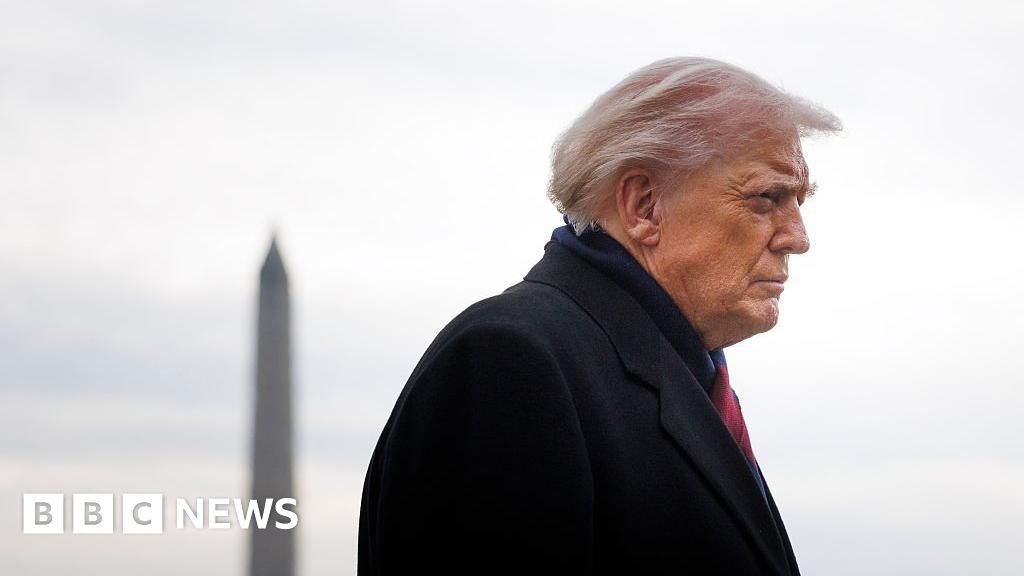
President Trump has escalated a hawkish foreign-policy agenda after a dramatic overnight raid in Caracas that captured Venezuela's president and his wife, invoking a revived 'Donroe Doctrine' to justify broader regional interventions. He has publicly threatened Colombia (after sanctions on President Gustavo Petro), warned of action against Iran if protests are violently suppressed, reaffirmed pressure on Mexico and Cuba, and floated interest in Greenland — highlighting Greenland's rare-earth resources and strategic Arctic position as China dominates global rare-earth supply. These developments raise geopolitical risk premiums for regional emerging-market assets, energy supply concerns (Venezuela reportedly supplies ~30% of Cuba's oil) and potential supply-chain/commodities implications for rare earths and hydrocarbons.
Market structure: Geopolitical threats to Venezuela, Colombia, Greenland, Iran and Mexico raise explicit upside for defense contractors (Lockheed LMT, Raytheon RTX, Northrop NOC) and strategic-minerals players (MP Materials MP, Lynas LYC.AX) while putting pressure on Latin American FX and sovereign credit (COP, MXN, Colombia sovereign). Expect a near-term commodity shock: a 5–15% risk-premium on Brent/WTI if operations expand or sanctions interrupt supply, and a 3–8% bid to gold on safe-haven flows. Cross-assets: USD and US 10y T-note bids should strengthen in days, EM spreads widen 50–200bp and implied vols in energy/defense options rise materially.
Risk assessment: Tail scenarios include miscalculated kinetic action (regional war, China/Russia retaliation) that would push oil >+15% and EM sovereign CDS >+300bp; low probability but high impact within 0–6 months. Short-term (days–weeks) volatility and FX dislocations are most likely; medium-term (3–12 months) effects include sustained defense spending and rare-earth reshoring; long-term (12–36 months) supply-chain realignment for critical minerals. Hidden dependencies: Chinese dominance of rare earth refining, maritime insurance/shipping cost pass-through, and commodity hedging positions in EM banks.
Trade implications: Tactical (0–3 months) — buy 3–6 month WTI call spreads (buy 1.0 month-forward ATM, sell +15–25% strike) and buy 3-month GLD calls as crash hedges; initiate 1–2% position each in LMT and RTX (6–12 month horizon). Medium-term (3–24 months) — 1% equity exposure to MP and 1% to LYC.AX for supply-chain rerouting; reduce/hedge Mexico and Colombia equity exposure via 2–3% short on EWW and sell/hedge Ecopetrol (EC) ADRs if COP funding stress >200bp wider. Use options to cap downside: buy 3–6 month USD/MXN call options if MXN weakens >5%.
Contrarian angles: The market may overprice near-term invasion risk — historical parallels (1990s sanctions cycles) show mean reversion in EM assets within 3–9 months once diplomacy proceeds. Defense and rare-earth equities already price some of the premium; cap exposures with stop-losses (10–15%) and scale in on volatility pullbacks. Unintended consequences include accelerated Chinese bilateral deals with Latin states (de-dollarization risk) — allocate 0.5–1% to long GLD and 7–10y UST put protection if oil moves >+10% or EM CDS spikes >+150bp.
AI-powered research, real-time alerts, and portfolio analytics for institutional investors.
Request DemoOverall Sentiment
moderately negative
Sentiment Score
-0.45
