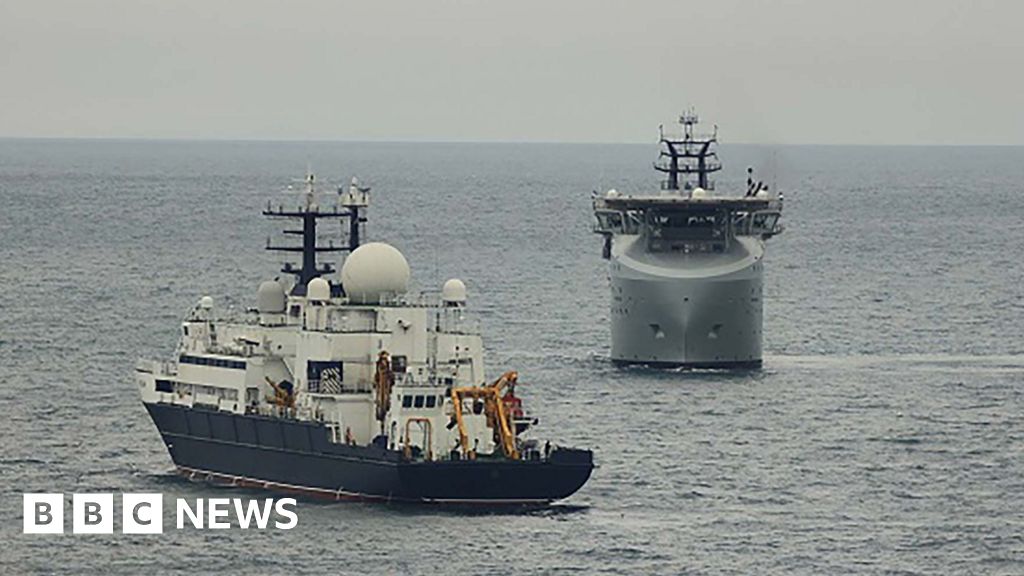
Russia's 'research' vessel Yantar, long suspected of mapping Britain’s undersea cables, has escalated tensions after its crew targeted RAF pilots with lasers—an act Defence Secretary John Healey called “deeply dangerous” and warned could prompt a military response if the ship crosses the 12‑mile limit. The vessel, linked to Russia's GUGI, can deploy deep‑sea drones able to map, cut or sabotage cables and pipelines that carry more than 90% of UK data and facilitate up to $7tn of financial transactions daily, prompting NATO to classify such infrastructure as critical. London is developing countermeasures (including the new vessel Proteus) but officials warn this activity forms part of broader Russian probing of NATO amid the Ukraine war, creating sustained hybrid‑threat and geopolitical risks to communications and energy links with attendant market and security implications.
Russia's oceanic research vessel Yantar, long suspected of mapping Britain's undersea cables, has escalated tensions after its crew targeted Royal Air Force pilots with lasers — an act Defence Secretary John Healey described as "deeply dangerous" and illegal in the UK — and he warned of a military response if the ship crosses the 12-mile territorial limit. The article links the Yantar to Russia's Main Directorate for Deep Sea Research (GUGI) and notes it can deploy remotely piloted submarines able to map, cut or plant devices on seabeds many thousands of metres deep.
Undersea cables carry more than 90% of UK data and pipelines and cables connect energy links to North Sea neighbours, with up to $7tn of financial transactions routed daily between the UK and US cited as potentially affected; NATO has classified deep-sea cables as critical infrastructure and flagged sabotage as a hybrid-warfare vector. The incident sits within a broader pattern of Russian probing of NATO — drone incursions and airspace breaches including the September entry of three Russian jets into Estonian skies — illustrating persistent geopolitical risk.
London is experimenting with countermeasures such as the vessel Proteus, but critics warn much damage may already have occurred; market signals in the briefing show moderately negative sentiment and a modest market-impact score (0.35), implying elevated but not immediate systemic market disruption. Investors should treat this as a standing geopolitical tail risk to UK communications, financial plumbing and energy links, with policy and military responses acting as key near-term catalysts.
AI-powered research, real-time alerts, and portfolio analytics for institutional investors.
Request DemoOverall Sentiment
moderately negative
Sentiment Score
-0.50
