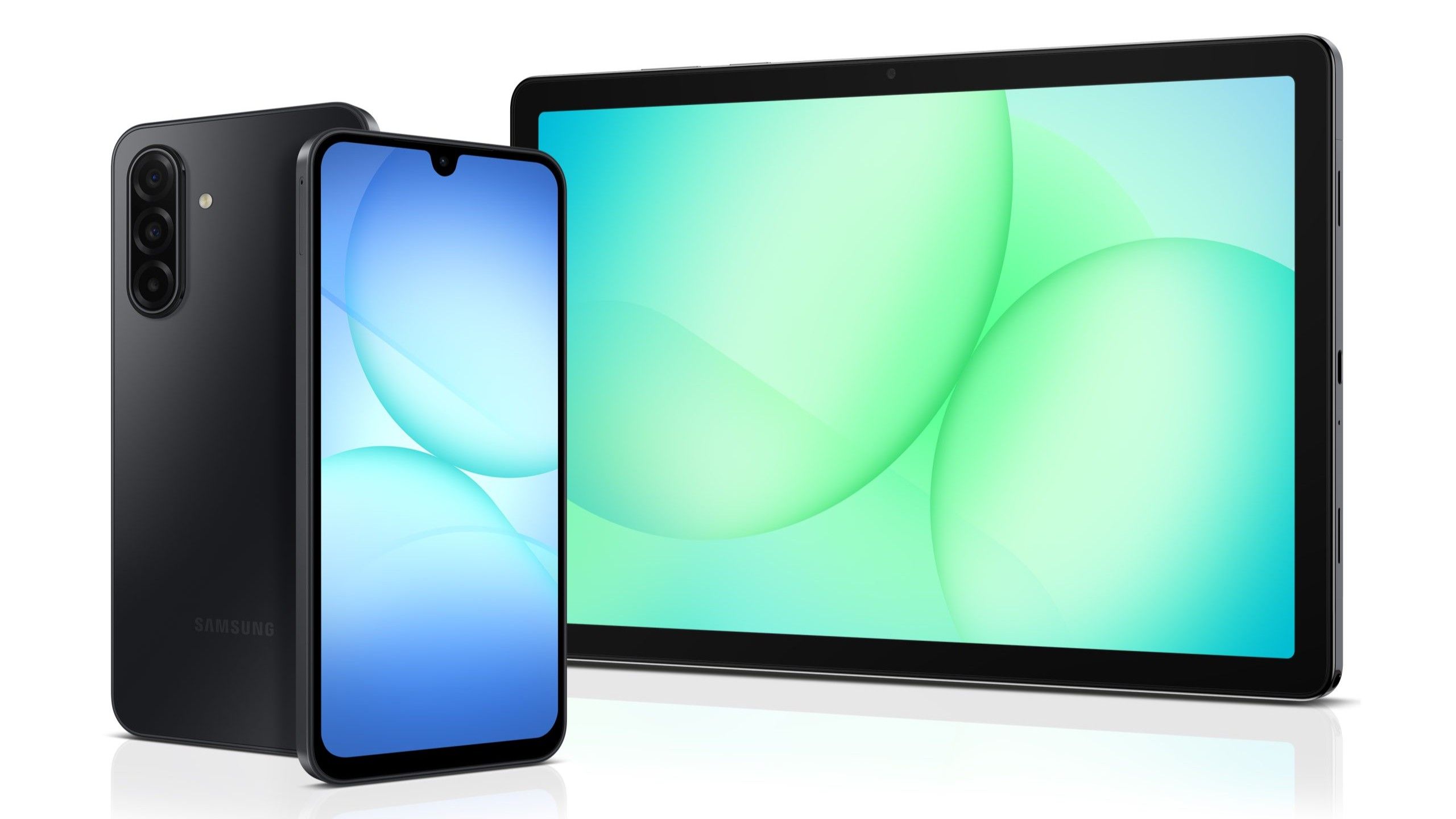
Samsung launched the Galaxy A17 5G and Galaxy Tab A11 Plus, bringing premium software features to its budget lineup: the A17 ships in a single 4GB/128GB configuration with an Exynos 1330, 6.7" FHD+ 90Hz Super AMOLED, 5,000mAh battery, 50MP main camera with OIS, and promises six years of Android and security updates; it will be available Jan. 7 for $200. The Tab A11 Plus offers 11" 90Hz LCD, quad speakers with Dolby Atmos, 3.5mm jack, MediaTek MT8775 CPU, 6GB/128GB or 8GB/256GB options, a 7,040mAh battery and optional 5G, launching Jan. 8 from $250; both devices support Circle to Search and Google Gemini, extending AI capabilities to lower-cost hardware and potentially boosting mainstream demand while the A17's 4GB RAM may limit appeal to heavy users.
Market structure: Samsung’s A17/Tab A11 move tightens its leadership in global low-end Android, benefiting Samsung Electronics (SSNLF/005930.KS) and Google (GOOGL/GOOG) via broader Gemini/search distribution. Winners also include MediaTek (share gain risk vs Qualcomm QCOM) because Exynos+MediaTek choices reduce Qualcomm pricing power; smaller Chinese OEMs that can’t match six-year support are losers. The six-year update promise increases customer lifetime value (LTV) and reduces churn, shifting monetization from one-off device sales toward services/ads over a 2–4 year horizon.
Risk assessment: Tail risks include an EU/US regulatory push against bundling Google AI (high-impact within 6–18 months), supply-chain shocks to Exynos/MediaTek production, or consumer backlash if 4GB RAM limits AI UX (revenue erosion). Immediate market impact is muted (days); watch short-term (0–6 months) adoption metrics and 6–24 month monetization trends. Hidden dependencies include carrier subsidies, app memory profiles, and regional rollout cadence that will determine realized ad impressions and search volume.
Trade implications: Favor modest long exposure to GOOGL (benefit from Gemini distribution) and selective exposure to SSNLF or MediaTek; avoid or hedge Qualcomm exposure. Use 3–6 month call spreads on GOOGL to capture incremental monetization with limited capital, and consider a 1:1 pair (long GOOGL, short QCOM) sized 0.5–1% each of portfolio. Time entry within 2 weeks of launches; reassess at 3 and 6 months using activation and Gemini MAU thresholds.
Contrarian angles: Consensus underweights monetization from AI on low-end phones — if Gemini drives a 5–10% uplift in search/assistant usage in emerging markets over 12–24 months, GOOGL EPS could beat by 2–3%. Conversely, adoption could disappoint if 4GB RAM materially constrains AI features; set a hard stop: cut longs if initial activation rate of A17 < A16 by >10% in Q1 post-launch. Historical parallel: Android penetration cycles (2013–2016) show device-led search growth can persist for multiple years, but margin dilution and regulatory scrutiny can rapidly reverse gains.
AI-powered research, real-time alerts, and portfolio analytics for institutional investors.
Request DemoOverall Sentiment
mildly positive
Sentiment Score
0.30
Ticker Sentiment
