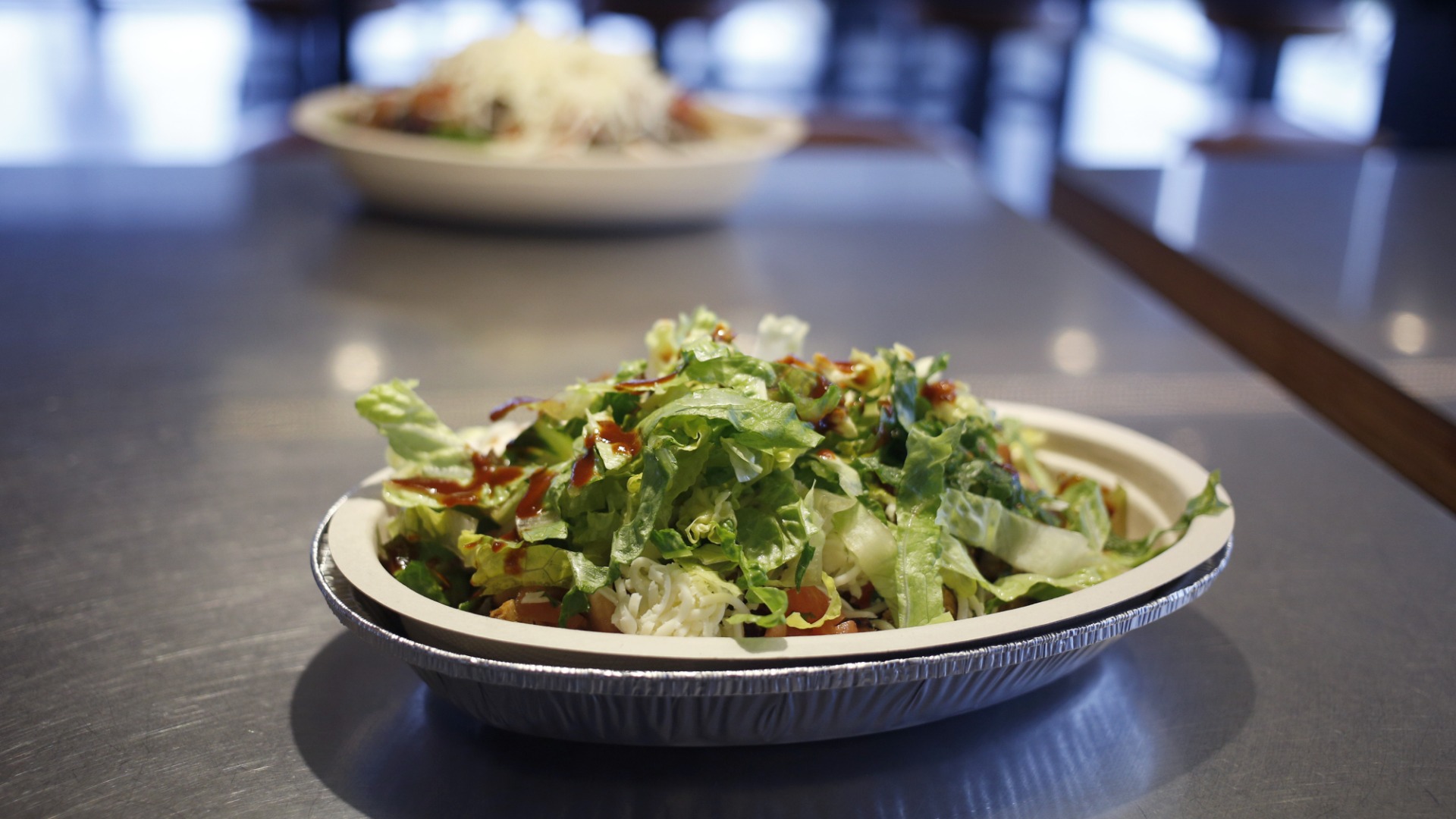
Fast‑casual restaurant names are trading lower in after‑hours trade (roughly -2%), with on‑air commentary noting waning consumer enthusiasm for bowl concepts and a rotation toward handheld items. Sweetgreen and Cava are singled out as down on the day after delivering triple‑digit gains in 2024, and speakers flagged potential pricing sensitivity (examples of ~$20 salads) and trend fatigue that could pressure traffic, revenue growth and margins. Investors should monitor same‑store sales and positioning in food‑service discretionary names for further downside or re‑rating risk.
Market structure: Bowl-focused fast-casual concepts (SG, CAVA) are losing pricing power as consumer preference shifts toward handhelds; immediate winners are high-throughput sandwich/QSR operators (MCD, WING, SBUX breakfast items) that can offer sub-$8 handhelds and take share. Sweetgreen (SG) appears most vulnerable given premium pricing and crowded category; expect promotional intensity and unit-level margin pressure of 100–300bps over next 2–6 quarters. Supply/demand is moving from limited high-margin bowls to abundant low-cost handheld supply, compressing same-store sales (SSS) growth for niche players.
Risk assessment: Short-term risk is earnings/SSS misses over the next 30–90 days; tail risks include a romaine/produce recall or sudden commodity inflation (lettuce, chicken) that could blow out COGS by 200–400bps and hurt all players. Hidden dependencies include digital membership churn, franchise vs corporate mix, and trancheable lease maturities that can mask profitability; monitor store-level EBITDA and digital retention rates. Catalysts to accelerate reversal: new handheld product launches, meaningful price cuts, or macro wage declines; catalysts to accelerate downside: SSS miss >200bps or margin guidance cut >150bps.
Trade implications: Implement a size-controlled short on SG (2–3% portfolio) with a 3–6 month horizon and target -25% downside if SSS or margin thresholds are breached; use 3-month puts 10–15% OTM or put spread to cap premium. Run a dollar-neutral pair: long CAVA (CAVA) 2% vs short SG 2% expecting CAVA to adapt to handhelds and outperform by 10–20% in 3 months; exit if relative performance diverges by >15% adverse. Rotate 30–50% of ’bowl’ exposure into defensive/scale operators (MCD, SBUX, KO) over next 4–8 weeks.
Contrarian angles: Market is underpricing potential brand/network advantages — SG’s loyalty data could monetize and stabilize revenue over 12–24 months, so a full conviction long is premature but a small, longer-dated call spread (9–18 months) could be a low-cost upside hedge. The selloff may be overdone for CAVA given portable pita format; a conservative buy-write (buy and sell 3-month calls) can capture income while testing consumer rotation. Beware unintended consequences: fast-casual consolidation (winner-take-most) could create large asymmetric winners if you pick the wrong short.
AI-powered research, real-time alerts, and portfolio analytics for institutional investors.
Request DemoOverall Sentiment
mildly negative
Sentiment Score
-0.30
Ticker Sentiment
