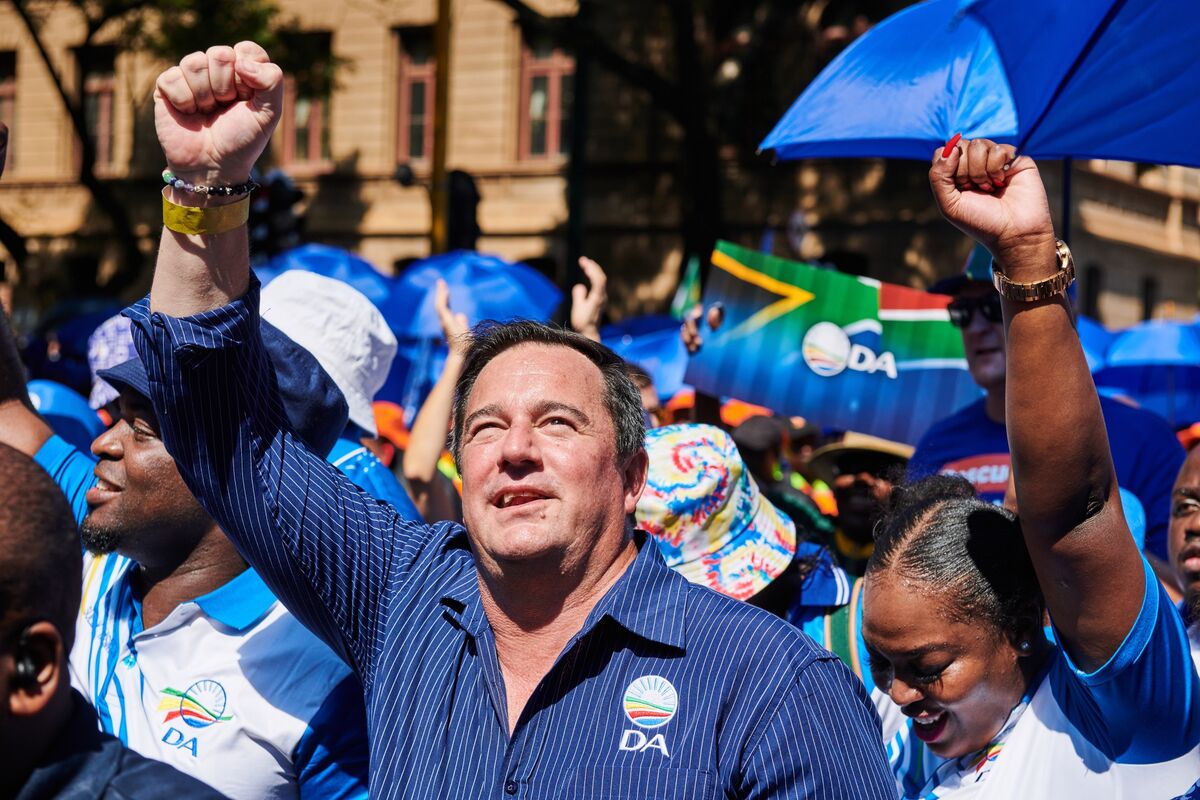
South Africa's Democratic Alliance (DA), the nation's second-largest party, has reaffirmed its commitment to the fractious 10-party ruling coalition, despite persistent policy and appointment clashes with the African National Congress (ANC) that have fueled doubts about the government's stability. This decision, backed by most DA members, is strategically aimed at bolstering electoral support in next year's municipal elections, signaling continued, albeit potentially contentious, political participation within the 'government of national unity' formed after the ANC lost its parliamentary majority for the first time since 1994.
South Africa's political landscape has gained a measure of near-term stability as the Democratic Alliance (DA), the nation's second-largest party, reaffirmed its commitment to the 10-party ruling coalition. This decision tempers immediate concerns about the collapse of the so-called 'government of national unity,' which was established 13 months ago after the African National Congress (ANC) lost its parliamentary majority for the first time in the post-apartheid era. However, the stability is tenuous, as the announcement comes against a backdrop of persistent and public clashes between the DA and ANC over policy and key appointments, which have fueled ongoing doubts about the coalition's long-term viability. The DA's stated motivation—to bolster its support ahead of next year's municipal elections—frames its continued participation as a strategic calculation, suggesting that underlying political friction remains a significant risk factor for investors monitoring South African assets.
AI-powered research, real-time alerts, and portfolio analytics for institutional investors.
Request DemoOverall Sentiment
mildly positive
Sentiment Score
0.25
