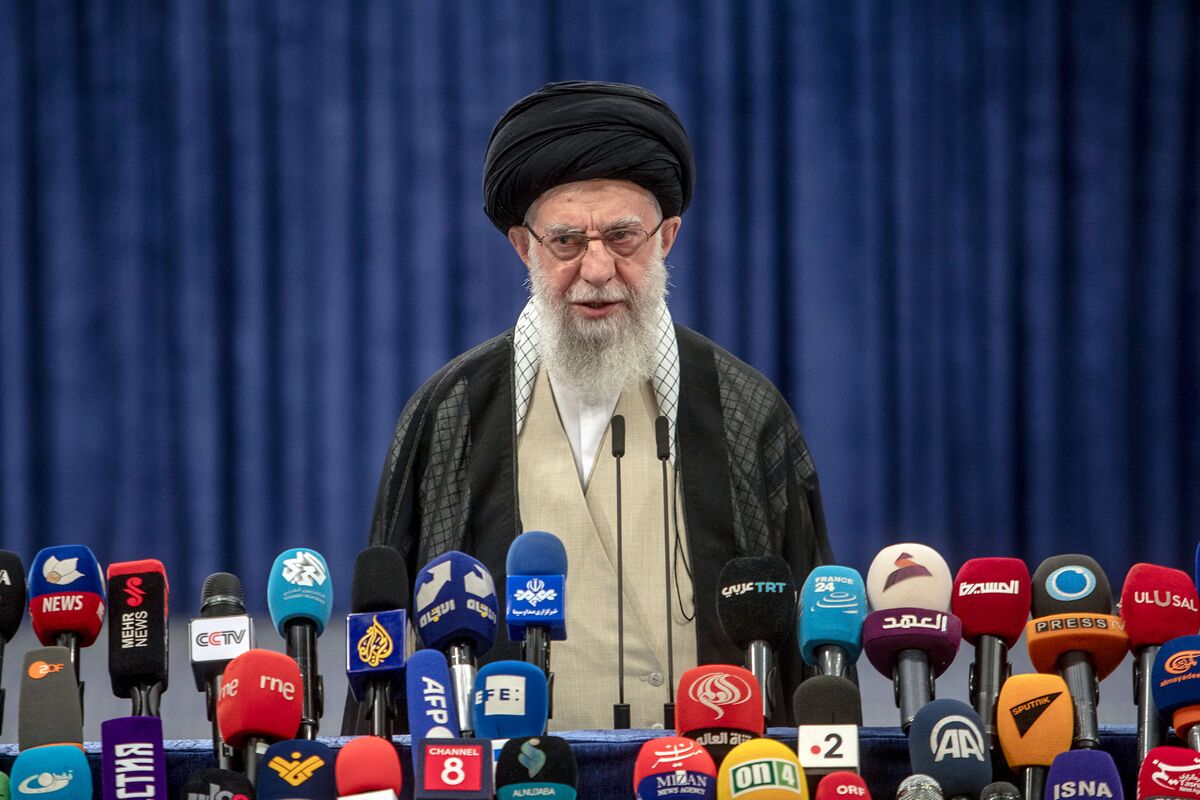
Iran's Supreme Leader Ayatollah Ali Khamenei stated that Iran will not surrender to Israel, responding to calls from US President Donald Trump for capitulation amidst ongoing conflict. Khamenei warned that any US military intervention would result in "irreparable damage," escalating tensions in the region.
Iran's Supreme Leader Ayatollah Ali Khamenei has declared that his country will not capitulate to Israel, countering calls from US President Donald Trump as the regional conflict extended into its sixth day. Khamenei explicitly warned, via the Fars news agency, that any US military intervention would result in "irreparable damage," a statement characterized by a "hawkish" tone and a "strongly negative" sentiment score of -0.75. This pronouncement significantly elevates geopolitical risk in the Middle East, heightening the potential for wider conflict and market volatility, as indicated by a market impact score of 0.7. The developments underscore themes of "Geopolitics & War" and may have implications for "Sanctions & Export Controls," suggesting increased uncertainty for global markets.
AI-powered research, real-time alerts, and portfolio analytics for institutional investors.
Request DemoOverall Sentiment
strongly negative
Sentiment Score
-0.75
