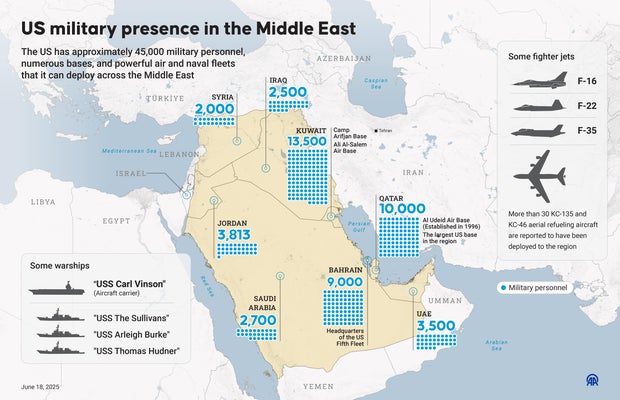
Iran launched a retaliatory missile attack on the U.S. Al Udeid Air Base in Qatar, following recent U.S. strikes on Iranian nuclear facilities. The attack, involving 14 missiles, was successfully intercepted by U.S. and Qatari defenses with no reported injuries, and President Trump noted prior warning. While the immediate physical impact was minimal, Qatar condemned the strike as a severe sovereignty violation, and the event has amplified congressional debate regarding presidential authority for military action, underscoring persistent geopolitical tensions and potential for regional escalation.
Iran's missile attack on the Al Udeid Air Base in Qatar, involving 14 short and medium-range ballistic missiles, was a direct and telegraphed retaliation for recent U.S. strikes on Iranian nuclear sites. The immediate military impact was nullified by the successful interception of all projectiles by U.S. and Qatari Patriot defense systems, resulting in no casualties. President Trump's characterization of the attack as a "very weak response" for which the U.S. received "early notice" suggests a degree of de-escalation and potentially choreographed signaling between the adversaries. However, this contrasts with Iran's internal messaging of a "devastating and powerful" strike. The primary fallout is geopolitical and political; Qatar condemned the attack as a "flagrant violation of sovereignty" and reserved its right to respond, indicating significant diplomatic strain. Furthermore, the incident has amplified a domestic U.S. political conflict over presidential authority, with congressional leaders clashing over the War Powers Act, which introduces uncertainty into the future U.S. military posture in the region.
AI-powered research, real-time alerts, and portfolio analytics for institutional investors.
Overall Sentiment
Neutral
Sentiment Score
-0.15
