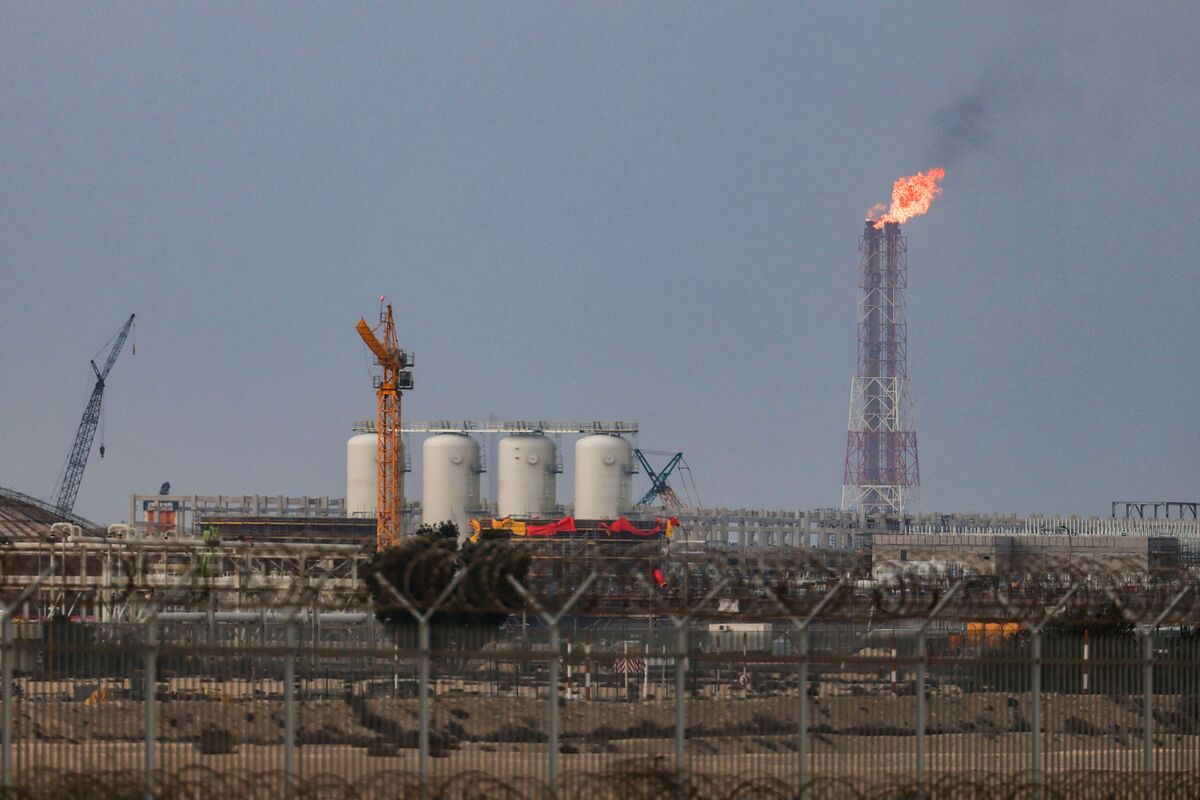
Satellite observations show increased flaring at some Middle East oil and gas facilities after attacks and blocked exports, raising greenhouse-gas emissions relative to pre-war levels. The rise in emissions highlights an ESG setback for investors focused on reducing waste and methane/CO2 from upstream operations, though it is framed as a secondary consequence amid the human and economic toll of the conflict.
Increased flaring functions as an unpriced supply leak in the short run: volumes that would otherwise be marketed or injected into storage are being destroyed, tightening available gas/LNG balances on a variable, facility-by-facility basis. That margin loss is nonlinear — a handful of high-capacity export or associated-gas sites offline or forced to flare can move regional spot spreads for weeks if repair and insurance timelines stretch beyond immediate days.
Beyond spot-price moves, the second-order shock is regulatory and capital-market reaction. Visible flare spikes accelerate investor stewardship and create a credible catalyst for faster regulatory intervention (stricter permits, fines, or conditional export approvals) within a 3–12 month window; that raises effective operating costs for operators with high carbon intensity and elevates the value of firms that measure and verify emissions.
Operationally, expect maintenance deferrals, higher insurance premiums, and slower project sanctioning for assets in contested regions — a multi-quarter drag on service demand and parts supply that benefits fast-to-market LNG sellers and third-party storage operators. Conversely, firms offering rapid remote monitoring and verification (satellite + analytics) gain negotiating leverage with insurers and buyers; carbon markets and offset instruments become a natural hedge for counterparties exposed to spot-driven emissions risk.
AI-powered research, real-time alerts, and portfolio analytics for institutional investors.
Overall Sentiment
mildly negative
Sentiment Score
-0.20
