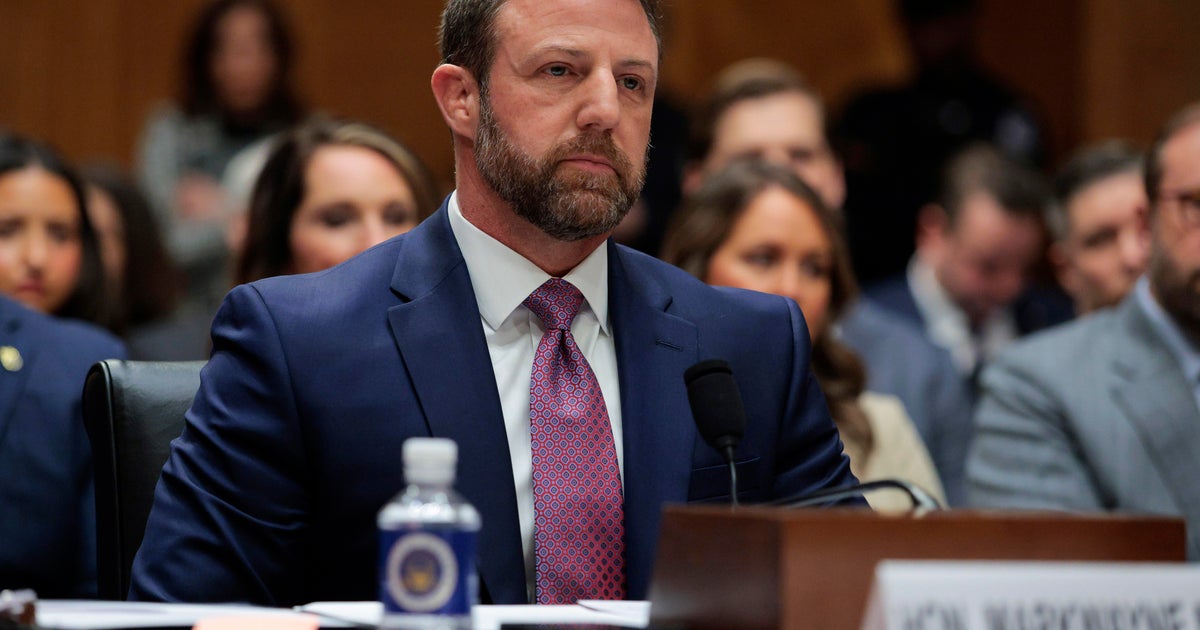
Sen. Markwayne Mullin underwent a contentious Senate Homeland Security Committee confirmation hearing and agreed to brief senators in a SCIF on a classified 2015 overseas trip; the committee could vote as soon as Thursday to advance his nomination. DHS remains shut down since Feb. 14 with roughly 200,000 employees working without pay, creating operational stress (notably at TSA) and making DHS funding the proximate market/operational risk. Mullin appears likely to advance given GOP control (53 Republicans) and some cross-party support (Sen. Fetterman), but unresolved questions on classified travel and use-of-force rhetoric leave confirmation and near-term policy clarity uncertain.
The market should price this as a governance-and-procurement story more than a pure personnel headline. A smooth confirmation of a Senate insider who pledges to operate “within the laws” raises the probability of near-term stop-gap funding for civil-facing DHS components (TSA, FEMA, Coast Guard) while longer-term immigration enforcement reform remains contested. That bifurcation favors vendors with short-cycle, operations-support contracts over those dependent on large policy-driven procurements that require statutory changes. Rand Paul’s procedural leverage and the classified-travel line of inquiry create a realistic path for a last-minute delay or a conditional confirmation tied to added oversight or reporting requirements. Those outcomes increase demand for compliance, auditing, and secure-communications services from commercial contractors while compressing timelines for big-ticket border-tech procurements — winners will be firms that can provide modular, fast-deploy solutions rather than bespoke multi-year systems. Over a 3–12 month horizon, expect two offsetting forces: incremental budget allocations to shore up TSA-like functions (positive for short-cycle contractors and staffing-sensitive travel names if resolved) and heightened congressional oversight risk (negative for any firm whose revenue relies on controversial ICE/CBP programs). The biggest near-term market catalyst is whether the committee votes quickly and whether language tying funding to reporting/oversight is attached; both can move pocket-sized defense/cyber orders into Q2 budgets or push them into multiyear uncertainty. Watch for operational knock-on effects at ports and in ground transportation: prolonged staffing/pay disruptions at border-facing agencies materially raise freight timing risk for companies with thin logistics buffers, creating asymmetric downside for high-turn inventory retailers and air-freight-reliant industrials over the spring shipping season.
AI-powered research, real-time alerts, and portfolio analytics for institutional investors.
Request DemoOverall Sentiment
neutral
Sentiment Score
0.00
