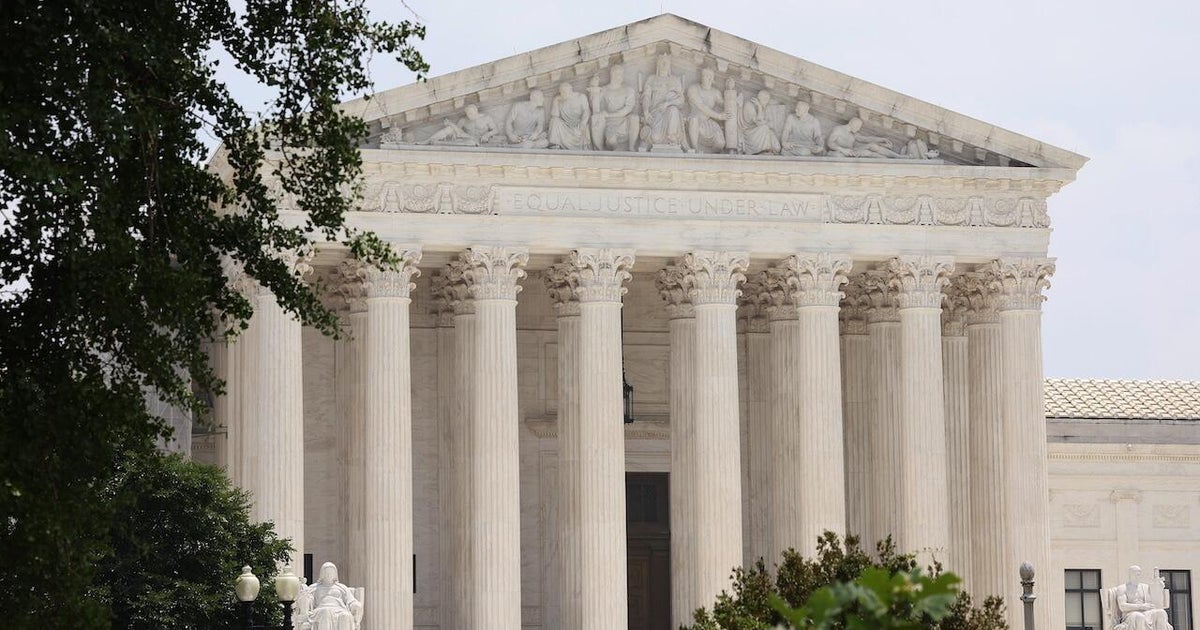
The Supreme Court has temporarily blocked lower court orders compelling the White House's Department of Government Efficiency (DOGE) to release information to the government watchdog group Citizens for Responsibility and Ethics in Washington (CREW), pending further proceedings in the U.S. Court of Appeals. This action halts the disclosure of records related to DOGE's work and personnel, as well as a deposition of its acting administrator, while the courts consider whether DOGE is subject to the Freedom of Information Act (FOIA) due to CREW's argument that it wields "substantial independent authority."
The Supreme Court has intervened in a legal dispute concerning the White House's Department of Government Efficiency (DOGE), halting lower court orders that mandated the disclosure of information about its work and personnel to the watchdog group Citizens for Responsibility and Ethics in Washington (CREW). This decision temporarily shields DOGE and its acting administrator, Amy Gleason, from discovery obligations, including a deposition, while the D.C. Circuit Court of Appeals re-evaluates the case. The core of the dispute, not yet before the Supreme Court for a final decision, is whether DOGE, a task force established by President Trump to reduce federal government size, operates with "substantial independent authority" and thus qualifies as an agency subject to the Freedom of Information Act (FOIA), as CREW argues, or if it is merely a presidential advisory body exempt from FOIA, as the Justice Department contends. The Supreme Court's order cited concerns that the lower court's discovery requirements were not "appropriately tailored" and invoked "separation of powers concerns" regarding internal executive branch communications. DOGE's activities, initiated on President Trump's first day back in the White House as part of his initiative to slash federal government size, include efforts to shrink the federal workforce, shutter entities like USAID and the U.S. Institute of Peace, and attempts to access sensitive government databases, prompting CREW's FOIA request to understand its structure and operations. The Solicitor General argued that upholding the lower court's order could subject numerous White House components to FOIA, compromising confidential advice to the president, while CREW countered that the Justice Department's stance would allow the executive to create powerful, opaque entities.
AI-powered research, real-time alerts, and portfolio analytics for institutional investors.
Request DemoOverall Sentiment
neutral
Sentiment Score
0.00
