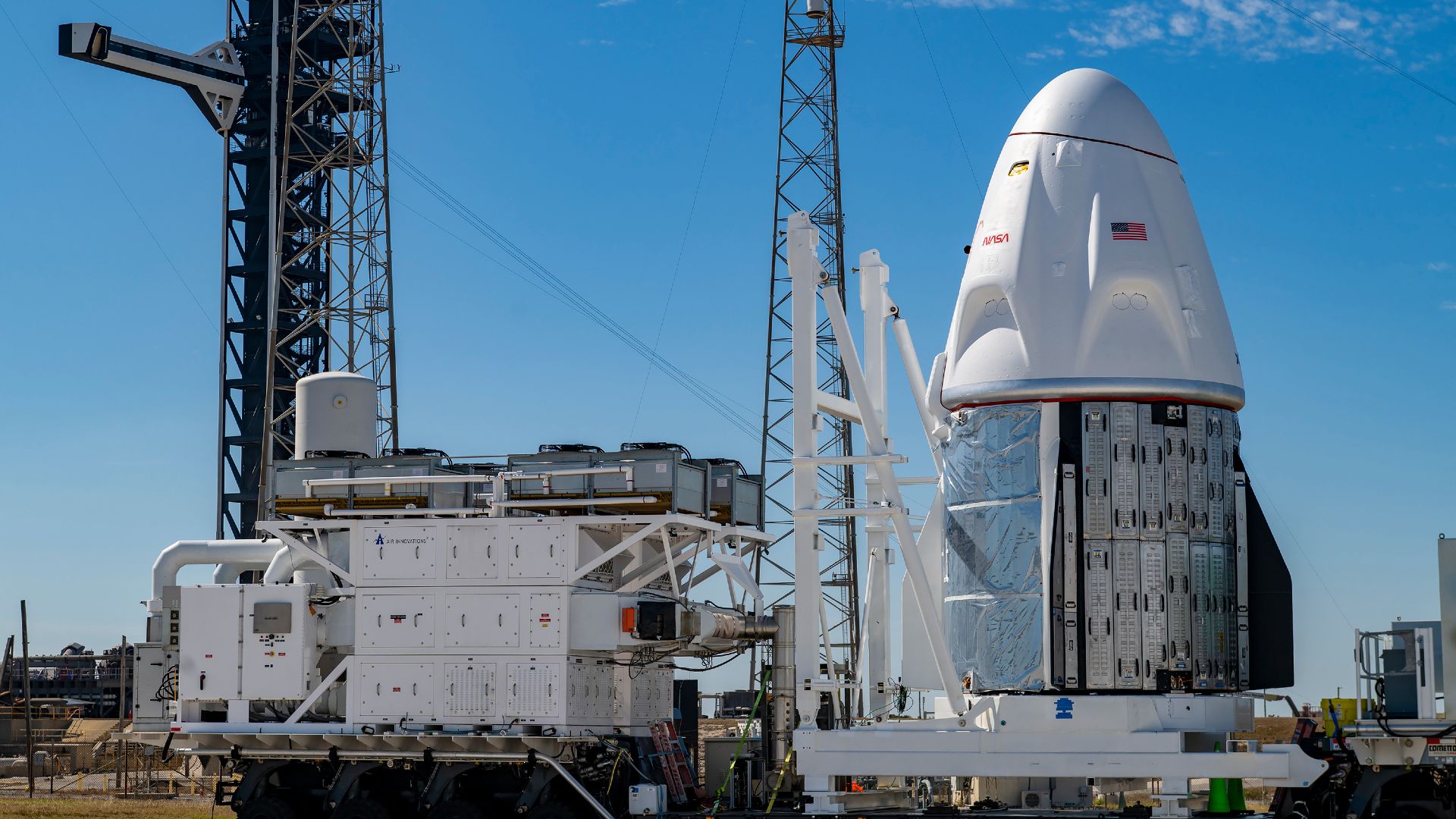
The FAA has cleared SpaceX's Falcon 9 to return to flight after a SpaceX-led investigation into a Feb. 2 upper-stage failure that prevented a deorbit burn and caused an uncontrolled reentry; the agency accepted findings that a stage-2 engine failed to ignite and noted SpaceX has identified technical and organizational preventive measures. NASA and SpaceX are targeting a Crew-12 launch on Feb. 11 at 6:01 a.m. EST from Cape Canaveral carrying four astronauts to the ISS for roughly a nine-month mission, restoring the station's crew to seven. The clearance ends a four-day grounding and reduces near-term operational uncertainty for Falcon 9 missions, though the recurrence of upper-stage anomalies remains a monitored risk.
Market structure: FAA clearance for Falcon 9 to fly reduces immediate operational risk but highlights systemic reliability tail risk for the low-cost launch oligopoly. Short-term winners are legacy primes (Lockheed Martin LMT, Northrop Grumman NOC, Boeing BA) and launch-insurance brokers (AON) who gain pricing power if insurers push rates up 5–15% and customers reallocate manifests over 2–12 weeks; SpaceX’s reputational discount could transiently widen by -5–10% in sentiment-sensitive suppliers.
Risk assessment: Primary tail risk is a crewed-flight failure or a multi-launch grounding (>14–30 days) that forces manifest reallocation and regulatory decoupling; that scenario could reroute 20–40% of near-term commercial payloads and spike launch insurance premia 2–3x. Immediate horizon (days): monitor Feb 11 Crew‑12 outcome; short-term (weeks–months): FAA/NASA probes and insurance repricing; long-term (quarters–years): procurement shifts toward incumbents and higher R&D/certification costs for all launchers.
Trade implications: Favor exposure to large defense/aerospace primes and propulsion suppliers (LMT, NOC, AJRD) for 3–12 month appreciation driven by contract capture and de-risking demands; underweight/short selective pure-play small-launch equities (RKLB) which face regulatory scrutiny and demand diversion. Use options to express directional views with defined risk (3–6 month call spreads on LMT/NOC, 3 month puts on RKLB) and size initial exposures small (1–3% NAV) until 30-day failure-free cadence confirmed.
Contrarian angles: Consensus that any SpaceX hiccup uniformly benefits small launchers is likely wrong — higher regulatory burdens raise barriers and favor incumbents with existing govt ties. Historical parallels (post‑Challenger/Columbia) show primes gained order flow and long-term pricing power; a single additional Falcon anomaly within 90 days should be treated as a regime shift and materially increase allocations to defense primes and aerospace insurers.
AI-powered research, real-time alerts, and portfolio analytics for institutional investors.
Request DemoOverall Sentiment
mildly positive
Sentiment Score
0.25
