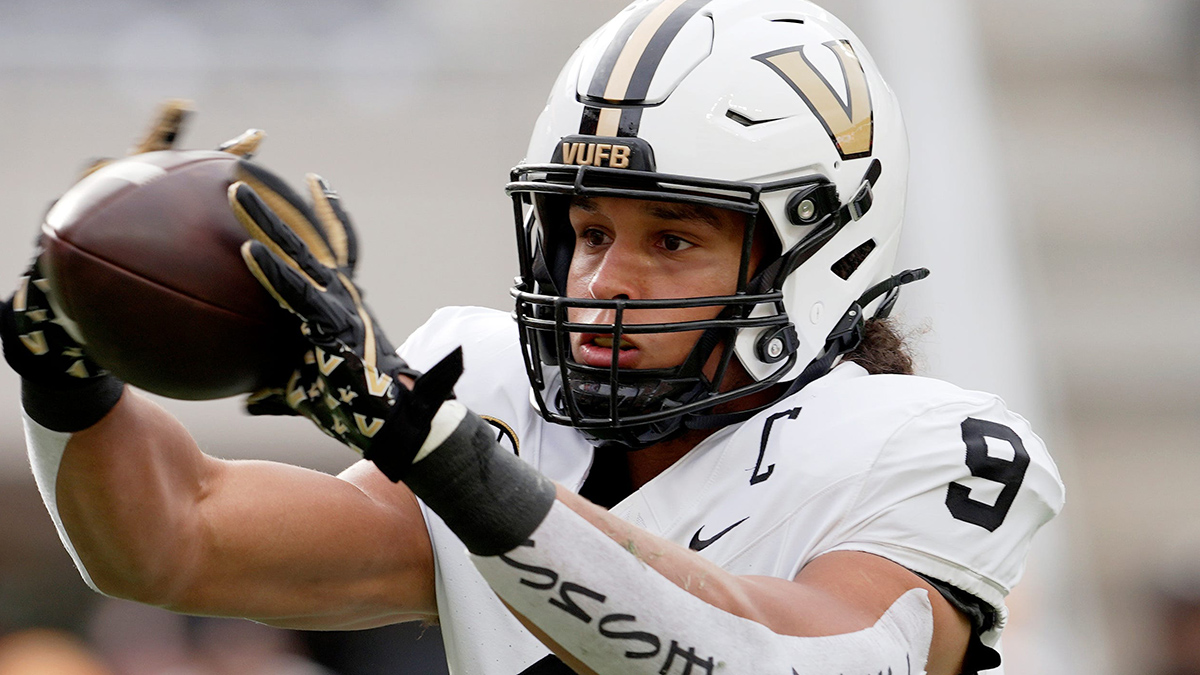
The article outlines several 2026 NFL mock draft scenarios for the New England Patriots at No. 31 overall, including a possible trade down to No. 34. Projected targets span tight end Eli Stowers, edge rushers Zion Young and Cashius Howell, right tackle Blake Miller, safety Dillon Thieneman, and wide receiver KC Concepcion, reflecting the team’s needs at edge, safety, receiver, offensive tackle, guard and tight end. The piece is opinion-driven draft analysis rather than market-moving news.
The key market signal here is not the player names, but the Patriots’ latitude to trade down from a low-probability slot. In the 30s, the expected value gap between pick 31 and a move into the mid-30s is often thin, while an extra Day 2 or future Day 2 pick can be more valuable in a weak class. That creates a subtle bias toward accumulation over conviction-taking, especially for a team that still has multiple roster holes and has not fully solved the WR/edge premium problem.
The second-order effect is that New England’s draft behavior becomes a read-through on management’s confidence in the offensive support structure around Drake Maye. If they take TE/edge/S rather than a receiver or line piece, it implies either internal optimism on a pending veteran WR addition or a belief that the marginal value of a “good” rookie at 31 is too low to justify forcing the pick. That matters because teams in this posture often overpay later in free agency or via trade after the draft when alternatives dry up.
From a contrarian standpoint, the consensus is likely underestimating how much a weak class compresses the return on first-round capital. In that setup, the team most likely to “win” is the one that converts pick 31 into a future asset and a premium Day 2 selection. The loser is whichever position market gets crowded out: if New England trades for a top receiver, the incremental demand for rookie WRs falls; if it doesn’t, the receiver market may re-rate quickly once the draft removes one of the few plausible avenues to add difference-making young talent.
Catalyst timing is immediate into Round 1, but the larger signal emerges over the next 2-6 weeks: post-draft roster moves will reveal whether this is a true build-around-Maye decision or a placeholder strategy. The risk is that moving down sacrifices the best shot at blue-chip upside in a class where few players project as clear impact starters. The upside is better portfolio construction: more shots on goal, better optionality for 2027, and less exposure to a low-hit-rate pick in the 30s.
AI-powered research, real-time alerts, and portfolio analytics for institutional investors.
Request TrialOverall Sentiment
neutral
Sentiment Score
0.05
