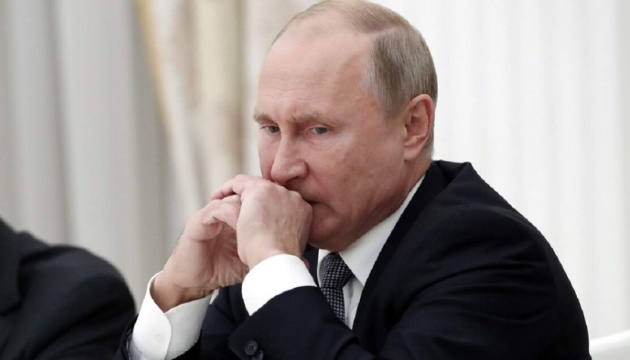
Russia has enacted a law banning enforcement of foreign court decisions that are not based on international treaties or UN Security Council resolutions, explicitly covering rulings from bodies such as the ICC and a planned Special Tribunal on the crime of aggression against Ukraine. The move follows ICC arrest warrants issued in March 2023 for President Putin and Maria Lvova-Belova and a December 2025 Russian in absentia sentencing of ICC officials; Ukraine has signed and ratified agreements with the Council of Europe to establish the Special Tribunal. The law further insulates Russia from international judicial enforcement and raises geopolitical and legal risk for entities exposed to Russian jurisdiction or international legal actions.
Market structure: Russia’s statutory repudiation of foreign judgments shifts bargaining power to state-linked debtors and asset holders inside Russia and raises expected recovery haircuts for foreign litigants. Direct winners are domestic claimants, state-owned enterprises and local insurers who can seize value; losers include foreign creditors, litigation funders and Western banks with unresolved Russia exposure, implying a higher risk premium on Russia-linked credit and longer recovery timelines (expected haircuts +20–50% vs pre-2024 benchmarks).
Risk assessment: Tail scenarios include reciprocal non-recognition of foreign judgments, large-scale asset seizures, or sanctions that freeze enforcement channels — each could trigger sudden re-pricing across EM credit and bank equities within days to weeks. Immediate effect (0–30 days) is market signaling and sentiment moves; short-term (1–6 months) is higher yields/credit spreads on Russia-related debt and weaker recoveries; long-term (6–36 months) is structural fragmentation of cross-border enforcement and higher pricing for arbitration/litigation finance.
Trade implications: Prefer defensive positioning: reduce naked Russia/EM-Russia exposure, buy protection on concentrated bank exposures, and short names that rely on cross-border recoveries (litigation finance). Use options to express asymmetric views (cheap put spreads on litigation funders, buy CDS where liquid) and overweight hard assets/energy as a geopolitical risk hedge for 3–9 months.
Contrarian angles: Consensus focuses on politics; it underestimates the contagion into litigation finance and political-risk insurance pricing — these sectors can re-rate 15–40% if recovery economics change. Historical parallels (Argentina restructurings, Russia 1998/2014) show large write-downs but eventual secondary-market opportunities once legal frameworks clarify; therefore staged entry and event-driven tranches outperform blunt exits.
AI-powered research, real-time alerts, and portfolio analytics for institutional investors.
Request DemoOverall Sentiment
moderately negative
Sentiment Score
-0.40
