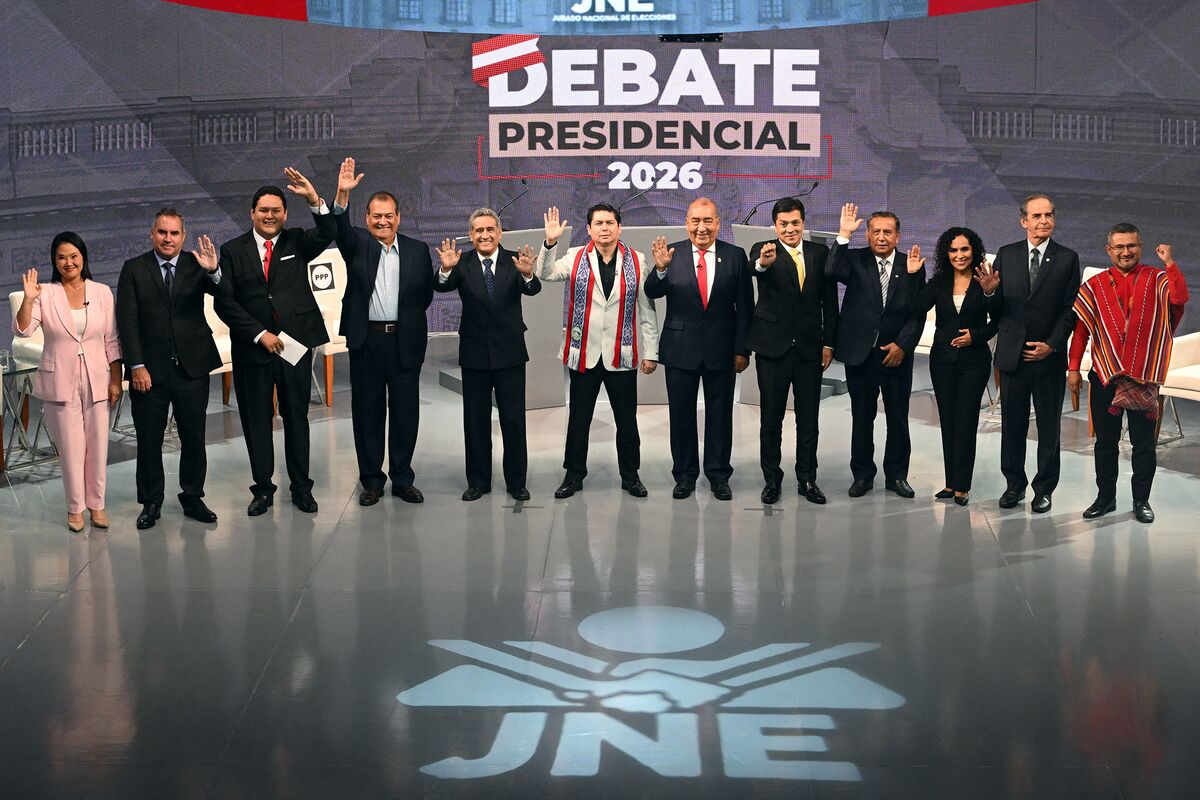
About one-third of Peruvians are undecided or backing no one ahead of the April 12 vote, with 35 candidates still in the race. Conservatives Rafael López Aliaga and Keiko Fujimori are stuck in a technical tie at roughly 10%–12% in polls, concentrated in Lima. Regions outside the capital — where 70% of Peru’s 34 million population lives — are likely to determine the outcome, leaving room for a surprise contender in the final days.
Markets are pricing Peru for continuity; that positioning is narrow and concentrated in Lima-exposed assets (banks, consumer, listed services), leaving rural-exposed sectors (mining, agribusiness, infrastructure) vulnerable to a late swing. A surprise contender carrying a rural/regional message would create two distinct transmission channels: immediate FX and sovereign spread pressure (days–weeks) and a slower but larger impact on capex/tax timelines for mining projects (months–years) via renegotiated royalties, licensing delays and higher social unrest premium.
Second-order supply effects matter: multi-year project timelines mean a pause or extra 100–300 bps on required returns for large copper projects would shift marginal global supply by several hundred thousand tonnes of copper over 3–5 years, favoring non-Peruvian producers and raising miners' capex hesitation. Also expect banks (loan books concentrated in retail and SME lending) to underperform if political fragmentation increases regulatory unpredictability — credit spreads and NPL provisioning could widen 50–150bps in a stress scenario.
Key near-term catalysts to watch are: polling momentum in the final 72 hours (a >10–15 percentage point jump for any non-leading candidate is a high-probability volatility trigger), local turnout differentials vs historical patterns (rural turnout > urban by 5–8% shifts outcome probabilities materially), and any pre-election policy pledges on mining royalties or nationalizations (explicit language will reprice miners within hours). The actionable window is immediate — hedge in days, reposition strategically over 1–6 months depending on policy clarity.
AI-powered research, real-time alerts, and portfolio analytics for institutional investors.
Request DemoOverall Sentiment
neutral
Sentiment Score
0.00
