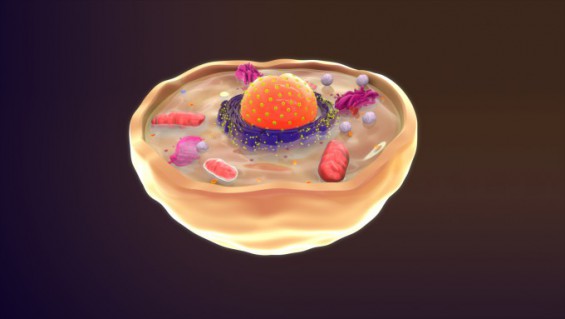
Researchers at the Broad Institute have engineered 'TimeVaults,' a reprogrammed cellular organelle that captures and stores cellular mRNA in situ, recording the complement of transcripts produced over a 24-hour window and retaining them for at least a week; recording can be toggled pharmacologically. In proof-of-concept work published in Science, TimeVaults were used to profile lung cancer persister cells and inhibiting the highest-expressed recorded genes increased drug killing, indicating the platform’s potential to uncover novel therapeutic targets and to study stem-cell differentiation.
Market structure: TimeVaults creates a clear demand shock toward cell‑recording, single‑cell and longitudinal assay equipment and reagents; winners are diversified lab suppliers (Thermo Fisher TMO, Danaher DHR), high‑throughput sequencers (Illumina ILMN) and single‑cell platform vendors (10x Genomics TXG). Near‑term pricing power accrues to instrument vendors (potential 5–15% incremental margin on adjacent consumables in 12–24 months) while pure‑service players with legacy bulk‑RNA focus face slower growth.
Risk assessment: Tail risks include IP litigation, failure to scale beyond cell lines, and ethical/regulatory constraints if human use is attempted—each could knock commercial timelines from 1–3 years to 3–6+ years. Immediate impact is negligible (days), catalytic partnership/M&A risk sits in the 3–12 month window, and real commercial revenue likely 12–36 months; hidden dependency is on sequencing/informatics capacity and OEM compatibility.
Trade implications: Favor durable, cash‑generating instrument vendors (TMO, DHR, ILMN) and optionality on platform specialists (TXG). Expect selective M&A interest from Big Pharma; implied vol for small genomics names may rise 20–40% on partnership news—use limited‑loss option structures to capture upside. Rotate modest exposure from binary early‑stage biotech R&D names into tools over 6–24 months.
Contrarian angles: Consensus will overstate near‑term monetization; TimeVaults is a research tool first and may take multiple validation cycles—historical parallel: single‑cell RNA‑seq adoption drove reagent/instrument sales years after papers. Unintended consequence: widespread adoption could commoditize certain assays, compressing per‑sample prices while concentrating profits in a few platform owners.
AI-powered research, real-time alerts, and portfolio analytics for institutional investors.
Request DemoOverall Sentiment
mildly positive
Sentiment Score
0.35
