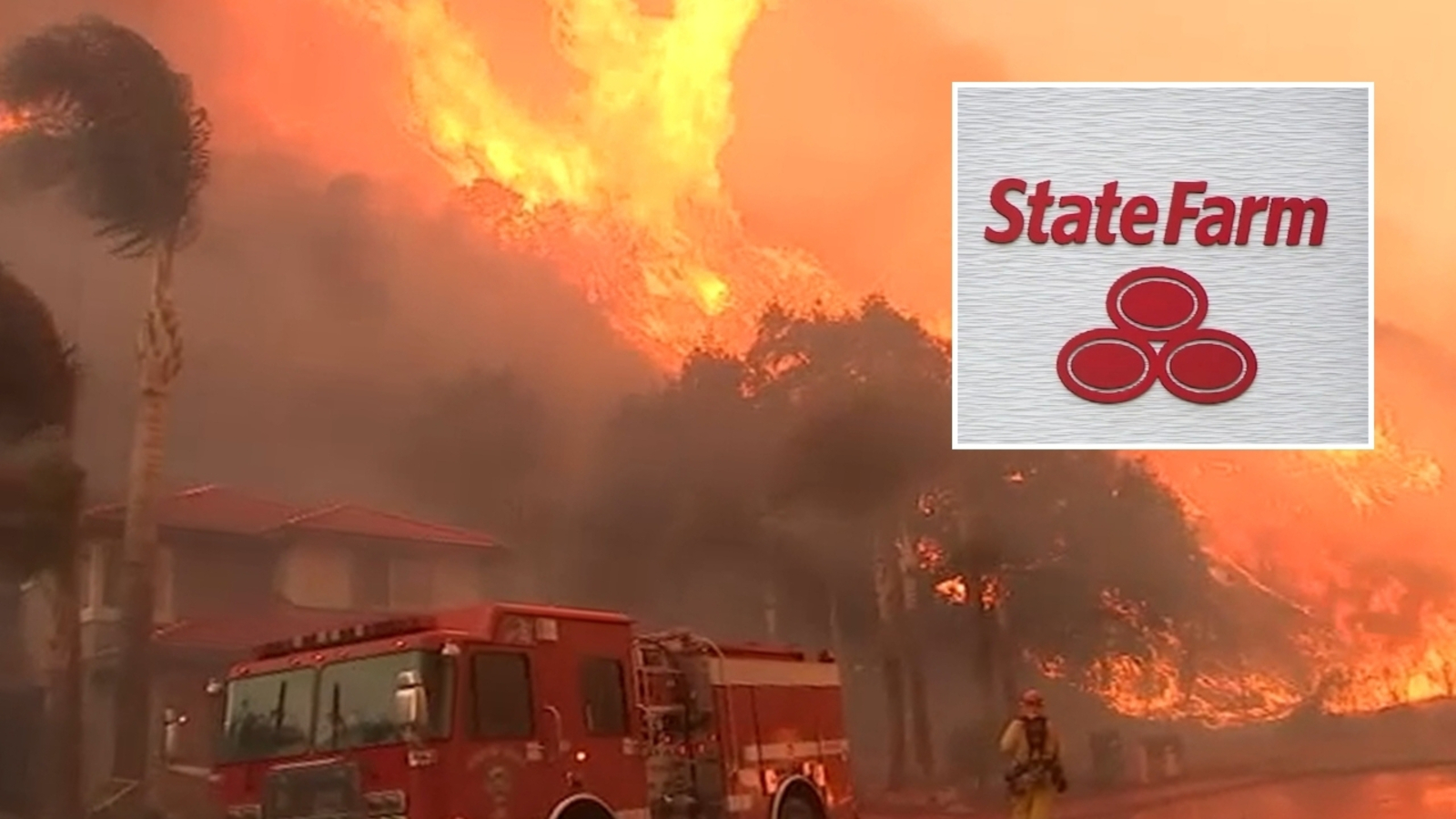
California is seeking penalties of up to about $4 million against State Farm after regulators found roughly 400 violations in a 220-claim sample tied to the 2025 Eaton and Palisades fires. The state says the insurer delayed investigations, underpaid claims, and mishandled smoke-damage testing, with thousands of policyholders potentially affected. Regulators could also suspend State Farm's license for up to a year, a significant threat to California's largest home insurer as the state battles an ongoing wildfire-related insurance crisis.
This is less about a one-off compliance headline and more about a policy re-pricing event for California personal lines. The immediate loser is any insurer with meaningful homeowners exposure in wildfire-prone ZIP codes: regulatory tolerance for rate increases goes up when enforcement actions demonstrate political willingness to punish poor claims handling, but so does capital uncertainty, which ultimately raises the cost of writing the business. That dynamic favors the firms with the cleanest claims ops and strongest reinsurance structures, while hurting smaller carriers that lack scale to absorb a prolonged scrutiny cycle. The second-order effect is that this accelerates the migration of risk from private carriers to the residual market and to consumer balance sheets. If private writers become more defensive, the FAIR Plan and surplus lines market likely pick up more exposure, but at materially worse economics and with less service quality, which can worsen the political feedback loop. That creates a subtle positive for select brokers and claims/admin vendors, but a negative for California housing affordability and transaction volume in high-risk areas as mortgage availability tightens. The real catalyst window is months, not days: the penalty itself is immaterial, but a temporary licensing suspension would be a regime shift because it would force State Farm to stop growing in its largest catastrophe-sensitive market. Even without suspension, the investigation raises the probability of more aggressive remediation, loss reserves, and dividend/repurchase caution at the parent level, which could pressure sentiment across the entire U.S. P&C complex. Contrarian view: the market may overestimate the likelihood of an actual suspension because regulators also need a functioning market, and a hard shutdown would be self-defeating in a state already short of capacity. The more likely outcome is negotiated compliance, incremental penalties, and continued rate relief, which would be mildly bearish for consumers but ultimately stabilizing for insurers that can document disciplined underwriting and claims controls.
AI-powered research, real-time alerts, and portfolio analytics for institutional investors.
Request DemoOverall Sentiment
strongly negative
Sentiment Score
-0.72
