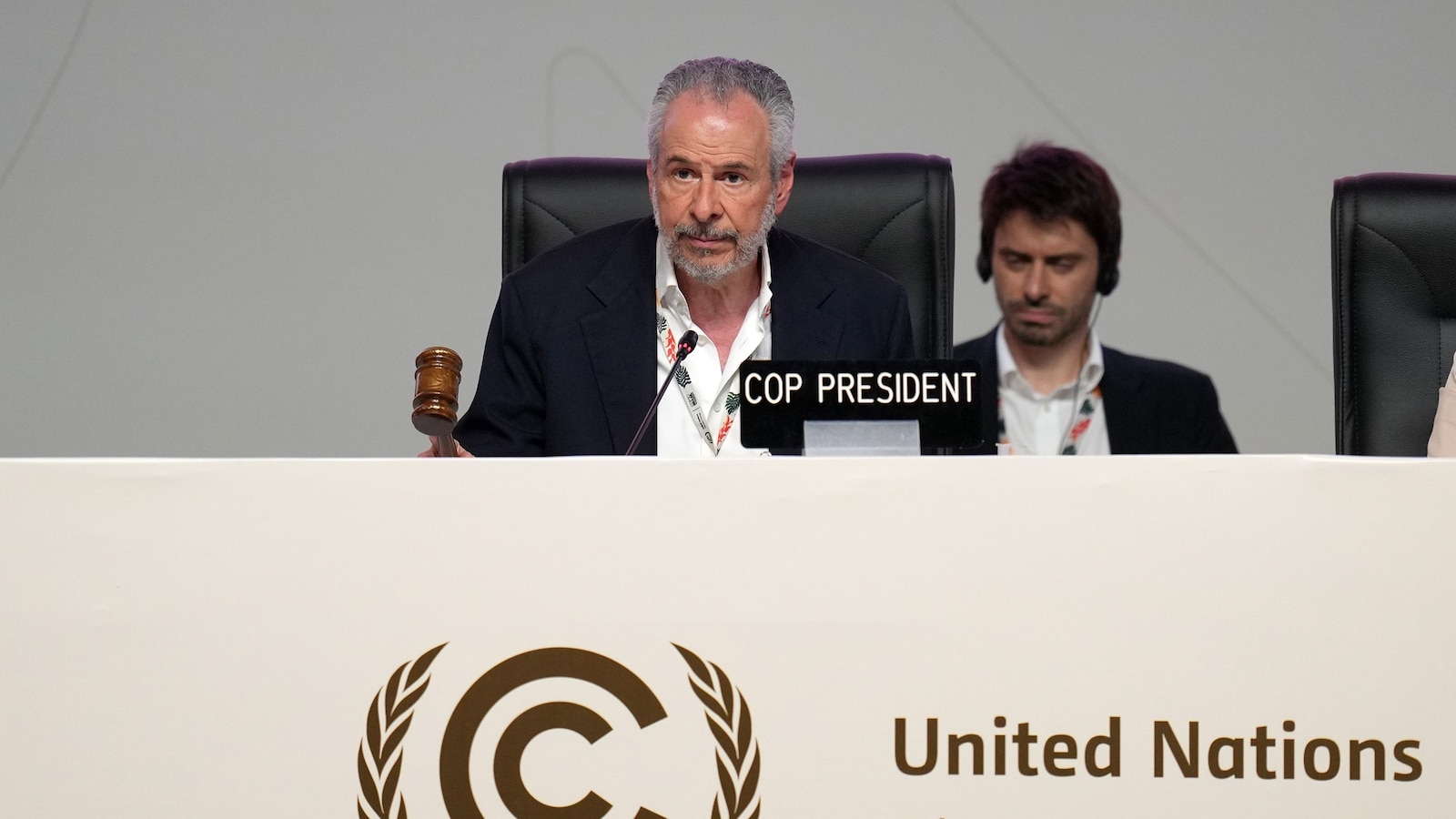
Delegates at COP30 in Belém agreed a final text after an extra day that secures some wins—an agreement to triple adaptation finance (with implementation details still unspecified) and creation of the Belém Action Mechanism for a just transition with stronger Indigenous, worker and biodiversity safeguards—but failed to deliver a negotiated global roadmap to phase out fossil fuels or major new Amazon-deforestation commitments. More than 80 countries had pushed for a fossil-fuel phaseout plan; COP30 President André Corrêa do Lago said he will produce non-binding roadmaps on deforestation and a just transition himself, but those lack unanimous backing and legal force. Observers including WRI, UCS and environmental NGOs said the outcome keeps the Paris framework alive but exposes wealthy nations' and petrostates' reluctance to provide the funded, equitable commitments needed, leaving timelines and financing for an energy transition unclear ahead of COP31 in Antalya.
Delegates at COP30 in Belém agreed a final text after an extra day, but the agreement omits a negotiated global roadmap to phase out fossil fuels and lacks significant new Amazon-deforestation commitments. More than 80 countries had pushed for a fossil-fuel phaseout roadmap that did not make the final text; COP30 President André Corrêa do Lago said he will produce non-binding roadmaps himself, which will not carry unanimous backing or legal force. The text does include language on tripling adaptation finance and establishes the Belém Action Mechanism (BAM) for a just transition with stronger Indigenous, worker and biodiversity safeguards, but specific implementation details and funding modalities were left unspecified.
Major environmental organizations reacted as a mixed outcome: WRI highlighted breakthroughs on adaptation finance, forest protection and elevated Indigenous voices while noting the weakened language on fossil-fuel transition; UCS called the result barely adequate; the Center for Biological Diversity praised BAM as a first-ever mechanism for just transition. The venue fire was invoked by critics as a metaphor for failure to secure funded, equitable fossil-fuel commitments, underscoring resistance from wealthy nations and petrostates to binding financial pledges. Given the supplied sentiment score (mildly negative, -0.3) and a modest market impact score (0.3), the announcement increases policy uncertainty rather than causing immediate market dislocation.
AI-powered research, real-time alerts, and portfolio analytics for institutional investors.
Request DemoOverall Sentiment
mildly negative
Sentiment Score
-0.30
The absence of a binding phaseout roadmap likely extends the policy transition timeline, favoring near-term fossil-fuel incumbents while keeping medium-term regulatory and reputational risks elevated. Conversely, the pledge to triple adaptation finance and the establishment of BAM create targeted funding and project opportunities in climate resilience and socially framed transition initiatives; investors should expect uneven, jurisdictional implementation and monitor progress ahead of COP31 in Antalya where Australia will lead negotiations.
