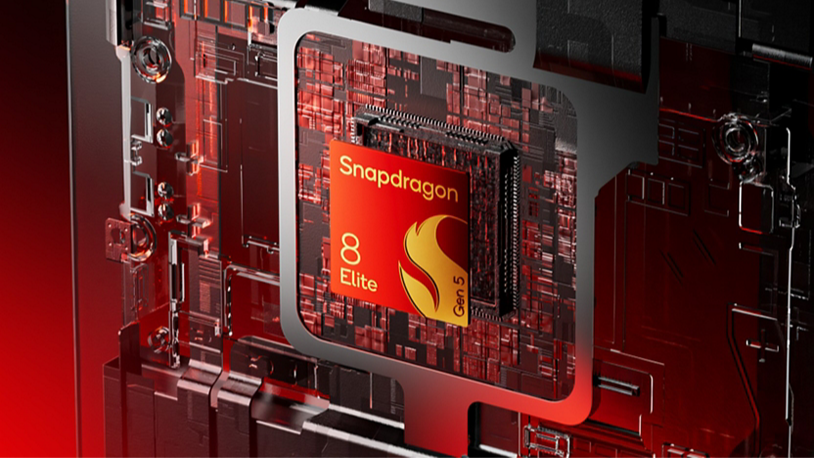
Leaked specs indicate Qualcomm's Snapdragon 8 Elite Gen 6 Pro (expected Sept 2026) may deliver under 20% CPU performance uplift but larger GPU improvements via an Adreno A850 with bigger cache and LPDDR6 support, and a 2+3+3 split core layout on a likely 2nm node. A standard Gen 6 SKU is expected with smaller gains. Rival MediaTek's Dimensity 9600 is also rumored on TSMC 2nm with a similar 2+3+3 layout and a new GPU (ray-tracing capable), suggesting competition will center on GPU/AI performance rather than big CPU jumps. Implication: limited CPU upside may cap broad performance-driven demand, while GPU/AI advances could drive differentiation in gaming and AI-focused devices; pricing is likely to be premium.
The market is re-pricing where incremental value will come from in flagship phones: not uniform core frequency gains but from bandwidth-, cache- and accelerator-driven features that translate into perceptible end-user improvements (gaming frame stability, on-device ML latency). For investors this implies revenue upside will skew toward firms selling the advanced process, memory, and IP that enable those features rather than the traditional CPU-IP vendor alone; if consensus already bakes ~15–20% product-level growth into Qualcomm for the next cycle, expect downside risk to that number with corresponding upside to long-lead foundry orders over the subsequent 12–24 months.
Second-order supply-chain effects matter: advanced-node capacity allocation and yield curves will determine near-term winners. A single foundry or a concentrated set of tools/memory suppliers capturing the early production tranche could see margin expansion that outpaces device OEMs — watch wafer bookings, substrate supply, and LPDDR6 uptake as leading indicators over the next 2–6 quarters.
Catalyst and risk framing: near-term catalysts that will re-rate names are (1) OEM design-win disclosure cadence through mid-2026, (2) foundry capacity/guide updates and yield commentary in quarterly calls, and (3) smartphone sell-through into holiday 2026. Tail risks that would reverse the trade are yield shortfalls at bleeding-edge nodes, unexpected Apple/Google architectural moves that reset competitive parity, or sudden end-market softness extending upgrade cycles. A contrarian angle: if market overweighs silicon specs, Qualcomm could defend revenue via modem/IP licensing and software stacks — keeping its downside capped, which favors pairs/smartly sized options rather than outright naked shorts.
AI-powered research, real-time alerts, and portfolio analytics for institutional investors.
Request DemoOverall Sentiment
neutral
Sentiment Score
0.05
Ticker Sentiment
