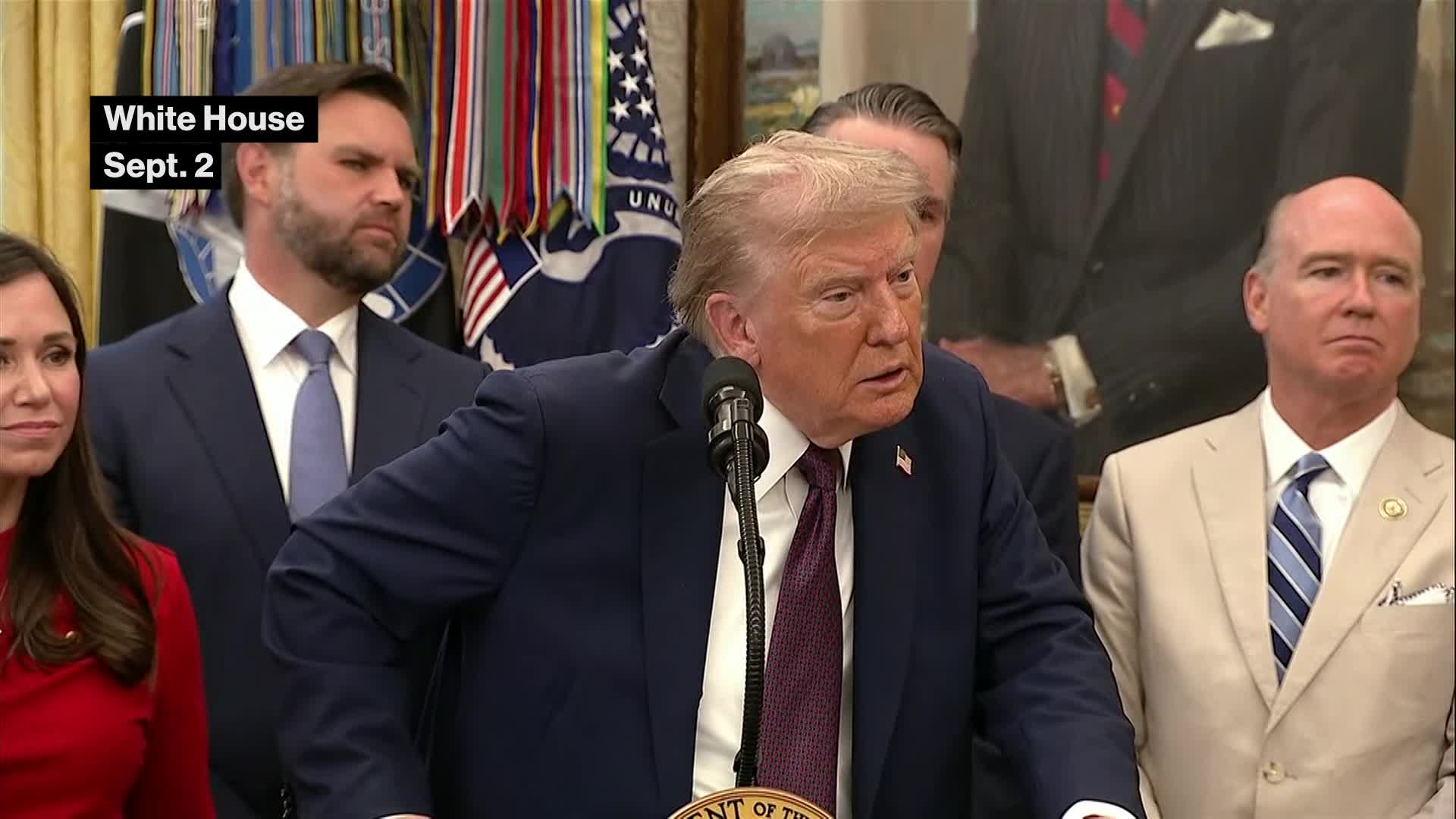
President Donald Trump confirmed the US is not considering lowering tariffs on India, maintaining the recently doubled 50% levies on Indian imports. This move, imposed as punishment for India's Russian oil imports, signals continued trade friction and the US's firm stance on geopolitical alignment, with Trump characterizing the prior relationship as 'one-sided'.
The United States has affirmed its hardline trade stance against India, with President Trump confirming there are no plans to lower the recently doubled 50% tariffs on Indian imports. This punitive measure is explicitly linked to India's purchasing of Russian oil, embedding the trade dispute within a broader geopolitical context of US sanctions against Russia. The President's comment characterizing the historical US-India relationship as "one-sided" signals that this is not merely a short-term negotiating tactic but reflects a more fundamental, protectionist shift in policy. The sustained high tariff level creates significant headwinds and uncertainty for any US industries reliant on Indian goods, threatening supply chain stability and corporate margins. The strongly negative sentiment score of -0.7 and a notable market impact score of 0.65 underscore the market's perception of this as a material risk, escalating trade friction between two major economies.
AI-powered research, real-time alerts, and portfolio analytics for institutional investors.
Request DemoOverall Sentiment
strongly negative
Sentiment Score
-0.70
