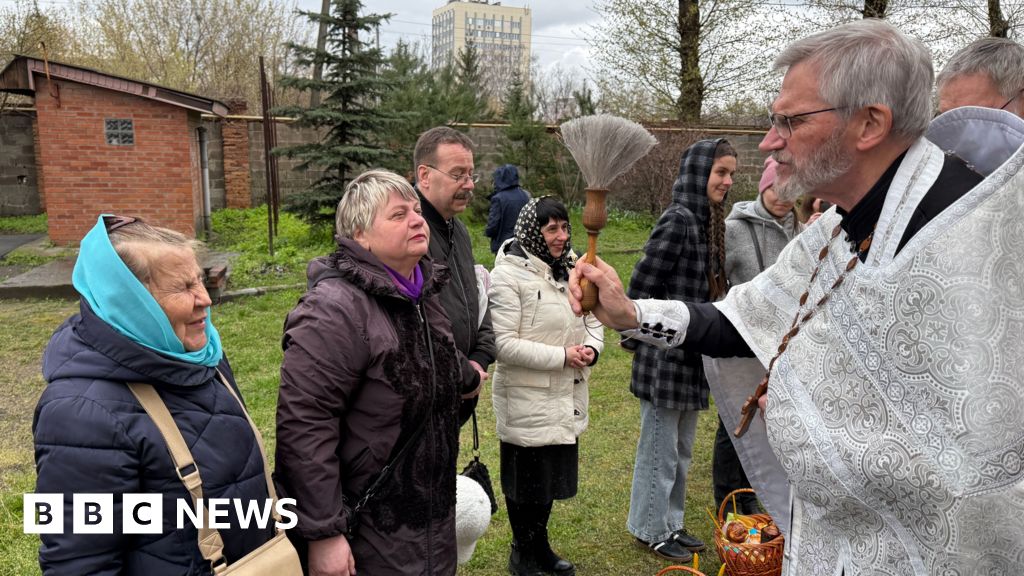
A 32-hour Orthodox Easter truce between Russia and Ukraine quickly frayed, with air raid sirens reported 38 minutes after it began and multiple ceasefire violations recorded along the frontline. Ukraine signaled willingness to extend the pause into a lasting ceasefire, but the Kremlin said attacks would resume in full on Monday. The article underscores continued war risk, heavy civilian casualties in Kharkiv, and stalled peace efforts amid broader geopolitical tensions.
The market-relevant signal is not the truce itself but the absence of credible de-escalation infrastructure. A ceasefire that fails within minutes reinforces a regime where front-line risk remains elevated while long-range strike risk can reappear abruptly after any political window closes. That keeps the conflict in the “high burn, low visibility” bucket: military consumption stays constant, reconstruction timelines stay deferred, and any asset prices linked to normalization in Eastern Europe should continue to discount a very long tail of volatility.
The more interesting second-order effect is on defense-industrial allocation. Ukraine’s drone capability is now not just a battlefield tool but an exportable wartime competency, and the article implies continuing foreign demand for Ukrainian know-how regardless of diplomatic noise. That supports a multi-year thesis for loitering munitions, counter-drone, EW, and battlefield networking vendors in the West, while civilian infrastructure in border regions will need persistent hardening spend rather than one-off rebuild orders. The commercial winners are the suppliers selling rapid-deploy protection and consumables, not large reconstruction primes waiting for a postwar peace dividend.
The contrarian read is that the worst macro damage may already be priced into broad Europe-facing risk assets, but not into specific underappreciated beneficiaries of prolonged conflict. If negotiations remain stalled for months, the overhang shifts from “will there be peace?” to “who can fight economically longest?” — a question that favors states and companies with cheap drone production, air defense depth, and resilient logistics. The biggest tail risk is a sharp escalation after a symbolic truce collapse, which would reprice energy, Eastern European transport, and defense supply chains in days rather than weeks.
AI-powered research, real-time alerts, and portfolio analytics for institutional investors.
Request DemoOverall Sentiment
strongly negative
Sentiment Score
-0.68
