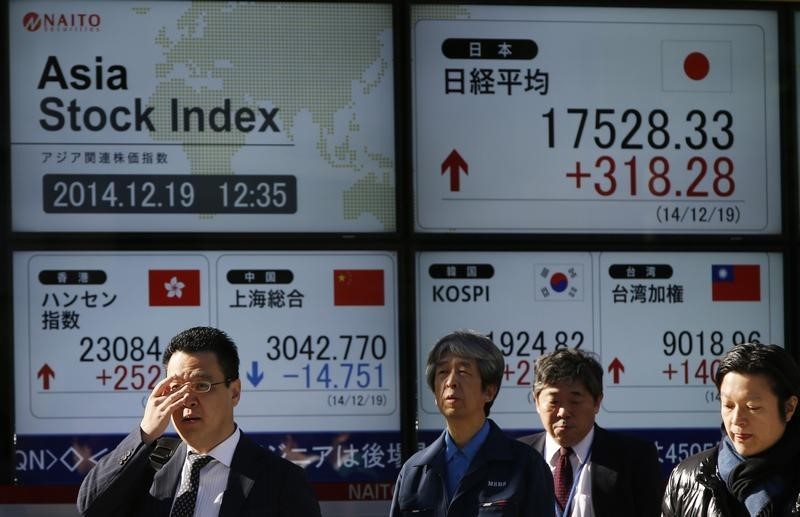
Report that U.S., Iran and regional mediators are discussing a potential 45-day ceasefire lifted Asian equities (Nikkei +1.4%, TOPIX +0.7%, KOSPI +1.1%, STI +0.3%) while India's Nifty slipped 0.4%; U.S. futures trimmed earlier losses. President Trump set a Tuesday 8 p.m. ET deadline for Iran to reopen the Strait of Hormuz or face attacks on infrastructure, keeping geopolitical risk elevated and pushing oil prices higher. Portfolio implication: monitor oil and shipping-risk exposures and near-term headlines — energy-import costs for Asian markets could rise if crude stays elevated and the situation deteriorates within the next 48 hours.
The market is now pricing a concentrated event window (days-to-weeks) layered on a multi-month structural energy risk; that compresses front-month option premia while leaving term premia elevated. Practically, expect front-month oil implied vol to fall by a material amount (order of tens of percent) if mediators signal progress in the next 48–72 hours, but the 30–90 day strip will still command a premium reflecting re‑opening risk and route-disruption asymmetry.
Second-order winners will be firms that capture higher energy margins or insurance/replacement-income from route disruption — think refiners, certain tanker owners, and reinsurers — while consistent energy importers and margin-sensitive services (airlines, container shipping) will see cash-flow stress if prices stay elevated. A temporary ceasefire would still leave frictions: higher insurance floors and re‑rated logistics networks mean freight and insurance spreads can remain 20–50% above pre-crisis levels for months even if tanker transits resume.
Tail risk is asymmetric and short‑dated: a failed diplomatic window tied to a hard deadline can produce 5–15% intraday crude jumps and rapid sector rotations within 24–72 hours. Reversals will be driven more by durable logistics normalization (insurance/freight spreads declining, not just lower crude) — that’s a multi‑month process. Consensus underweights the persistence of elevated non-crude costs (insurance, rerouting, refinery/backlog inefficiencies) which can keep headline inflation for importers higher even if headline crude eases quickly.
AI-powered research, real-time alerts, and portfolio analytics for institutional investors.
Overall Sentiment
mixed
Sentiment Score
-0.05
