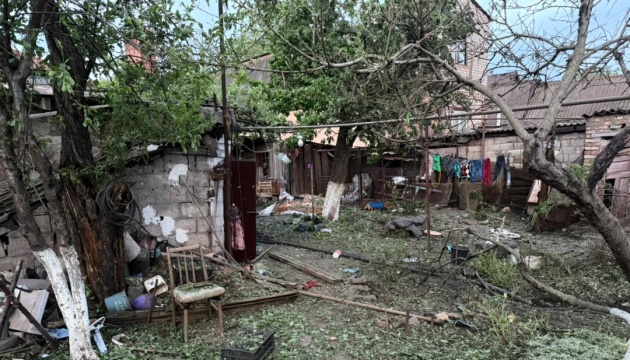
A Russian drone strike on a residential building in Kryvyi Rih killed two older people and critically injured their 9-month-old granddaughter. Zelensky said the attack underscores continued Russian shelling of Ukrainian cities and the need for stronger international pressure and air defense support. The event reinforces geopolitical risk and could influence defense-related sentiment, though it is not a direct market catalyst.
The immediate market read-through is not about a single strike; it is about the persistence of low-cost asymmetric escalation that keeps the conflict in a “high-volatility, low-resolution” regime. That matters because it raises the expected spend on air defense interceptors, point-defense systems, EW, and repair logistics faster than it changes the front line, which tends to favor suppliers with replenishment pipelines and high-margin software/command layers over pure hardware primes.
Second-order effects are more interesting than the headline itself. Sustained attacks on civilian infrastructure increase the probability of accelerated Western aid packages, but also the risk of intermittent political fatigue if defenders cannot visibly reduce penetration rates; that creates a lumpy procurement cadence rather than a smooth one. In Europe, the more this becomes a durable pattern, the more governments are forced to re-rate domestic stockpiles, harden critical infrastructure, and pull forward spend that was originally budgeted for 2026-27.
The key contrarian point is that the market may already “know” defense spending should rise, but may underappreciate how much of the marginal dollar shifts from platform purchases to interceptors, sensors, and battle-management software. That favors names with recurring revenue and capacity to scale production quickly, while the biggest loser is anything dependent on a near-term détente or a rapid capex normalization in Europe. Tail risk is a sharper escalation that broadens the conflict and widens the beneficiary set into cyber, satellite, and logistics, but the base case remains a multi-quarter uplift in air-defense and resilient infrastructure spend.
AI-powered research, real-time alerts, and portfolio analytics for institutional investors.
Request DemoOverall Sentiment
strongly negative
Sentiment Score
-0.85
