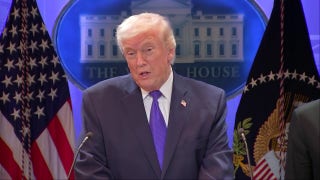
The Supreme Court ruled 6-3 that the President lacks authority under the International Emergency Economic Powers Act (IEEPA) to impose sweeping tariffs, a major legal check on executive trade powers. In response President Trump announced he will pursue alternatives, including a new 10% “global tariff” order under section 122 on top of existing tariffs and additional section 301 investigations; he claimed tariffs have generated “hundreds of billions” in revenue. The decision reduces one pathway for unilateral tariff action but the administration’s announced measures and ensuing legal and congressional battles increase near-term policy uncertainty for trade-exposed sectors and markets.
Market structure: A 10% “global tariff” plus continued Section 301 probes is an immediate ~10% ex-cost shock to import-heavy P&Ls; direct beneficiaries are domestic basic-materials (steel: CLF, X) and some utilities/energy via higher commodity prices, while import-reliant consumer/tech (AAPL, WMT, TGT) and low-margin retailers face 50–200bp gross margin pressure if costs cannot be passed through. Pricing power shifts toward domestic producers and freight carriers in the near term; expect steel/aluminum spot spreads to widen by 5–15% in 1–3 months if tariffs stick. Bond markets will price modestly higher inflation risk (higher breakevens) and equities will see sector dispersion, raising single-name implied vols by 20–50% in affected names.
Risk assessment: Tail risks include broad retaliatory tariffs (low-probability but high-impact: global GDP shock >1% and EM funding stress), expedited reshoring that raises capex but only after 12–36 months, or a legal/political reversal that nullifies tariffs within 30–90 days. Immediate (days) risk is volatility spikes and FX moves; short-term (weeks–months) is earnings-miss risk for importers; long-term (quarters–years) is structural supply-chain reallocation. Hidden dependencies: inventory timing (Q1 build could blunt near-term pain), sector-specific pass-through elasticity, and Fed policy reaction to stickier CPI.
Trade implications: Tactical longs: materials (CLF, X) and select industrials (CAT) for 3–12 months; tactical shorts: import-heavy consumer tech/retail (AAPL, TGT, XRT ETF) via defined-risk put spreads for 1–3 months. Hedge portfolio inflation by adding TIPs (TIP or SCHP) 2–4% and underweight long-duration Treasuries by ~25% of fixed-income sleeve. Options: buy 3-month 5–10% OTM puts on AAPL or XRT (cost-budget ~1–2% portfolio risk) and buy 6–12 month calls on CLF (or call spreads) to leverage upside while capping premium.
Contrarian angles: Consensus assumes persistent hurt to all trade-exposed firms; that underestimates near-term tariff revenue funding and political incentives to keep tariffs (which could prop fiscal impulse and risk assets). Historical parallel: 2002 US steel tariffs aided domestic producers briefly but invited retaliation and higher input costs—expect similar 6–12 month bounce then squeeze. Mispricings include small/mid-cap domestic manufacturers that are oversold; unintended consequence: higher domestic capex over 12–36 months benefiting industrial suppliers (fastener, machinery names) — look for companies with >50% US revenue and sub-12 month payback on reshoring capex.
AI-powered research, real-time alerts, and portfolio analytics for institutional investors.
Request DemoOverall Sentiment
moderately negative
Sentiment Score
-0.25
