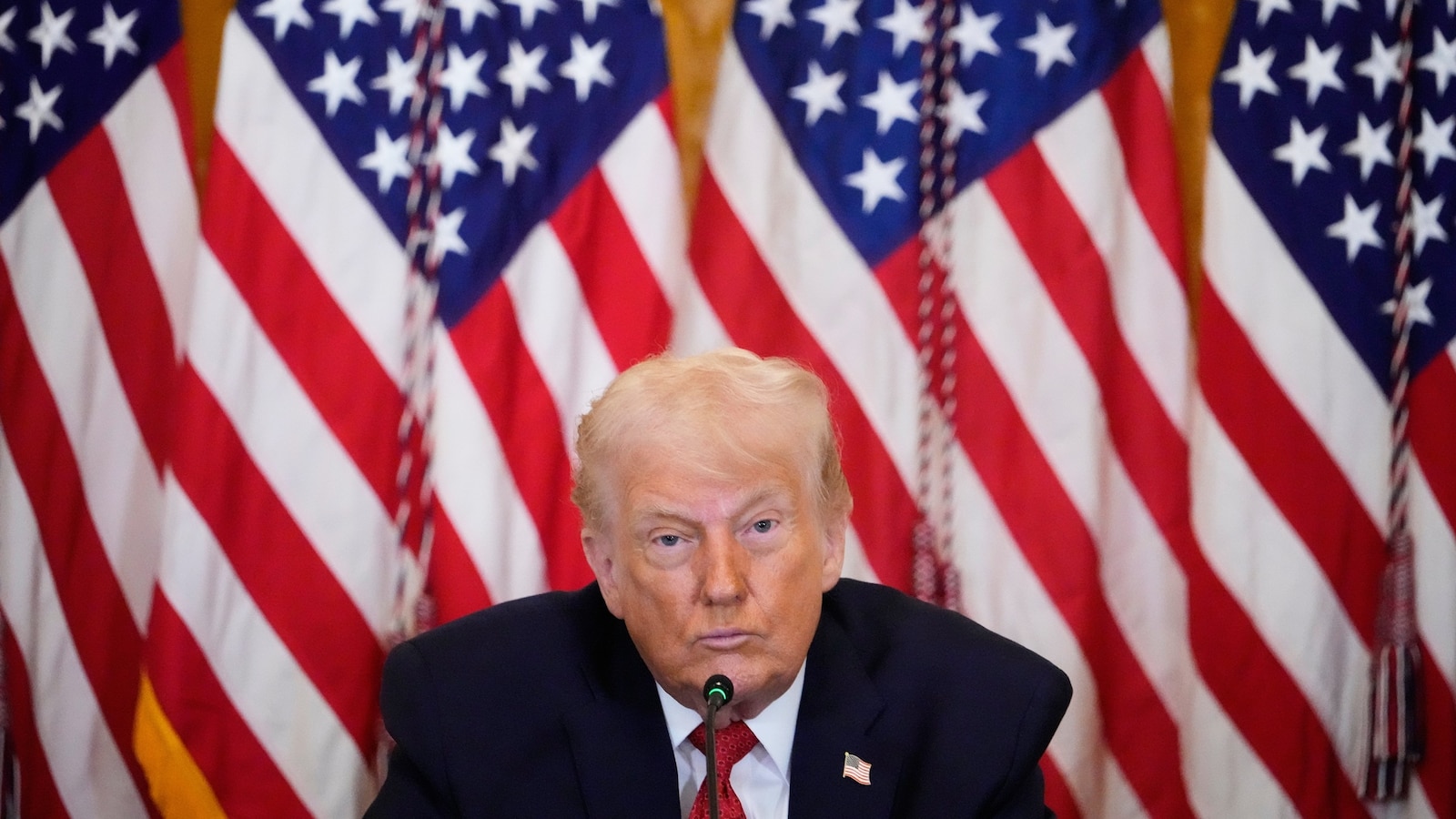
President Trump said he may impose tariffs on countries that do not back U.S. efforts to acquire Greenland, citing national security, a move that risks clashing with recent trade agreements with European allies. European leaders and NATO partners, including France, have publicly pushed back — France announced troops for exercises in Greenland — while a bipartisan congressional delegation met Danish lawmakers to reassure allies and oppose any U.S. acquisition. The rhetoric raises geopolitical and trade-policy uncertainty that could strain U.S.-Europe relations and defense cooperation, though it currently appears more political than an immediate market-moving policy shift.
Market structure: The immediate market winners are defense contractors and safe-haven assets—expect a 3–7% relative bid for prime defense names (LMT, NOC, RTX) in a 1–4 week risk-off flare and a 1–3% lift in gold/GLD. Losers are politically exposed European exporters and integrated supply-chain manufacturers (autos, luxury goods) if tariff threats broaden; expect pressure on EU export-growth sensitive ETFs (VGK) over 1–3 months. Pricing power shifts marginally to domestic defense and logistics providers; global supply/demand for specific commodities (uranium, rare earths) could reprice over quarters if access to Greenland becomes strategic.
Risk assessment: Tail risks include a formal tariff regime announced within 30–90 days or reciprocal EU tariffs (+5–15% hit to transatlantic trade flows) which would widen EM and European equity spreads by 50–150bps. Immediate (days) risks are sentiment-driven; short-term (weeks–months) risks include trade-policy contagion; long-term (years) risks include sustained NATO friction altering procurement cycles and investment in Arctic minerals. Hidden dependencies: multinational supply chains, WTO dispute outcomes, and Congressional pushback—watch votes and NATO communiqués as binary catalysts.
Trade implications: Tactical trades: 1–2% long in LMT/NOC via 3–6 month call spreads (buy 5–10% OTM / sell 15–25% OTM) to capture defence upside while limiting premium; 1–2% long GLD via calls for geopolitical hedging. Relative trade: long US defense (LMT) vs short Europe ETF (VGK) 1–2% net exposure for 3 months. Use protective puts on European exporters (3-month VGK puts) if tariff language hardens.
Contrarian angle: Consensus overstates immediate economic damage—actual tariff implementation faces legal/legislative hurdles; the risk-reward favors buying volatility cheaply in defense and materials (MP, URNM) on a 3–12 month view. Historical parallels (localized geopolitical spats) show short-lived equity dislocations but multi-year reallocation to defense/minerals; unintended consequence: stronger USD and capital flows into US cyclical defense and critical-minerals miners, creating a multi-quarter alpha opportunity.
AI-powered research, real-time alerts, and portfolio analytics for institutional investors.
Request DemoOverall Sentiment
mildly negative
Sentiment Score
-0.25
