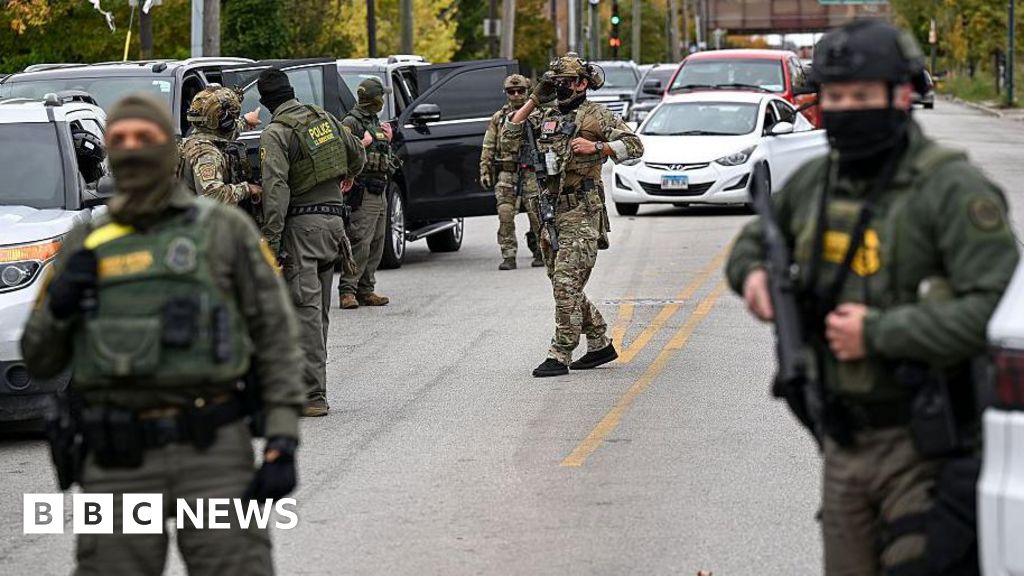
The US Supreme Court, in a 6-3 unsigned order, denied the Trump administration's request to federalize National Guard troops in the Chicago area and left a lower-court injunction blocking the deployment in place, saying federalization likely applies only in "exceptional" circumstances. Justices Thomas, Alito and Gorsuch dissented; the ruling constrains a tactic the administration has used in multiple Democratic-led cities to respond to protests and immigration enforcement actions. The decision reduces near-term executive-authority risk in those jurisdictions and is unlikely to have material direct market implications.
Market structure: The ruling is a legal constraint on federal domestic deployments, favoring state/local authorities and civil-rights plaintiffs while removing a potential revenue/opportunity channel for ad hoc federal security contracting. Expect negligible GDP impact but localized demand shocks — private security and municipal services could see +5-15% uptick in procurement in Chicago-area budgets over 3–12 months as cities reallocate funds; large defense primes see only single-digit percentage revenue exposure at risk.
Risk assessment: Tail risks include escalation if the administration pursues alternative federal tools (DHS/FBI surge operations) or Congress seeks statutory change; those would materialize in 1–6 months and could reverse market moves. Immediate (days) impact is political headline risk; short-term (weeks–months) could affect urban retail/office foot traffic and muni credit flows; long-term (quarters) precedent tightens executive flexibility, increasing legal-costs for federal enforcement programs.
Trade implications: Favor municipal-credit exposure to blue states that retain autonomy (potentially tighter spreads 5–20 bps vs peers in 3–6 months) while trimming cyclical downtown-focused REITs vulnerable to protest-driven demand loss. Hedge politically sensitive equity beta with low-cost VIX calls or 3-month S&P puts as a 1–3% portfolio insurance (trigger S&P drop >3%). Small relative shorts in firms whose near-term revenues rely on ad hoc federal domestic deployments (select federal-security contractors) are warranted but sized conservatively (<=1–2%).
Contrarian angle: Consensus will treat this as a minor legal story; the market may underprice the precedent’s medium-term effect on federal contracting and municipal credit spreads. If administrations pivot to non-military federal tools, beneficiaries will be tech/analytics contractors (BAH, CACI, LDOS) — a reversal risk within 30–90 days. Watch DOJ contract awards and FY budget language as catalysts that could flip these trades quickly.
AI-powered research, real-time alerts, and portfolio analytics for institutional investors.
Request DemoOverall Sentiment
neutral
Sentiment Score
0.00
