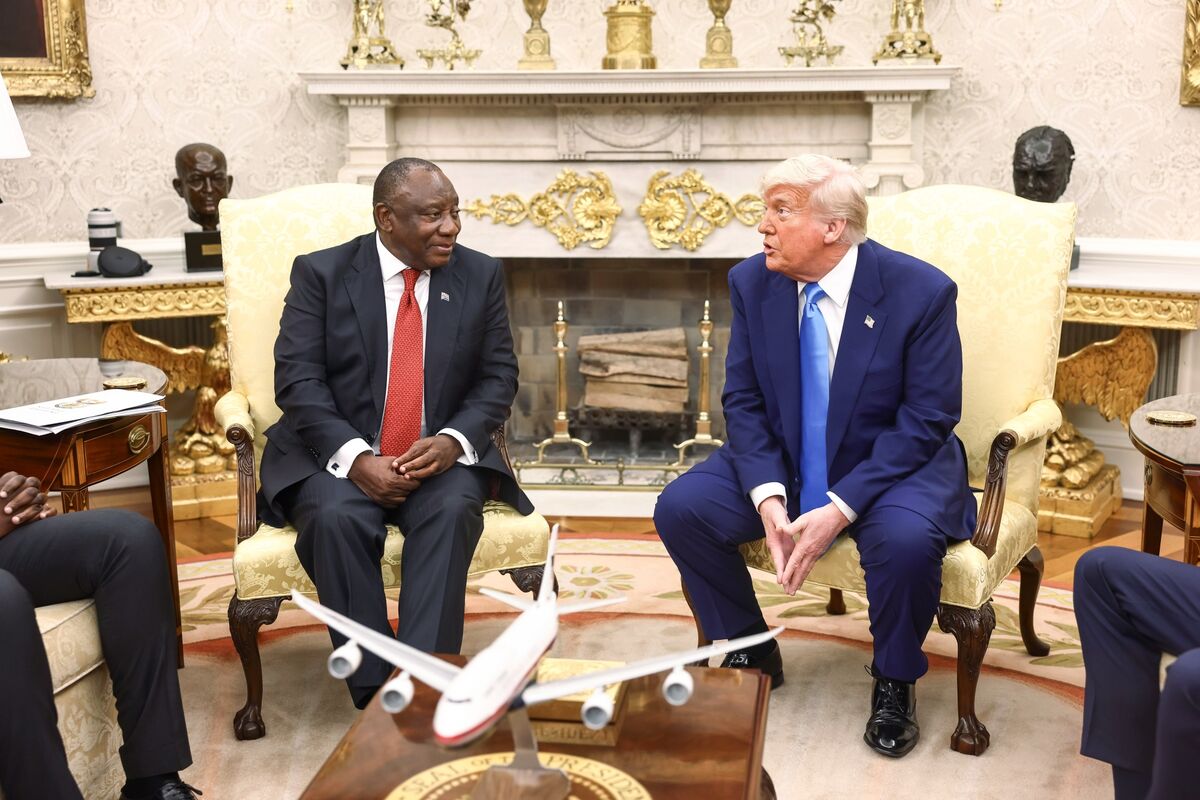
South African President Cyril Ramaphosa's White House visit, intended to foster trade relations and dispel claims of a "genocide" against White South Africans, was unsuccessful in dissuading President Trump from his position. Ramaphosa brought White South African representatives, including golfers and the agriculture minister, to demonstrate the falsity of the genocide claims, but the meeting did not achieve its intended goal of altering Trump's views.
South African President Cyril Ramaphosa's White House meeting with then-US President Donald Trump, intended to counter a conspiracy theory about alleged genocide against White individuals in South Africa and to promote bilateral trade, failed to achieve its objectives. Ramaphosa's delegation, which included White South African professional golfers and the country's agriculture minister, was unable to persuade President Trump, with the encounter reportedly culminating in an "ambush" rather than constructive dialogue. This diplomatic setback highlights the potential for significant friction in US-South Africa relations and underscores the difficulties in advancing trade agendas when confronted with entrenched, politically sensitive narratives at the highest governmental levels. While the associated signals indicate a neutral overall sentiment and a low immediate market impact score of 0.1, the incident points to underlying geopolitical tensions and challenges in trade policy engagement, reflecting the themes of Geopolitics, Domestic Politics, and Trade Policy.
AI-powered research, real-time alerts, and portfolio analytics for institutional investors.
Request DemoOverall Sentiment
Neutral
Sentiment Score
-0.10
