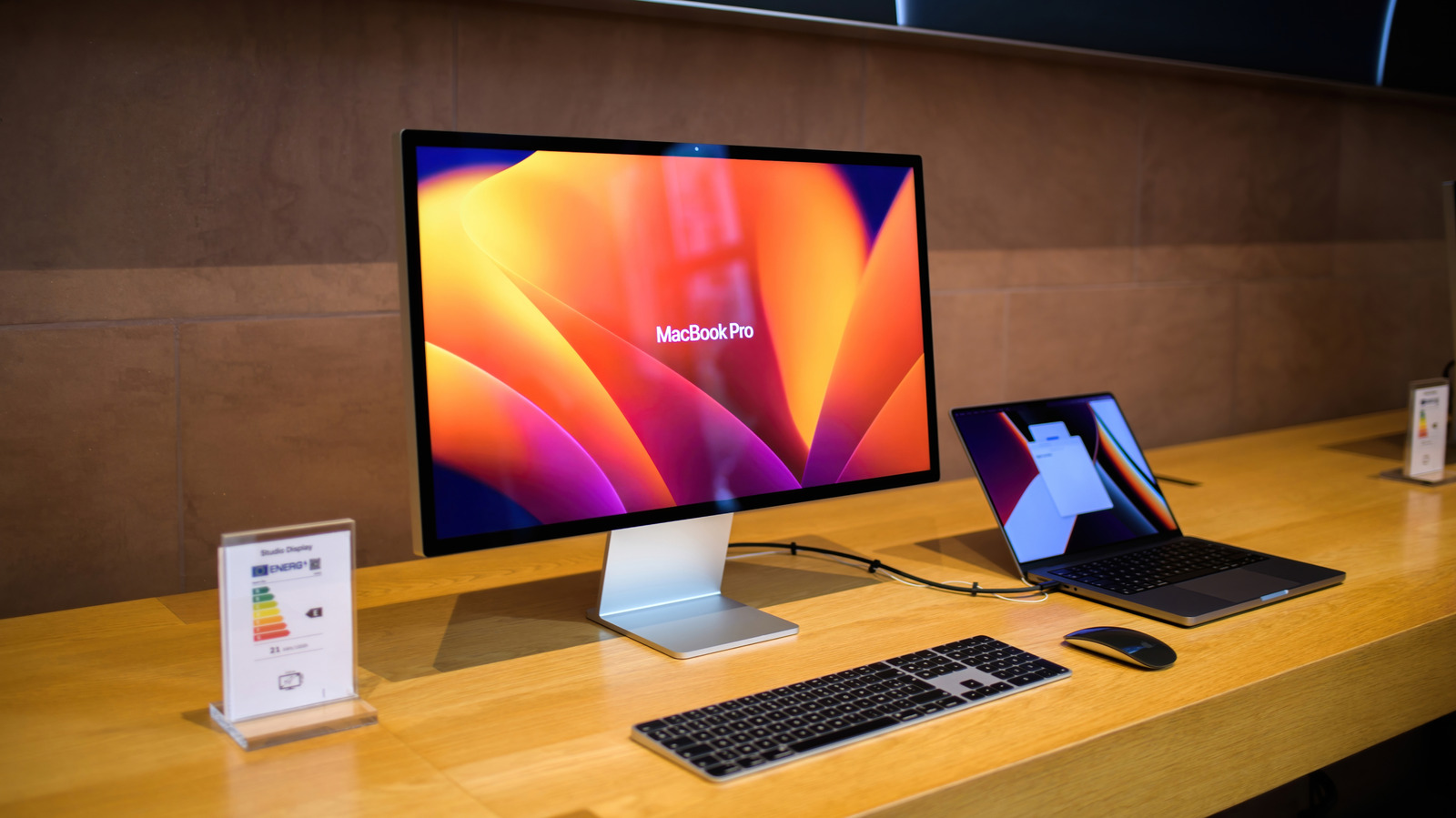
M5 Max-enabled MacBook Pro can drive up to four external displays over a single Thunderbolt cable (M5 Pro up to three), while Apple claims the M5 chips deliver up to 30% faster CPU and 50% faster graphics versus the prior generation. The M5 Max supports four displays at up to 6K@60Hz or 4K@144Hz but is limited to two displays at 8K@60Hz or 5K@120Hz. Native multi-monitor support removes many DisplayLink/workaround needs, simplifying setups—dock port counts and monitor daisy-chaining remain the main practical constraints.
This product update materially reduces a longstanding friction point for high-ARPU professional buyers, which is likely to increase purchase intent and shorten upgrade cycles among creative and engineering users. Expect a measurable lift to MacBook ASPs and services attach over the next 3-12 months as professionals trade up to a more consolidated single-machine workflow (fewer docks, fewer secondary PCs), shifting spend away from Intel-powered Windows workstations at the high end. Accessory vendors face a bifurcation: those that reconfigure docks to expose more native TB4/USB-C endpoints can capture incremental sales, while vendors dependent on software workarounds (DisplayLink-style) should see demand erosion, creating inventory and pricing pressure in 2-6 quarters. For Intel, the second-order hit is not from raw CPU performance but from OEM wallet-share and platform stickiness—losses in the premium notebook category compress ASPs and slow platform transition timing, weighing on premium-margin laptop volumes over the next 4-12 quarters.
Key catalysts to watch: sell-through velocity in the first 8-12 weeks post-launch, channel inventory changes reported in quarterly comments, and accessory OEM order patterns (higher ports per dock orders vs software-dock replenishment). Reversals could occur if Apple faces supply constraints, if enterprise procurement resists switching due to management/tooling costs, or if Intel announces a competitive platform-level solution (discrete GPU + TB4 integration) within 6-12 months that restores OEM incentives. Macro winter risks—enterprise IT freezes or capex reduction—would blunt the upgrade cycle and compress the thesis into 2-4 quarters of muted demand rather than a durable share shift.
Trade framing: the core asymmetric opportunity is long platform exposure (AAPL) vs short platform-disintermediated incumbents (INTC) while monitoring product sell-through and accessory reorder trends. Near-term, structures (call spreads / put spreads) limit option premium bleed if the market initially overprices enthusiasm; medium-term, a dollar-neutral pair trade captures platform rotation while hedging broader market moves. Set explicit alerts for Apple channel inventory commentary and Intel OEM order guidance—those two datapoints will be the fastest read on whether this is a transient upgrade bump or a structural shift.
AI-powered research, real-time alerts, and portfolio analytics for institutional investors.
Request DemoOverall Sentiment
mildly positive
Sentiment Score
0.25
Ticker Sentiment
