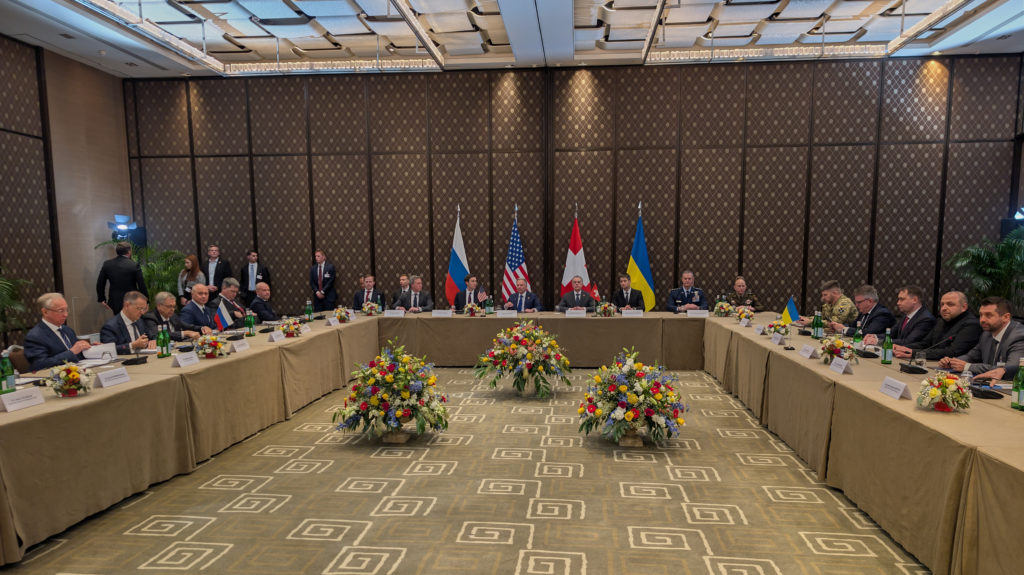
U.S.-brokered peace talks in Geneva convened Russian and Ukrainian delegations alongside U.S. envoys (including Steve Witkoff and Jared Kushner) and military chiefs to discuss security, humanitarian issues and ceasefire monitoring, but participants signaled low expectations for major concessions ahead of a U.S. June settlement deadline. The talks coincided with heavy fighting — Russia reportedly struck 12 Ukrainian regions with nearly 400 long-range drones and 29 missiles, causing power and heating outages, while Ukraine struck Russian energy and chemical facilities (Tamanneftegaz and Metafrax) — developments that prolong regional instability and present ongoing downside risk to energy supply and defense-related assets.
Market structure: The Geneva talks increase probability of a prolonged, attritional conflict rather than an immediate ceasefire — winners are U.S. defense primes (LMT, RTX, NOC) and incremental-LNG exporters (Qatar, U.S. LNG shippers) who gain pricing power if European/Russian flows stay disrupted; losers are European utilities and commodity processors exposed to Russian feedstocks. Energy and commodity tightness signals upside pressure on Brent/TTF in the near-term (+5–20% shock scenario) while safe-haven flows boost USD and shorten German bund durations episodically.
Risk assessment: Tail risks include (A) talks collapse → sharp escalation with NATO-adjacent supply commitments, (B) targeted strikes on oil/gas chokepoints → >500kbpd shortfalls, (C) secondary sanctions or cyber backlashes that freeze payment rails; probability low-medium but impact high. Time horizons: immediate (days) = volatility spikes and FX moves; short-term (weeks–months) = commodity price shocks, earnings revisions for energy/defense; long-term (quarters–years) = restructured European energy sourcing and sustained defense budgets.
Trade implications: Tactical plays should overweight defense equities (6–12 month horizon) and conditional energy exposure sized to oil thresholds; hedge geo-vol with 2–3 month VIX/VXX call spreads. Cross-asset: buy USD (UUP) vs EUR on failed talks; buy UNG or Brent futures exposure if Brent > $80 and trim if Brent < $70; protect downside in defense names with short-dated puts if a ceasefire materializes by June.
Contrarian angles: Consensus prices in continued stalemate — what’s underpriced is the asymmetric reaction risk if a credible ceasefire appears before the U.S. June deadline: defense and energy can gap down 15–30% within days. Historical parallel: 2022 showed fast spikes then mean-reversion; therefore favor defined-risk option structures and threshold-based scaling rather than uninsured large longs to avoid being caught by a rapid peace-driven drawdown.
AI-powered research, real-time alerts, and portfolio analytics for institutional investors.
Request DemoOverall Sentiment
moderately negative
Sentiment Score
-0.45
