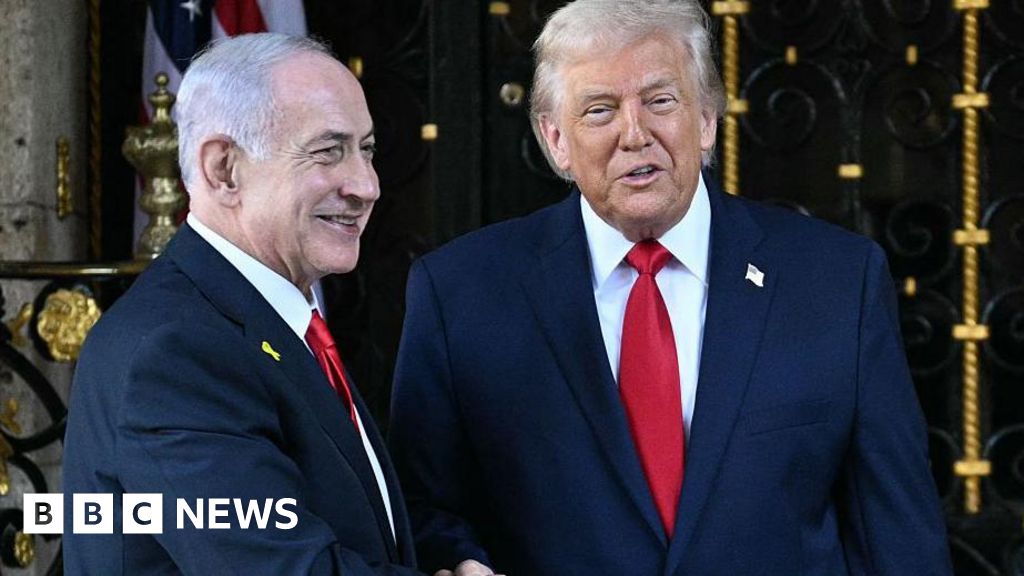
Prime Minister Benjamin Netanyahu will meet President Trump as US-Iran nuclear negotiations reach a critical stage, with Netanyahu pressing for limits on uranium enrichment, ballistic missiles and Iranian support for proxies such as Hamas and Hezbollah while Iran refuses limits absent sanctions relief. The White House has increased its military posture in the region (USS Abraham Lincoln deployed and Trump considering a second carrier strike group), and both Israel and the US reserve the right to military action—heightening near-term geopolitical risk that could lift regional risk premia and affect energy and defense-related assets ahead of an election year.
Market structure: Elevated US–Israel diplomatic activity and renewed Iran brinkmanship structurally favors defense and energy capex: prime beneficiaries include Lockheed Martin (LMT), Raytheon/RTX (RTX), Northrop Grumman (NOC) and large integrated oil majors (XOM, CVX) if oil supply risk rises. Direct losers are airlines (AAL, UAL), travel/leisure and EM sovereign credit; expect at least a 5–15% bid for defense names on sustained tensions and 10–25% downside risk to airline revenue per month of elevated Brent>=$100/bbl.
Risk assessment: Tail risks include a direct US–Iran kinetic conflict (low probability, high impact) that could push Brent >$120/bbl, spike VIX >40 and produce an acute S&P drawdown >15% in weeks. Time horizons: immediate (days) — volatility and FX moves; short-term (weeks–months) — oil, bond and credit spreads react; long-term (quarters–years) — higher baseline defense budgets and sanctions-driven energy realignments. Hidden deps: US election incentives, Israeli domestic politics, and Gaza ceasefire fragility; catalysts include carrier deployments, sanctions announcements, and publicized missile incidents.
Trade implications: Implement overweight to Aerospace & Defense (2–4% position sizes per name) and energy majors (1–3%), offset by tactical shorts in US airlines (AAL, UAL) and select EM sovereign bonds. Use options to control risk: buy 3–6 month 25–delta calls on LMT/RTX and a Brent 3-month $15 call spread to capture oil upside; buy VIX 1-month calls as a 0.5–1% portfolio hedge. Enter now; scale up if Brent >$95 or VIX >25; cut positions if a verified diplomatic de-escalation occurs within 30 days.
Contrarian angles: Markets often overprice immediate war risk and underprice multi-year defense re-rating — a limited diplomatic deal would create sharp mean reversion in oil and airlines (20–30% bounce). Conversely, a protracted sanctions regime could permanently re-route energy flows benefiting niche energy service names (SLB, HAL) and cyber-defense vendors. Consider buying high-quality defense on any >10% pullback and selective EM credit long-only trades if spreads widen >150bp versus USTs.
AI-powered research, real-time alerts, and portfolio analytics for institutional investors.
Request DemoOverall Sentiment
moderately negative
Sentiment Score
-0.35
