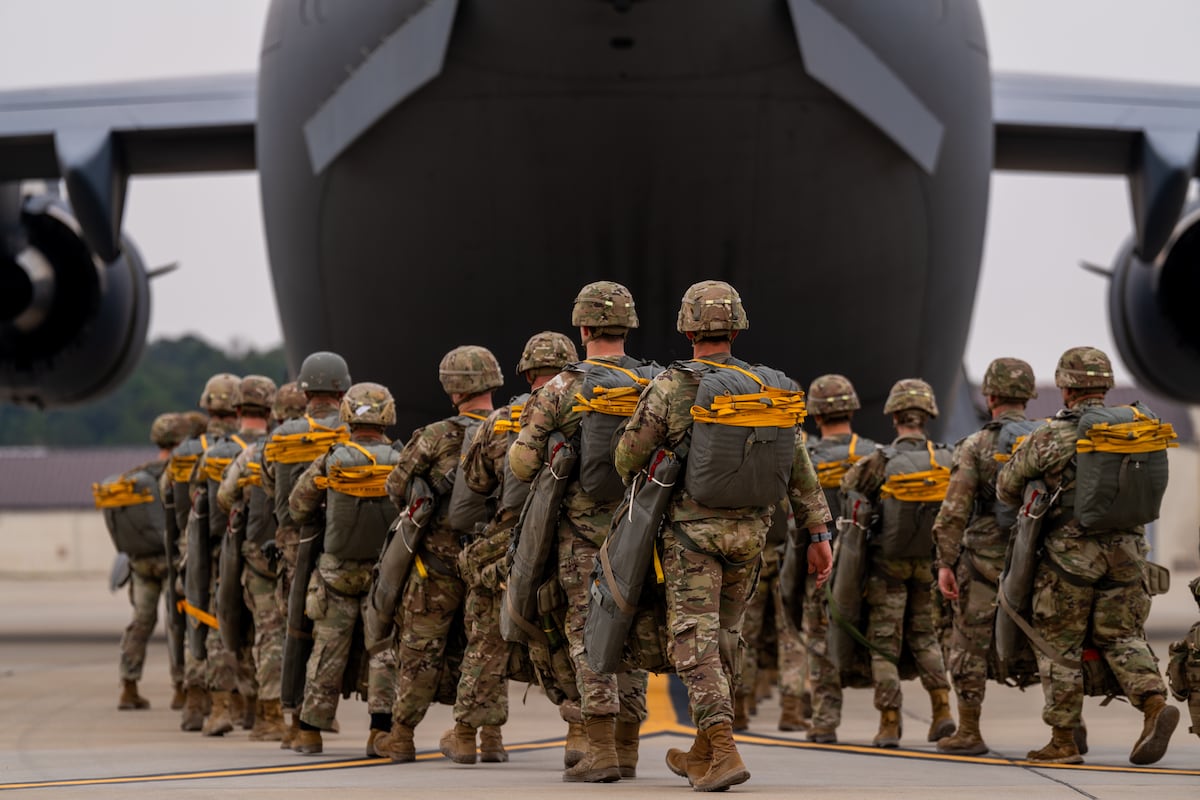
Elements of the 82nd Airborne Division headquarters, division enablers and the 1st Brigade Combat Team are deploying to the CENTCOM AOR, the Pentagon confirmed. The move follows prior reinforcements including the USS Boxer and thousands of Marines and sailors and comes amid escalating tensions with Iran; The New York Times reported the deployment may involve thousands of Army troops. Size, duration and mission remain undisclosed; implications include higher regional tail risk and potential upside to defense-sector and energy risk premia.
A tactical uptick in US force posture in the Middle East should translate into a fast-moving procurement and logistics impulse that disproportionately benefits firms with ready-to-ship munitions, missile guidance components, and expeditionary sustainment capacity. Expect order flow to surface in book-to-bill and government contract announcements over 6–12 months, producing a mid-single-digit EPS tailwind for munitions-heavy divisions (versus minimal near-term revenue impact for long-cycle airframe programs).
Energy markets will likely price a risk-premium first and fundamentals second: a 1–6 week spike in freight/insurance concerns can add $2–6/bbl to Brent even without physical bottlenecks, compressing refinery margins while boosting upstream realizations. US shale can respond within 2–4 quarters, capping a sustained price rise, so the window for energy carry trades is short and volatility-driven.
Secondary effects include higher marine and political-risk insurance rates, elevated freight indices, and transient USD strength as a safe-haven—these flow through to narrower credit spreads for US defense contractors (better liquidity) but wider spreads for regional corporates and EM sovereigns in the near term. Watchables that lead order conversion: DoD contract modifications, DLA stockdraw notices, and accelerated FMS (Foreign Military Sales) announcements over the next 3 months.
The consensus is leaning toward a permanent defense re-rating; that may be premature. If escalation remains calibrated and limited, equities will reprice quickly once explicit large contract awards fail to appear. Use options and pairs to express exposure; avoid one-way equity risk that assumes immediate multibillion dollar, multi-year procurement flows unless you see contract-level confirmation within 8–12 weeks.
AI-powered research, real-time alerts, and portfolio analytics for institutional investors.
Request DemoOverall Sentiment
neutral
Sentiment Score
0.00
Ticker Sentiment
