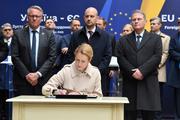
Since the Oct. 13 Sharm el‑Sheikh summit where President Trump declared a “lasting peace,” that plan has stalled as Israel continues to occupy much of Gaza, restricts media access and the West Bank has seen unprecedented violence from settlers and an increasingly politicized army, says Le Monde; Amnesty has labeled the Oct. 7 Hamas massacres “crimes against humanity,” but the article stresses that Israel’s ruling coalition — now including far‑right parties that openly seek annexation or “transfer” of Palestinians — and a discredited Palestinian Authority have left the occupied territories exposed to escalating abuses. The piece warns that the summit’s omission of the West Bank and the international community’s apparent acceptance of reduced Gaza fatalities risk normalizing a destructive status quo that undermines prospects for durable peace and elevates political and stability risks in the region.
Two months after the Oct. 13 Sharm el-Sheikh summit where President Trump declared a "lasting peace," the initiative has stalled: Israeli forces continue to occupy roughly half of Gaza, restrict media access, and more than two million Palestinians remain in degrading humanitarian conditions, according to the article. The Le Monde account dated Dec. 10 documents unprecedented levels of destruction, casualties and detentions in Gaza and describes expanding restrictions that overshadow quieter but increasing violence in the West Bank.
Le Monde and the article identify a growing influence of religious Zionists within the Israeli military and note that two far-right parties entered the governing coalition three years ago with goals of annexation or "transfer," contributing to a discredited Palestinian Authority and normalized coercive policies. Amnesty International on Dec. 11 labeled the Oct. 7 Hamas attacks as "crimes against humanity," underscoring heightened legal and reputational scrutiny of actions on all sides.
Sentiment signals are strongly negative (sentiment_score -0.85) while the provided market_impact_score is low (0.08), implying limited immediate market reaction but rising structural geopolitical and political-risk exposure in the region. The omission of the West Bank from the summit plan and apparent international acquiescence raise the prospect of protracted instability that could affect regional risk premia and policy-dependent sectors over the medium term.
AI-powered research, real-time alerts, and portfolio analytics for institutional investors.
Request DemoOverall Sentiment
extremely negative
Sentiment Score
-0.85
