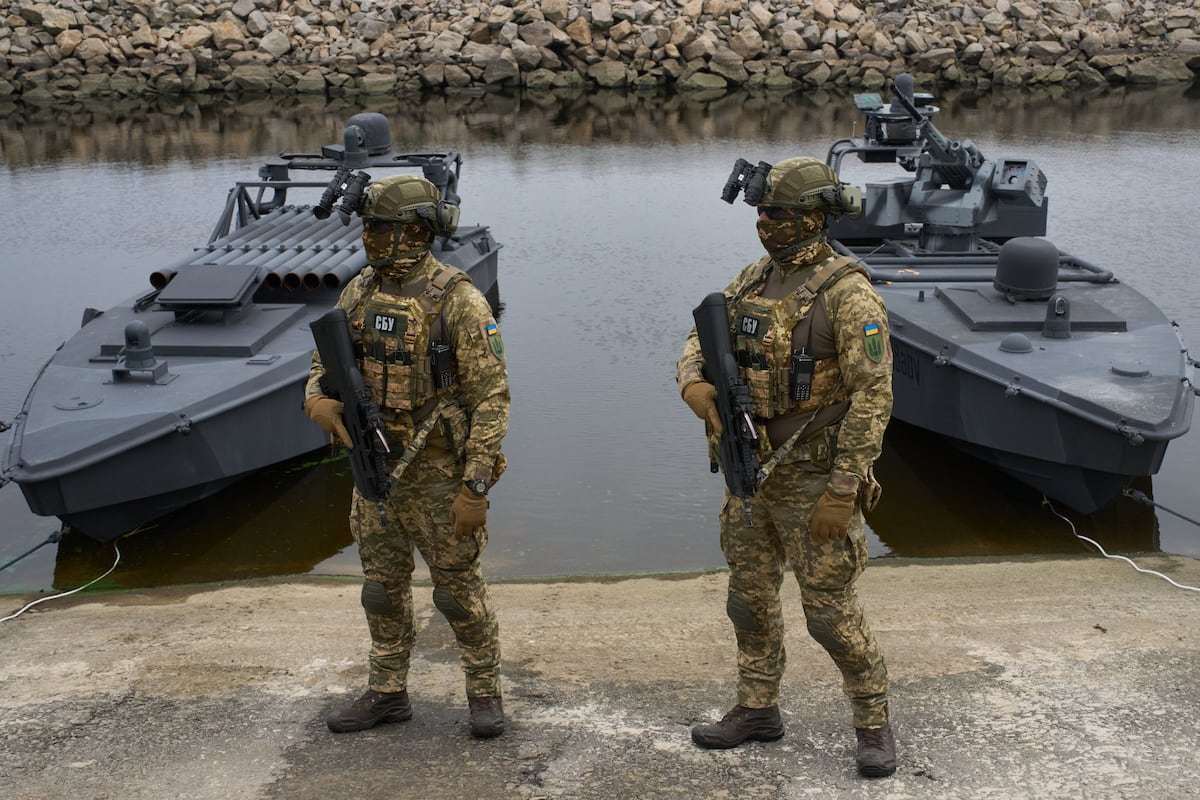
On Dec. 15 the Ukrainian Security Service published video it says shows its domestically developed Sub Sea Baby underwater strike drones striking a Kilo-class (Project 636.3) submarine at the Novorossiysk naval base, with an explosion at the stern that the SBU says put the vessel out of action; Moscow denies the attack and says all ships are intact. The footage — apparently taken from port cameras — suggests Ukrainian infiltration of base surveillance and the operation reportedly involved multiple, highly restricted autonomous torpedo‑like drones whose maker remains undisclosed. If verified, the incident would demonstrate a new asymmetric maritime capability that can threaten high-value Russian naval assets and expose critical vulnerabilities in shore‑side security and force posture.
On Dec. 15 the Security Service of Ukraine (SBU) published video it says shows its domestically developed Sub Sea Baby underwater strike drones hitting the stern of a Kilo-class (Project 636.3) submarine at the Novorossiysk naval base, producing a major explosion that the SBU claims put the vessel out of action; the Russian Ministry of Defense denies the attack and says all ships are intact. The recording appears to be sourced from port cameras, which the article notes suggests Ukrainian access to base surveillance networks and possible cyber or physical infiltration of shore-side sensors.
The report emphasizes the Sub Sea Baby as a non-public, domestically designed autonomous torpedo-like system operated in multiple units, with the manufacturer undisclosed and access extremely restricted according to an anonymous industry source; Naval News commentary suggests waypoint-guided autonomous navigation that can traverse confined internal channels. The SBU also credited Sea Baby surface naval drones with displacing Russian ships from Sevastopol Bay, indicating a broader push toward unmanned maritime strike and surveillance capabilities.
If independently verified, the episode would represent a material asymmetric capability that threatens high-value naval assets, exposes vulnerabilities in port security and sensor networks, and could alter Russian force posture and operational deployment in the Black Sea; however, independent confirmation is lacking and official denials create substantive uncertainty. Market signals in the summary rate sentiment as moderately negative (sentiment_score -0.35) with a modest market impact score (0.35), implying potential for regional risk repricing and short-term volatility rather than a clear systemic shock.
AI-powered research, real-time alerts, and portfolio analytics for institutional investors.
Request DemoOverall Sentiment
moderately negative
Sentiment Score
-0.35
