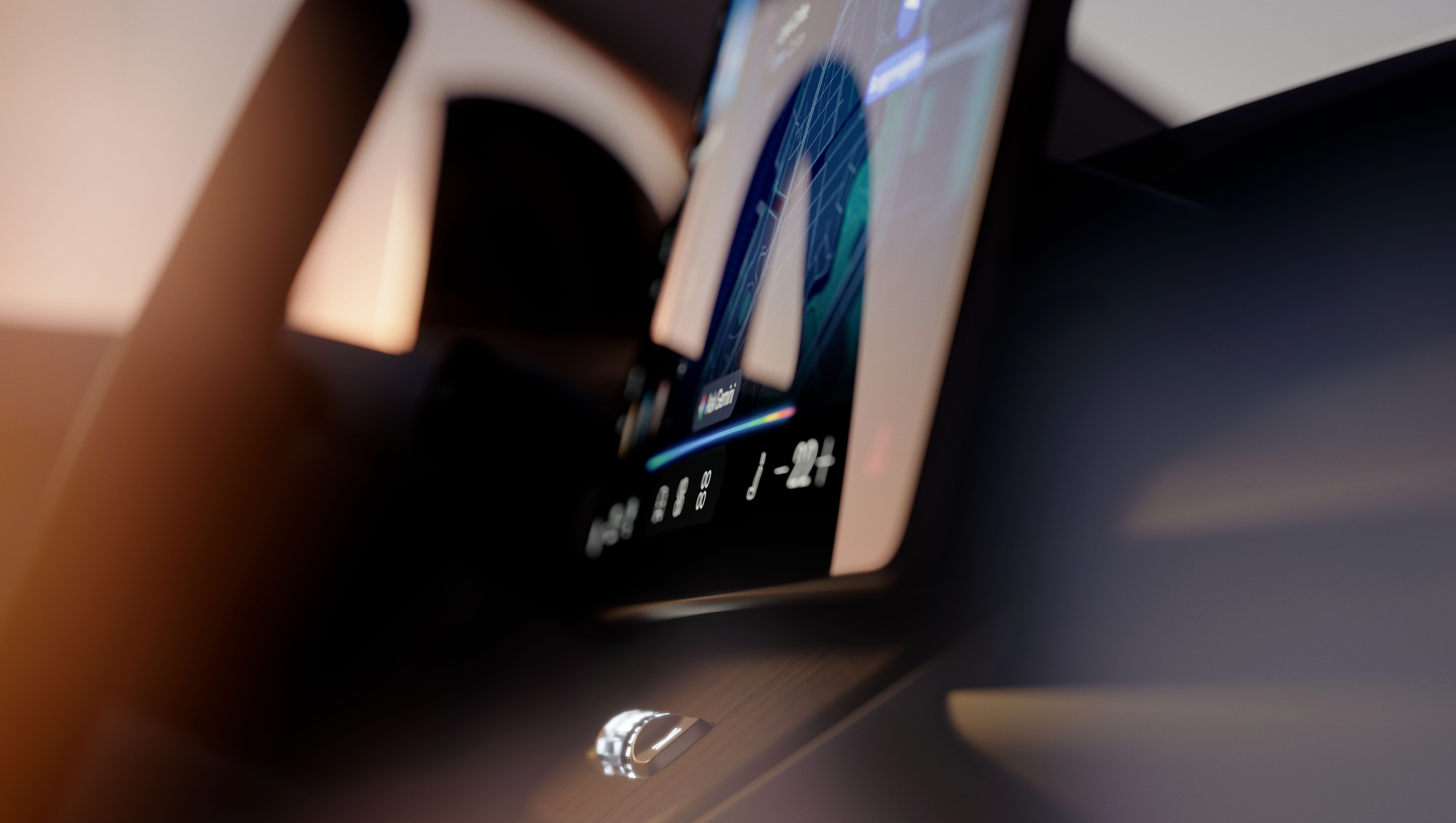
Volvo Cars will reveal the all-electric EX60 on January 21, 2026, positioning it as a software-defined, AI-enabled mid-size SUV that integrates Google’s Gemini assistant and in-house HuginCore with hardware from Qualcomm and NVIDIA. Key product claims include up to 400 miles range (AWD), 173 miles added in 10 minutes on a 400 kW charger, over-the-air updates and advanced driver-assistance enabled by high computational capacity; the move underscores Volvo’s strategy to differentiate on software and AI partnerships. The announcement complements Volvo Car Group’s strong 2024 financials (core operating profit SEK 27bn; revenue SEK 400.2bn; global sales 763,389), suggesting potential positive implications for product-led demand and brand positioning rather than an immediate market-moving earnings surprise.
Market structure: This deal crystallizes a small set of winners — GOOGL (Gemini + cloud/data), NVDA (Drive AGX Orin compute demand) and QCOM (Snapdragon cockpit/connectivity) — who gain pricing power as OEMs shift to software-defined, subscription-first business models. Expect OEM margins to bifurcate: brands that control software/UX capture recurring revenue while legacy Tier‑1 suppliers face margin pressure. Semiconductor demand for high‑end SoCs will tighten supply vs. demand, supporting chip multiples and near-term chip spot prices; modest upward pressure on copper/rare metals persists from sustained EV production.
Risk assessment: Tail risks include regulatory/privacy action (EU/US) targeting in-car data, large-scale OTA security failures, or a chip supply shock that delays production — each could wipe 10–30% off near-term consensus profits for beneficiaries. Immediate effects will cluster around the Jan 21 reveal (days); order/design wins and dealer/configuration rollouts will play out over weeks–months; monetization of subscriptions and OTA revenue is a quarters–years story. Hidden dependency: Volvo’s 4-year free data likely shifts costs to Google/partner telcos and delays positive FCF recognition for Volvo.
Trade implications: Tactical allocations — establish 2–3% long GOOGL via 3–6 month calls (10–15% OTM) to capture Gemini monetization; a 1–2% position in NVDA via 1–3 month call spreads (7–12% OTM) to exploit event-driven demand for Drive AGX; a 1% buy in QCOM shares for connectivity exposure ahead of design wins. Pair idea: long GOOGL vs short VOLCAR B (VOLCAR B) small position (1%) to express software monetization > OEM manufacturing margin, re-evaluate at Q1 earnings or if trade moves ±20%.
Contrarian angles: Consensus understates cost of providing 4 years of free data and the slow cadence of OEM monetization — revenue lift for GOOGL may lag 6–12 months while liability and security costs rise. NVDA’s automotive TAM is real but will be measured in low‑single-digit billions over 2 years, not immediate material revenue; current sentiment may be partially overdone. Historical parallel: smartphone OS winners accrued outsized ecosystem economics after an initial OEM subsidy period; here privacy/regulatory backlash or safety incidents are the main derailers.
AI-powered research, real-time alerts, and portfolio analytics for institutional investors.
Request DemoOverall Sentiment
moderately positive
Sentiment Score
0.45
Ticker Sentiment
