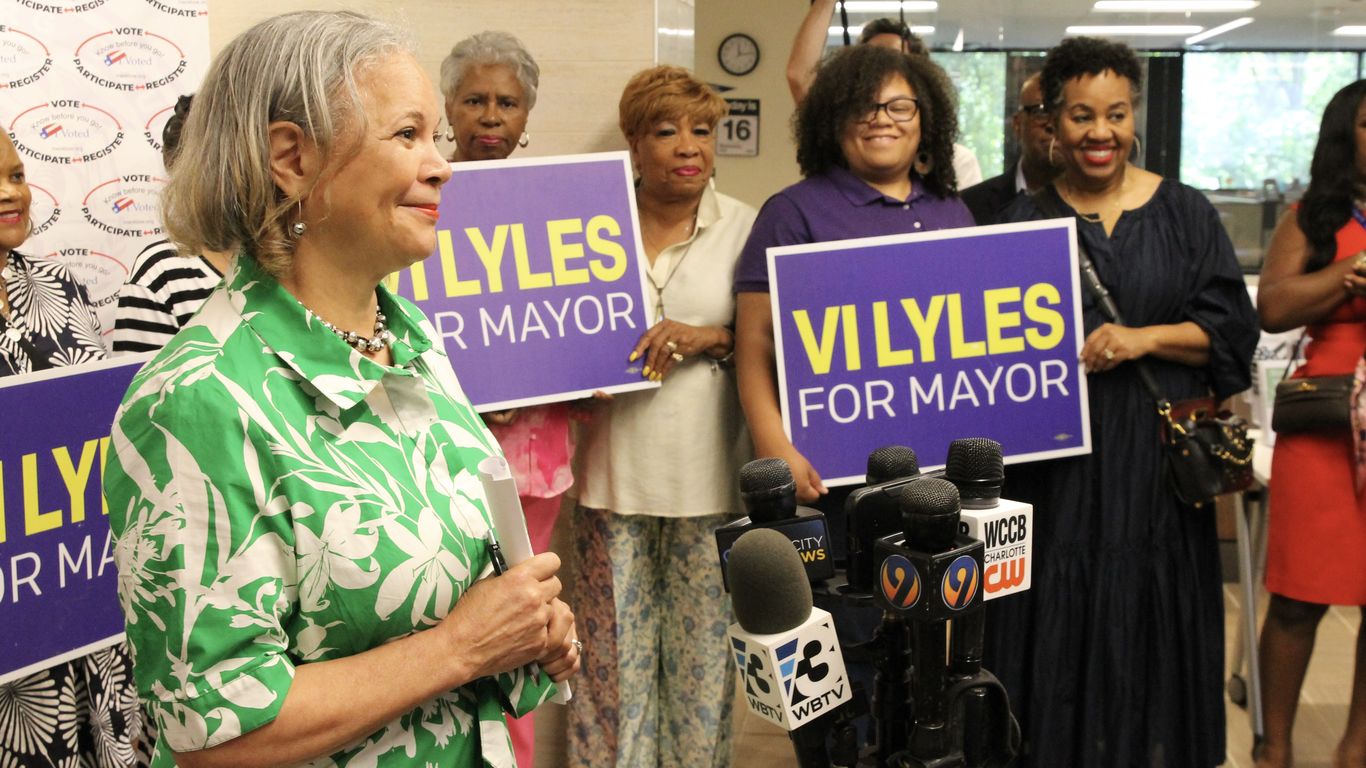
Charlotte Mayor Vi Lyles will resign effective June 30, about 18 months before her term ends, triggering an interim appointment process and likely increasing competition in the next mayoral race. Lyles, 73, said she is stepping down to spend more time with her grandchildren and will not endorse a successor immediately. The news is politically relevant but is unlikely to have meaningful market impact beyond local governance.
The immediate market impact is not on city policy itself, but on the probability distribution of the next 12-18 months of governance in Charlotte. Early departure meaningfully increases the odds of an open-seat contest and an interim appointment process that becomes a proxy battle between the local business establishment and the activist-left, which can shift permitting, public safety, and zoning assumptions well before Election Day. For real estate, infrastructure, and municipal-service vendors with Charlotte exposure, the key issue is not ideology per se but decision latency: a prolonged transition typically slows capital allocation and pushes controversial projects rightward on the calendar.
Second-order effects are most likely in the local growth stack. Charlotte has been a beneficiary of financial-services migration and Sun Belt in-migration; a more contested succession raises the chance of short-term messaging noise around transit, housing density, and downtown safety, which can widen the discount rate on office-adjacent assets and mixed-use development. That matters for firms dependent on steady municipal approvals and public-private partnerships, because even a few months of deferred permitting can ripple into construction starts, lease-up schedules, and capex timing.
The contrarian view is that the headline may overstate governance risk: an interim mayor chosen by council often acts as a stabilizer, not a disruptor, and local institutions may prefer continuity over experimentation. If the eventual field skews moderate, the market will quickly fade the political premium. The real catalyst to watch is whether the replacement process elevates a polarizing candidate; if so, expect a 2-3 month window of elevated uncertainty around municipal budgets and downtown development decisions rather than a year-long regime shift.
AI-powered research, real-time alerts, and portfolio analytics for institutional investors.
Request DemoOverall Sentiment
neutral
Sentiment Score
-0.05
