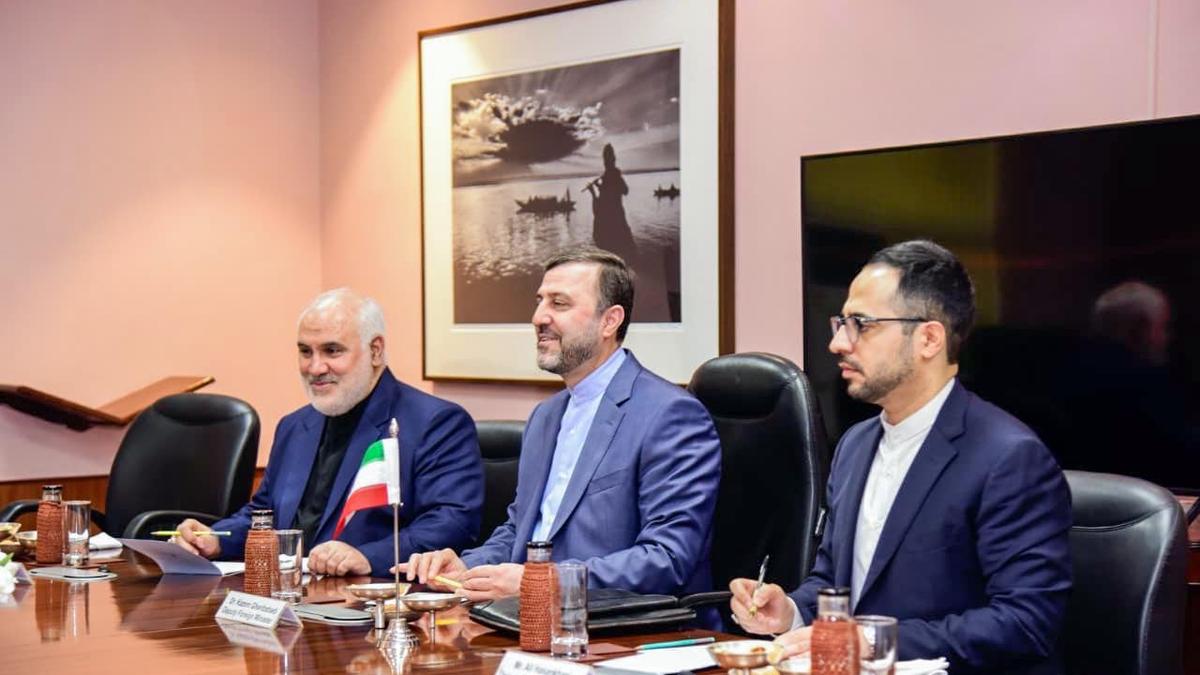
Iran said it is drafting a new protocol to charge for navigation, pollution response, and rescue services in the Strait of Hormuz, potentially adding costs and uncertainty to a critical global shipping chokepoint. The deputy foreign minister also warned marine traffic could be affected if U.S. attacks resume, though he said the strait would remain open to India-linked ships. The article underscores elevated geopolitical risk in West Asia and heightened disruption risk for energy and trade routes.
This is less about an immediate closure risk than a creeping repricing of maritime sovereignty: Iran is trying to convert an implicit security guarantee into a toll-and-compliance regime. The market’s first-order read is crude risk premium, but the second-order effect is a potential structural increase in “transaction costs” for every Gulf barrel, with the biggest beneficiaries likely being alternative export routes, not just oil producers. That should modestly support tanker rates, Atlantic Basin refining margins, and any infrastructure that reduces dependence on the Strait. The key asymmetry is that Iran does not need to fully close the chokepoint to create pain; even selective enforcement, inspection friction, or insurance ambiguity can slow flows and widen differentials within days. The most exposed assets are Asian refiners and import-dependent carriers with thin inventories, while the relative winners are shipping names with stronger balance sheets and optionality to re-route. The market may underappreciate how quickly freight and war-risk premiums can spike before any actual volume disruption shows up in headline data. Catalyst timing matters: the near-term risk is a diplomatic failure around the BRICS language that hardens Iran’s posture, but the larger move would come if U.S.-Iran negotiations stall for several weeks and shipping desks start pricing persistent operating friction into contracts. A credible de-escalation headline would unwind this fast, but absent that, volatility can remain elevated even without kinetic escalation. The contrarian point is that full closure is still a low-probability outcome because Iran’s leverage is highest when the lane remains open but more expensive, not when it triggers a global response. For portfolios, this is a tactical hedgeable geopolitical premium rather than a pure directional energy call. The best setup is to own assets that monetize higher freight and regional dislocation while keeping oil beta modestly long through optionality, not outright delta.
AI-powered research, real-time alerts, and portfolio analytics for institutional investors.
Request DemoOverall Sentiment
mildly negative
Sentiment Score
-0.35
