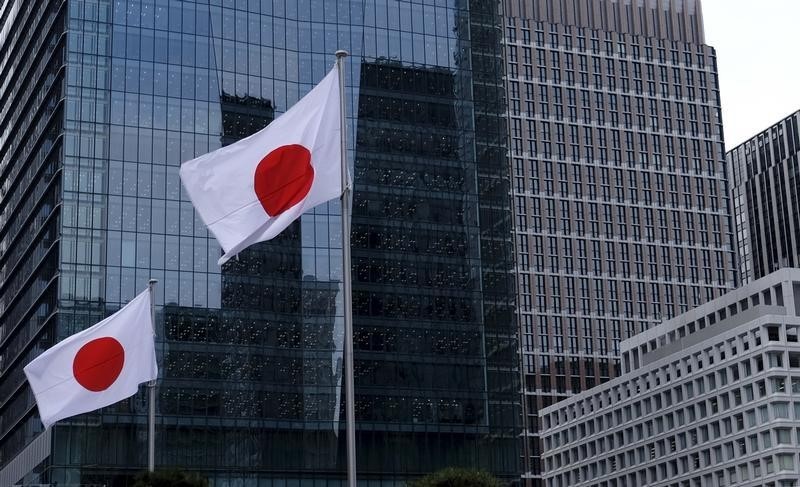
President Trump hosted Japanese Prime Minister Sanae Takaichi, praising Japan's support on Iran but making tense, provocative remarks (including a Pearl Harbor reference) and stating the US 'doesn't need' allied help in the Iran conflict. He noted roughly 45,000 U.S. troops are based in Japan and reiterated that Iran must not obtain nuclear weapons, referencing the Feb. 28 start of the war. The headline also notes Nvidia was added to New Street Research’s '2026 best idea list'—a positive analyst mention without financial detail; overall the political rhetoric may modestly affect risk sentiment but is unlikely to cause an immediate market-wide move.
Geopolitical friction and transactional alliance rhetoric accelerate two offsetting structural forces for NVDA: (1) upside from accelerated government/defense procurement of AI accelerators and software (multi-year contracts, sticky revenue, higher ASPs) and (2) downside from policy-driven market fragmentation and export controls that compress TAM in the near term. Expect the former to manifest as multi-quarter bookings and backlog lift (6–24 months) if governments move from signalling to procurement; the latter can show up immediately in share-price volatility and revenue mix shifts for China (days–months). On the supply side, tighter US-Japan coordination on semiconductor security could unlock incremental fab capacity and component prioritization (HBM, substrates) for US champions — a 5–10% easing of constraint in HBM supply alone would materially shorten NVDA’s delivery timelines for datacenter systems over the next 12–24 months. Conversely, any fragmentation of standards or export regimes that forces NVDA into bifurcated SKUs would raise unit costs and elongate product cycles, compressing gross margins. Tail risks are asymmetric: immediate election-driven policy changes or targeted export controls can remove 10–20% of addressable revenue in a country within single-quarter reporting windows, while wins from defense procurement compound over years. Key catalysts: CHIPS funding allocations and defense budget announcements (3–18 months), export-control rule changes (days–months), and large government AI solicitations or MoUs with Japan/Allies (6–24 months). From a positioning standpoint, NVDA’s moat in software and model stacks is underappreciated by traders who focus only on GPU supply; that argues for conviction with defined-risk option structures rather than naked directional exposure. The tactically optimal approach balances long convexity to capture multi-year secular demand with tight hedges for policy/event risk around elections and export-control decision windows.
AI-powered research, real-time alerts, and portfolio analytics for institutional investors.
Request DemoOverall Sentiment
neutral
Sentiment Score
0.00
Ticker Sentiment
