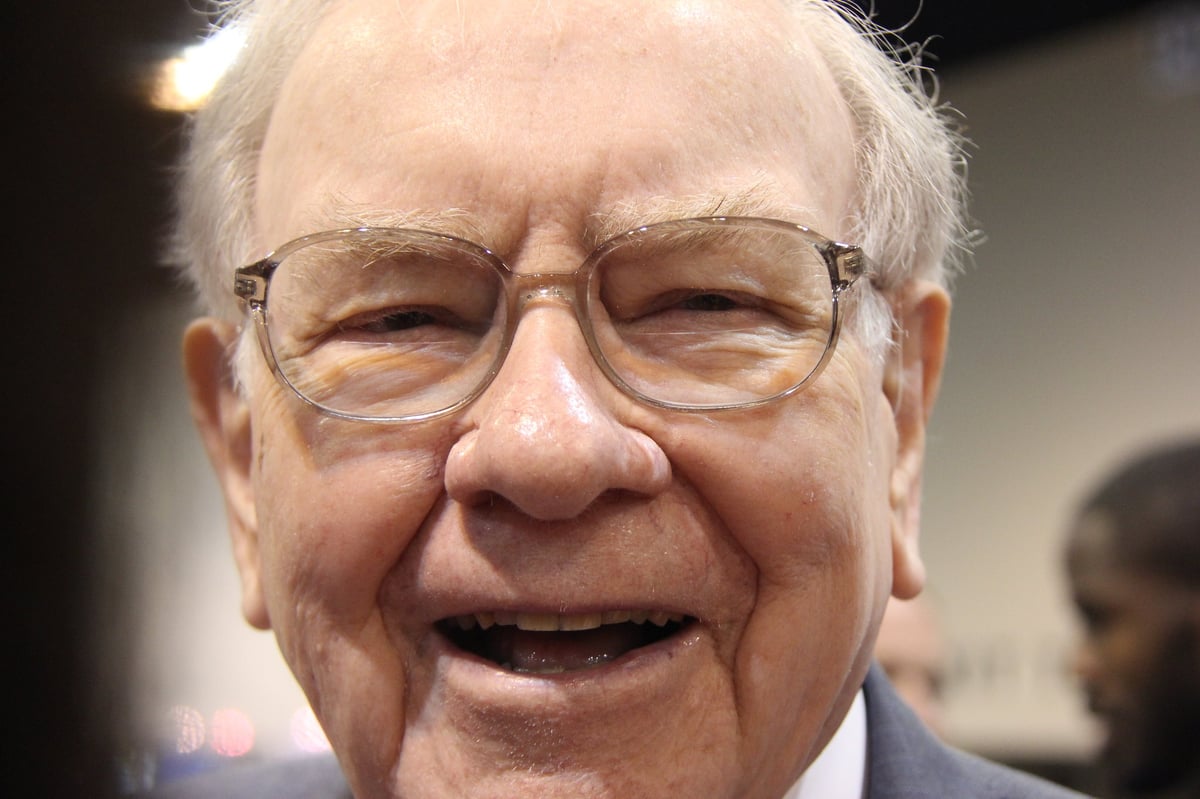
Berkshire Hathaway disclosed a new position of 17.8 million Alphabet shares in its Q3 13F, underscoring institutional confidence in Alphabet's AI and cloud-led growth. Alphabet produced $73.6 billion in trailing-12-month free cash flow, reported cloud operating margin of 24% (up from 17% a year ago), an 82% y/y cloud backlog surge, and raised capex guidance to $91–93 billion for the year; EPS grew ~35% y/y through the first three quarters. A favorable antitrust court ruling preserving default search contracts and positive reception for Gemini 3 have helped drive the stock from a forward P/E under 20 to nearly 29, supporting the investment case despite near-term depreciation headwinds from heavy data-center spending.
Market structure: Berkshire buying 17.8M GOOGL shares validates an incumbency trade: winners are Alphabet (GOOGL) for ad + cloud monetization, TPU/AI-accelerator suppliers (NVDA, possibly GOOGL’s infra partners), and large AI model consumers (Anthropic, Meta) who may outsource compute. Losers include smaller ad-tech/search challengers and low-scale cloud providers whose pricing power will be constrained as Google expands capacity via the $91–93B capex plan. Supply/demand signals: heavy capex implies rising data-center capacity and TPU/GPU demand — upward pressure on chips/energy commodities and elevated implied vol for mega-cap tech options. Cross-asset: stronger GOOGL reduces equity risk premia for large caps (supportive for equities), pushes USD flows into tech, and may modestly tighten corporate bond spreads for investment-grade tech borrowers.
Risk assessment: material tail risks are regulatory (DOJ appeal/antitrust action within 6–24 months), EU privacy/regulatory fines, and model-safety/operational failures that could curtail Gemini licensing; an adverse outcome could compress multiples from ~29x to <20x (30–40% downside). Timing: immediate (days) for sentiment shocks, short-term (quarters) for revenue/backlog realization (cloud backlog +82% is high-signal), long-term (2–4 years) for depreciation and ROIC normalization as capex hits P&L. Hidden dependencies: cloud growth hinges on third-party contracts (Meta/Anthropic) actually signing and staying multi-year; advertising resilience depends on AI not cannibalizing paid-search queries. Catalysts to watch: quarterly EPS vs guidance (next 1–3 quarters), announcements of TPU contracts, and any antitrust appellate rulings.
Trade implications: direct play — establish a 2–4% portfolio long GOOGL over 4–6 weeks, scaling buys on pullbacks >8–10%; hedge initial exposure with 6–12 month 5–10% OTM puts sized to 25–50% of position. Options strategy — buy 12–18 month LEAPS call spread (buy 50-delta JAN 2026, sell ~1.3–1.5x strike) to capture AI upside while limiting premium; sell near-term covered calls on rallies >20% to harvest volatility. Pair trade — go long GOOGL and short META on a 1:0.8 notional basis (cloud/AI exposure vs consumer-social advertising risks) for relative alpha; rotate 3–5% from small/mid-cap ad-tech into mega-cap AI leaders if earnings confirm backlog conversion. Exit rules: trim half position on a >25% one-month rally or cut full exposure if quarterly revenue misses consensus by >5% or DOJ wins an appeal halting default search agreements.
Contrarian angles: consensus assumes seamless cloud monetization and enduring ad margins — market may be underpricing depreciation/ROIC drag from $90B capex over 2–4 years, which could shave mid-single-digit EPS growth rates. The run to ~29x may be overdone if AI licensing deals don’t materialize; historical parallel — MSFT/Azure took ~2–4 years from heavy capex to durable margin expansion, not quarters. Unintended consequences: bigger data-center footprint increases regulatory and ESG scrutiny (energy/water) and customer-concentration risk (if a handful of large model buyers negotiate steep discounts), creating scenarios where upside is delayed while downside is immediate.
AI-powered research, real-time alerts, and portfolio analytics for institutional investors.
Request DemoOverall Sentiment
moderately positive
Sentiment Score
0.55
Ticker Sentiment
