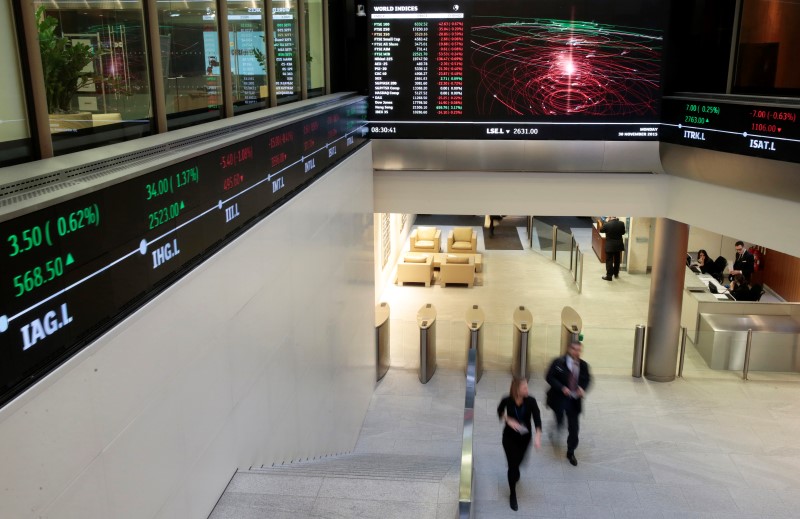
The Investing.com United Kingdom 100 fell 0.92% at the close as Aerospace & Defense, Automobiles & Parts and Fixed Line Telecoms led losses; decliners outnumbered advancers 926 to 867. Top risers included WPP +2.84% to 246.60, Scottish Mortgage +2.51% to 1,299.88 (3‑year high) and Imperial Brands +2.02% to 3,139.00, while Melrose -4.30% to 507.20, Rolls‑Royce -3.86% to 1,142.60 and Marks & Spencer -3.45% to 341.70 were the worst performers. Commodities and FX moves were modest: Gold futures -0.04% to $4,682.85/oz, WTI crude (May) +2.22% to $114.91/bl, Brent (June) -0.33% to $109.41/bl, GBP/USD ~1.32, EUR/GBP ~0.87 and the US Dollar Index futures -0.12% at 99.69.
The market is exhibiting a classic headline-driven bifurcation: energy prices are pricing a near-term supply shock while defensive and aerospace names are either profit-taking or reflecting near-term demand risk. That divergence signals position crowding rather than a clean re-risking of growth vs. commodity exposure — crowded longs in certain defense/airframe stocks can reverse sharply on a single operational update, while energy positioning can gap if shipping or sanctions narratives intensify over weeks.
The WTI/Brent split and mixed moves in base metals and gold point to a regional supply story rather than a global demand shock: Atlantic basin logistics and tanker availability can amplify price moves even if underlying global balances are only modestly tighter. Expect crack spreads and refining economics to re-rate unevenly across regions — European refiners and integrated majors will capture different margin dynamics versus US independent E&Ps over the next 4–12 weeks.
Gold’s muted response despite geopolitical noise is a warning that real yields and positioning (fund flows, options/skew) remain the dominant drivers; a small move lower in real yields could produce a non-linear upside in gold and gold miners within 2–6 weeks. Conversely, a coordinated policy response (SPR releases, rapid diplomatic de-escalation) can erase energy risk premia in 30–60 days and force a sharp reversal in commodity-sensitive equities.
Key tail risks: rapid escalation leading to insurance/shipping disruption (days–weeks), major SPR or diplomatic action (weeks–months), and macro shocks from central bank communications that re-assert real-rate control (days). Tradeable windows are short — 2–12 weeks — and merit asymmetric option structures or tightly sized directional exposure rather than broad, multi-quarter bets.
AI-powered research, real-time alerts, and portfolio analytics for institutional investors.
Request DemoOverall Sentiment
neutral
Sentiment Score
0.00
