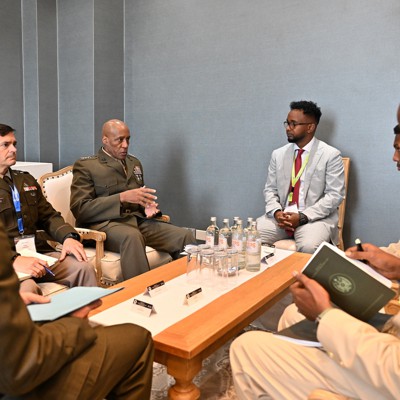
AFRICOM is requesting increased support from allied nations to counter terrorism in Africa and offset the impact of reduced U.S. aid, which commander General Langley says groups like al-Shabaab view as an opportunity to expand operations; the aid cuts also risk ceding influence to China, which is increasing its engagement in the region through security and training programs, potentially replicating U.S. efforts.
The U.S. Africa Command (AFRICOM) is signaling heightened geopolitical instability in Africa following the Trump administration's decision to cut billions in foreign aid, a development characterized by a 'strongly negative' sentiment score of -0.7. AFRICOM commander General Michael Langley has stated that this aid reduction hampers efforts to deter terrorism and counter China's growing influence, forcing AFRICOM to request increased 'burden-sharing' from allied and African nations. Terrorist groups, particularly al-Shabaab in Somalia and ISIS and al-Qaida affiliates in the Sahel region—described as the 'epicenter of terrorism'—reportedly view the withdrawal of U.S. Agency for International Development (USAID) funding as an opportunity to expand operations and exploit governance gaps. The U.S. strategy is shifting towards helping 'Africa do more for itself,' with continued support focused on overlapping security interests and matched by local leadership, including intelligence sharing and joint military exercises. Concurrently, China is actively increasing its engagement across Africa through aid, lending, and security training programs, aiming to replicate U.S. influence and fill vacuums left by reduced American presence, as noted by Chairman Xi Jinping's commitment to step up engagements.
AI-powered research, real-time alerts, and portfolio analytics for institutional investors.
Overall Sentiment
strongly negative
Sentiment Score
-0.70
Ticker Sentiment
