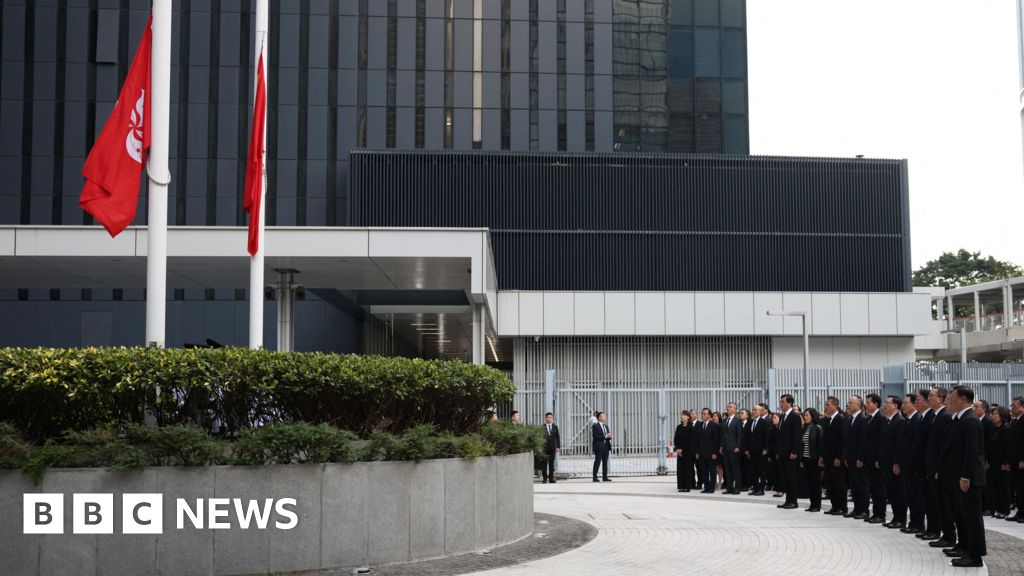
A catastrophic fire at Wang Fuk Court in Tai Po, Hong Kong — which spread rapidly across seven of eight tower blocks, killing at least 128, injuring 83 and leaving 150 unaccounted for — has prompted a three-day mourning period and an ongoing criminal and corruption probe. Authorities say flammable external insulation (polystyrene), plastic scaffolding netting and bamboo scaffolding facilitated the blaze; ICAC has arrested engineering directors and scaffolding subcontractors and police have detained others on manslaughter-related matters. The estate, built in 1983 with 1,984 flats housing about 4,600 residents, reportedly had ineffective fire alarms and multiple renovation checks (16 since July), raising regulatory, liability and ESG questions for contractors, insurers and Hong Kong housing oversight that could increase scrutiny and potential costs in the renovation/construction sector.
Market structure: Immediate losers are Hong Kong residential developers, renovation contractors and local scaffolding/subcontractor chains (higher liabilities, lost permits); winners are large-cap diversified contractors, global fire-safety suppliers and insurers with retrofit product lines as mandated remediation raises demand. Expect near-term pricing power to shift away from small subcontractors toward large firms that can finance compliance; renovation activity may slow 20–40% in next 3–6 months as permits are paused and checks multiply. Cross-asset: expect equity volatility in HK property names, modest widening of credit spreads (50–200bp on weak credits), and mild upward pressure on local construction-material prices; HKD FX peg should remain intact, limiting FX moves.
Risk assessment: Tail risks include a regulatory sweep (citywide mandatory cladding retrofits and criminal liabilities) causing multi-billion HKD remediation bills and several contractor bankruptcies; worst-case residential market shock could knock 10–25% off prices over 6–12 months. Immediate (days): sharp sentiment sell-offs and news-driven arrests; short-term (weeks–months): policy announcements, ICAC prosecutions and insurance claim waves; long-term (12–36 months): structural capex reallocation into fire-safe materials and industry consolidation. Hidden dependencies: insurers’ policy wordings, contractor balance-sheet opacity and cross-holdings of developers in REITs could transmit contagion.
Trade implications: Short selective HK residential names and subordinated debt for 1–3 month tactical plays; buy 6–12 month call spreads on global fire-safety/controls suppliers (e.g., JCI, HON) to capture remediation demand; buy CDS or put protection on vulnerable developer bonds if spreads move >100bp. Sector rotate 3–7% from HK pure-play property into defensive utilities/REITs and short-dated HKSAR paper; use options to size risk—target asymmetric payoffs (max loss defined, upside >=2x premium).
Contrarian angles: Consensus assumes permanent demand destruction in HK housing; history (e.g., Grenfell aftermath) shows remediation programs create multi-year service & materials booms benefiting large suppliers and well-capitalized contractors. If prices for small-cap developers drop >20% without new macro deterioration, consider selective long in large-cap developers (1113.HK, 0016.HK) on 9–12 month view due to consolidation benefits and balance-sheet resilience. Watch for policy signals (mandatory remediation budget >HK$5bn) which would flip short developer / long materials trades within 30–90 days.
AI-powered research, real-time alerts, and portfolio analytics for institutional investors.
Request DemoOverall Sentiment
strongly negative
Sentiment Score
-0.65
