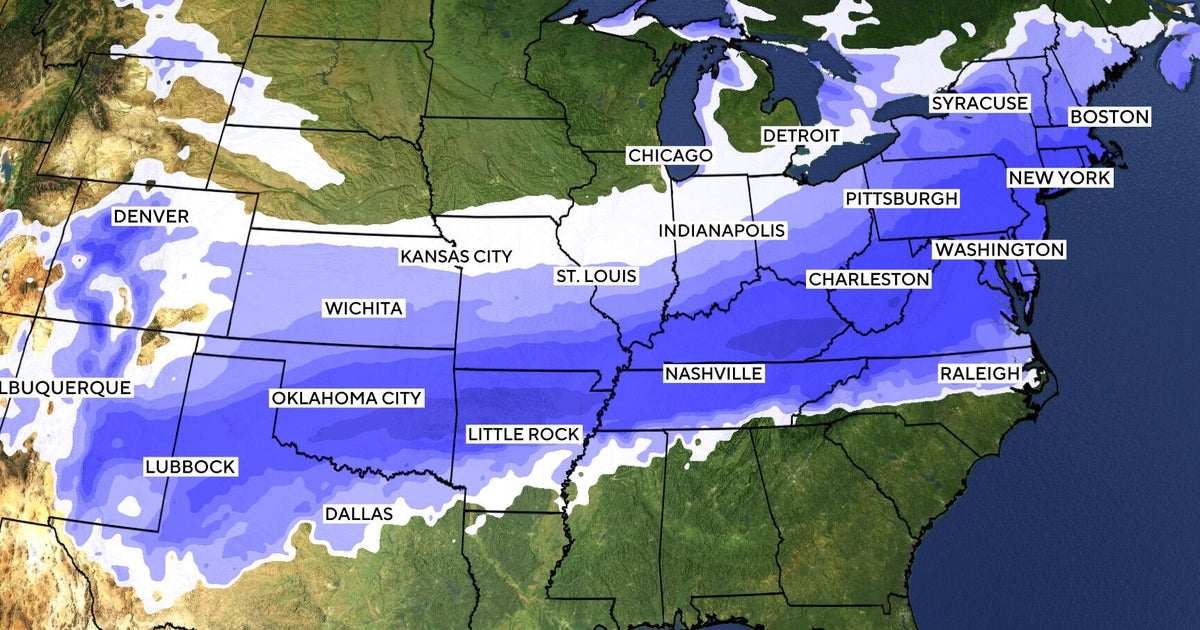
A significant winter storm will develop in the southern Plains and track east across roughly 35 states this weekend, bringing heavy snow (5–10 inches possible in the southern Plains), accumulating ice (0.2–0.5 inches along the southern track), and Arctic air that could produce wind chills down to -40 to -50°F and frostbite in 5–10 minutes. The slow-moving system threatens widespread travel disruption — including potential cancellations at major airports such as DFW, Will Rogers (OKC), Little Rock, Memphis, Nashville and Atlanta — hazardous conditions on major interstates (I-10, I-20, I-30, I-35, I-40, I-44, I-49, I-55), and ice-related power outages that could curtail heating demand and local economic activity. Hedge funds should anticipate short-term operational risk to airlines, regional transportation and utilities exposure, and potential localized supply-chain and energy-demand volatility.
Market structure: Immediate winners are short-term natural gas and heating-fuel sellers (spot Henry Hub/HH) and local utility services/providers; losers are airlines, airport service operators and road/rail logistics exposed to delays. Expect a 10–30% knee-jerk move in prompt Henry Hub and a multi-day spike in regional distillates if subfreezing temps persist; airline pax revenue could drop 5–15% for impacted weekend schedules.
Risk assessment: Tail risks include cascading grid failures or prolonged outages (Texas-2021 analogue) that create multi-week supply shocks and regulatory inquiries; insurance loss estimates could roll into quarterly earnings for P&C insurers. Time horizons: immediate (0–7 days) = travel disruptions, spot-energy spikes; short (1–8 weeks) = claims and reimbursement flows; medium (1–3 quarters) = rate filings/capex for utilities and fuel supply adjustments.
Trade implications: Direct plays include short-dated long NG exposure (futures or UNG alternatives) and short airline equity exposure via puts; defensive long positions in regulated utilities (SO, DUK) for 1–3 month window to capture rate-base resilience. Use options: buy 2–4 week HH call spreads or ATM puts on AAL/UAL sized to 1–3% portfolio risk; consider pair long EQT (EQT) vs short AAL (AAL).
Contrarian angles: Consensus will overstress travel pain and underweight second-order demand for home-heating, generator sales (HD, LOW) and emergency services. Historical storms show equities snap back within 2–6 weeks; if NOAA models flip warmer in 48–72h, NG pops may reverse 20–40% — size positions accordingly. Watch fuel logistics (terminal inventories) as the hidden choke point that can sustain price moves.
AI-powered research, real-time alerts, and portfolio analytics for institutional investors.
Request DemoOverall Sentiment
moderately negative
Sentiment Score
-0.35
