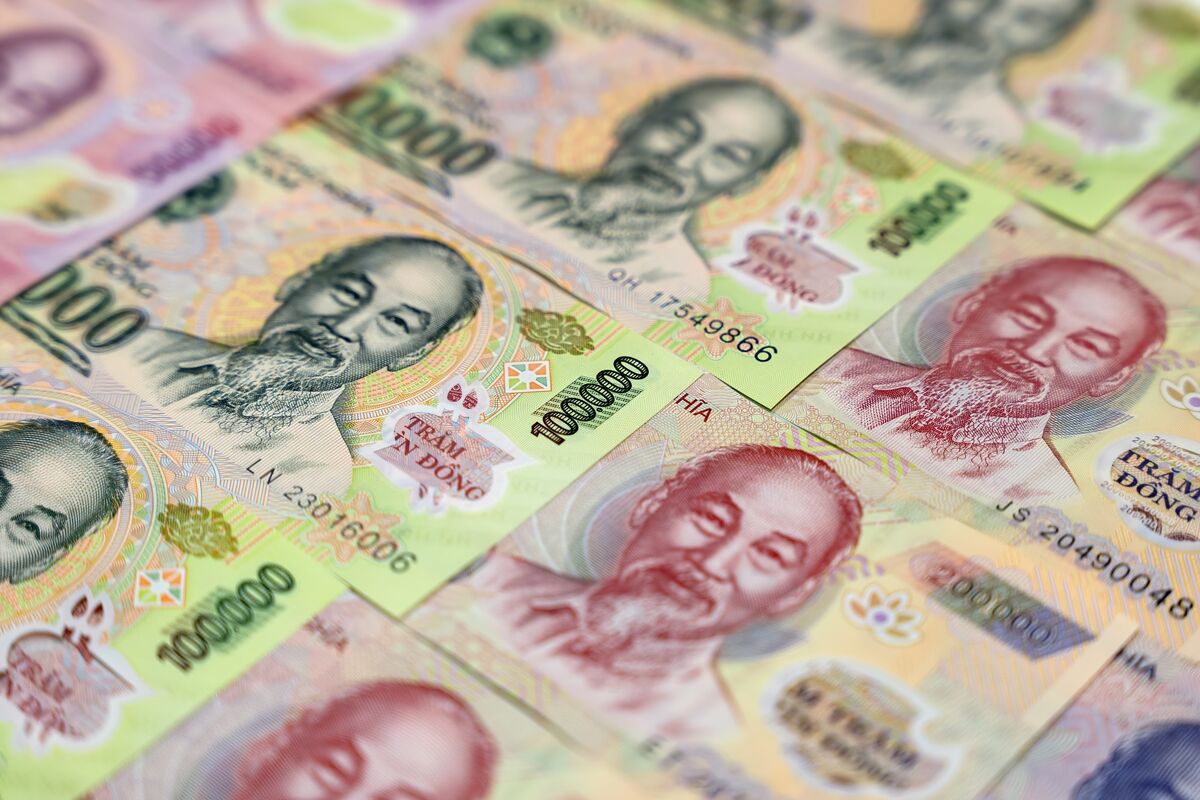
Vietnam's State Bank is actively guiding the dong lower, with the dollar-dong pair climbing approximately 3.5% in 2025, poised for its steepest annual gain since 2011. This strategic depreciation aims to enhance the nation's export competitiveness and mitigate the impact of US trade tariffs, with analysts anticipating continued currency weakness as the central bank maintains a weaker bias.
The State Bank of Vietnam is actively pursuing a policy of guided currency depreciation to bolster its export-led economy against the backdrop of US trade tariffs. The dollar-dong reference rate has climbed approximately 3.5% in 2025, a trajectory that positions it for the most substantial annual increase since 2011 and has pushed the dong to near-record lows. This strategic devaluation is designed to enhance the price competitiveness of Vietnamese goods relative to its Southeast Asian peers, who are also navigating the same external trade pressures. Market consensus, as indicated by analyst forecasts, points towards a continuation of this trend, with expectations that the central bank will maintain its weaker currency bias to support the nation's trade balance.
AI-powered research, real-time alerts, and portfolio analytics for institutional investors.
Request DemoOverall Sentiment
mildly positive
Sentiment Score
0.15
