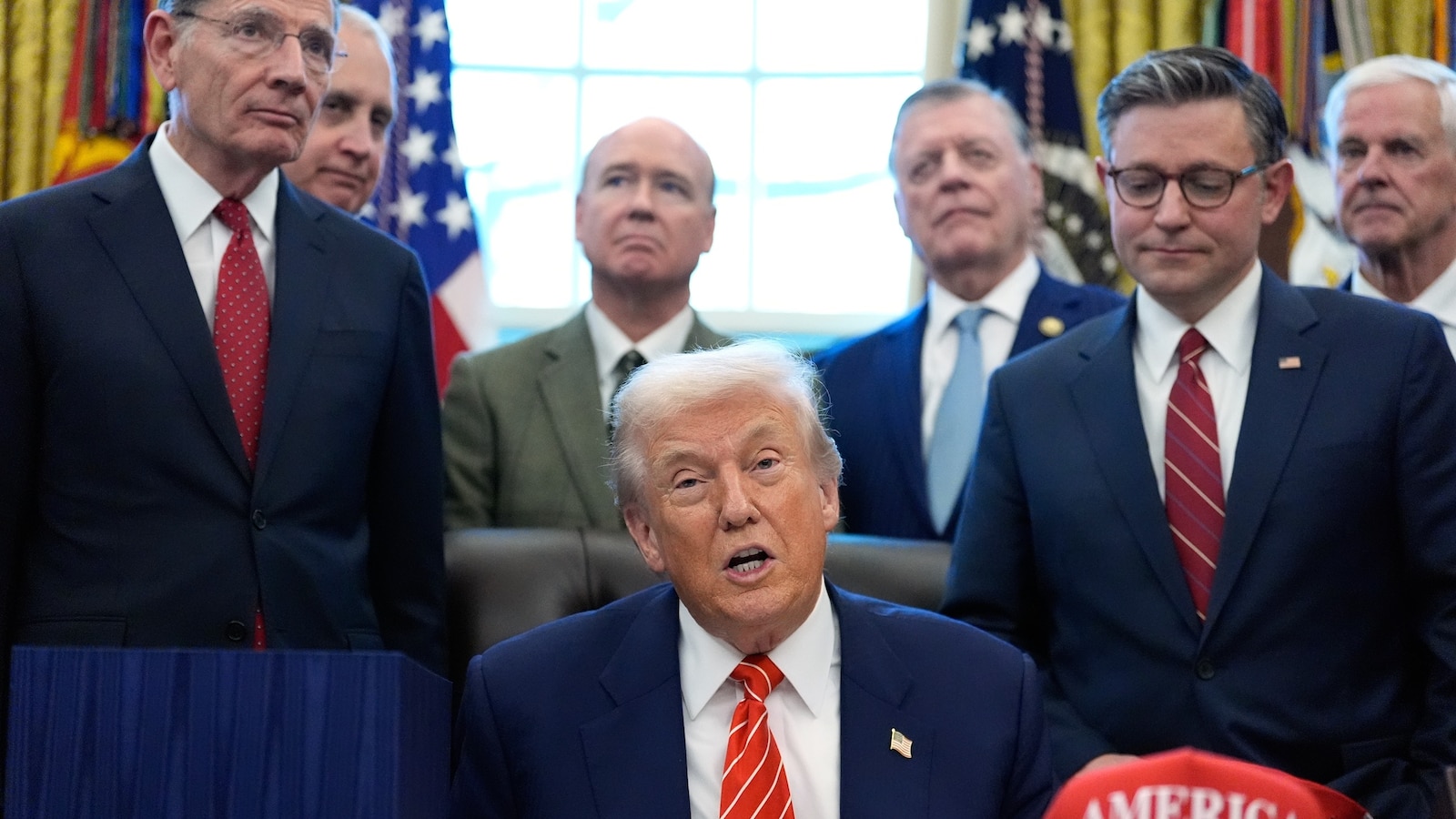
President Trump reiterated calls to have the federal government 'get involved' in administering state elections, arguing states are agents of the federal government and repeating unfounded claims of widespread 2020 voter fraud. He and allies pressed for the SAVE Act, which would require proof of citizenship for federal voter registration, while Republican leaders signaled support for the bill but denied endorsing a full federal takeover; Senate leaders plan to bring the measure to the floor though the filibuster remains a barrier. The comments escalate political and legal tensions over election administration, mid-decade redistricting efforts and federal requests for state voter data, creating policy uncertainty ahead of the 2026 midterms.
Market structure: Federalizing or even loudly threatening federal involvement reallocates demand toward federal-grade cybersecurity, identity verification and systems integrators (beneficiaries: CRWD, PANW, BAH, LDOS, EFX/RELX). State election vendors (mostly private) and local governments face greater procurement scrutiny; municipal issuers in GA/MI/PA could see higher risk premia if litigation or funding fights accelerate. Short-term market impact should be modest (market impact score ~0.15) but concentrates wins in firms with existing federal contracts and scalable SaaS/cloud offerings.
Risk assessment: Tail risks include constitutional/legal escalation that raises VIX >40 and widens muni-Treasury spreads by 25–75 bps within days-weeks, and localized civil unrest harming consumer-facing sectors. Timeline: immediate (days) = headline-driven volatility; short-term (30–90 days) = SAVE Act/committee actions; long-term (6–24 months) = procurement cycles and mid-decade redistricting outcomes. Hidden dependency: most election infrastructure vendors are private — public plays are proxies tied to federal IT/cyber budgets, not direct policy wins.
Trade implications: Favor 6–12 month longs in public cyber and government IT contractors with specified targets and stop-losses while carrying a short-dated volatility hedge. Rotate out of municipals concentrated in battleground states into AAA corporates if muni spreads widen >20 bps. Monitor the Senate floor calendar and any federal RFP announcements over the next 30–90 days as primary catalysts for re-rating.
Contrarian angles: Consensus presumes either immediate federal takeover or no change; both extremes miss the procurement lag and legal friction that favor incumbents with federal relationships while creating short-term execution risk. If headlines cause 8–12% pullbacks in BAH/LDOS/CRWD, those are buyable on 12–24 month horizons (post-9/11 style cyber funding pattern). Beware that a real federal procurement initiative could initially depress revenues by 1–3 quarters as vendors re-bid contracts before upside materializes.
AI-powered research, real-time alerts, and portfolio analytics for institutional investors.
Request DemoOverall Sentiment
mildly negative
Sentiment Score
-0.25
