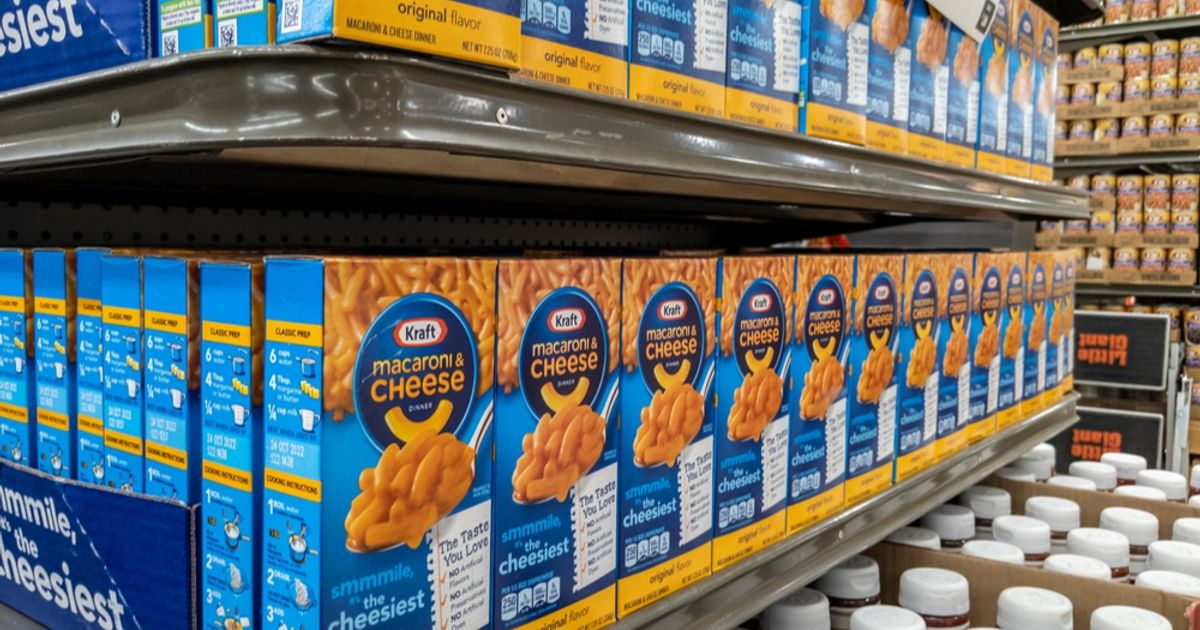
Kraft Heinz shares fell more than 4% after Berkshire Hathaway filed SEC paperwork allowing it to sell its entire ~27.5% stake (roughly 325 million shares), creating immediate selling pressure. Jefferies reiterated a Hold and $23 target, citing ~4% YoY US retail sales declines in Q4, worsening volumes, ongoing share loss (only 2 of top 10 brands with positive volume growth in recent periods), and the need for incremental marketing and R&D investments; the firm also flagged uncertainty around the planned corporate split and the recent CEO transition under Steve Cahillane that could prompt a revision of the separation plan and distract from organic growth initiatives.
Market structure: Berkshire’s 27.5% (≈325M shares) flex-sell filing creates a sizable potential overhang that directly benefits acquirers and liquid, well-capitalized consumer staples peers (e.g., GIS, CPB) and hurts KHC’s short-term free-float and price discovery. Pricing power is under pressure as KHC reports sequential volume declines and share loss across categories; if management pivots to sustained price promotions to protect volumes margins could compress by 200–400bps over 12–18 months. Retailers and private-label players gain bargaining leverage while suppliers face delayed order rebalancing until demand stabilizes.
Risk assessment: Near term (days–weeks) the main tail risk is a forced public block sale that could knock KHC down another 10–20% if liquidity is poor; medium term (1–3 months) split-structure changes or a strategic buyer paying a control premium are asymmetric upside catalysts. Hidden dependencies include low/mid-income US consumption trends (watch weekly grocery same-store volumes and SNAP data) and incremental marketing/R&D spend run-rate — if incremental spend >$200–300M annually margin trajectory worsens. Key catalysts: Berkshire trade filings (monitor 13D/13G updates) in next 30 days, KHC Q4 results and a formal split revision within 60–90 days.
Trade implications: Tactical short KHC exposure sized 1–2% portfolio via a 3-month put spread (buy 0–5% OTM put, sell 15% OTM) to cap cost, or outright 1% notional short equity if borrow cost <3% and stop at 8–10% adverse move. Pair trade: short KHC / long K (Kellogg) equal notional for 3–6 months to play execution and brand differentiation; overweight KMB or CLX by 0.5–1% as defensive staples with cleaner margins. If KHC gaps below a 10% threshold on heavy volume, reduce short and switch to a mean-reversion options sell (iron condor) for premium capture over 30–60 days.
Contrarian angles: Consensus assumes purely negative liquidity-driven declines; market may be overselling if Berkshire arranges private block trades or strategic buyers (PE or competitor) — a negotiated sale could deliver a 15–30% control premium and rapid re-rate. Historical parallels: large founder/anchor exits (e.g., Kraft/Heinz-era transactions) often compress price briefly then reprice on deal clarity; if management revises split to unlock clearer cash flows, downside is limited. Unintended consequence of an aggressive sell is KHC accelerating buybacks or asset carve-ups — set buy triggers (see decisions) to capture that event-driven upside.
AI-powered research, real-time alerts, and portfolio analytics for institutional investors.
Request DemoOverall Sentiment
moderately negative
Sentiment Score
-0.60
Ticker Sentiment
