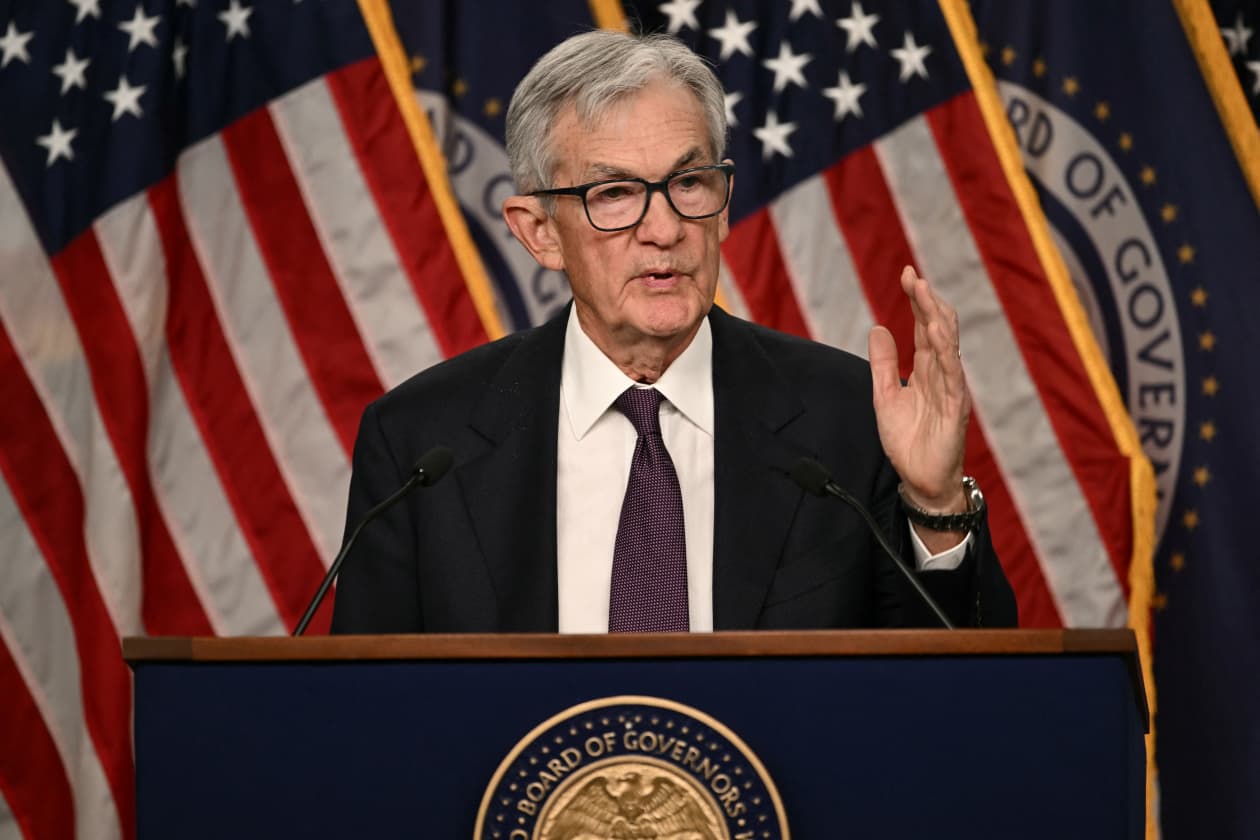
Gas prices jumped about 30% after the Iran conflict, and Fed Chair Jerome Powell warned this has introduced “new inflation,” prompting Fed officials to rethink further cuts to short-term rates this year. Stocks and bond funds fell on the hawkish pivot, signaling a risk-off reaction that could weigh on portfolio returns (including retirement accounts). Expect higher near-term inflation risk and a reduced likelihood of Fed easing, which is broadly negative for equities and interest-rate-sensitive assets.
A near-term geopolitical supply shock is transmitting into markets through two linked channels: higher commodity-driven CPI prints and a higher policy-rate floor as central banks push back on cutting. Mechanically, expect front-end yields to re-price up first (2s +10–25bps within weeks) while breakevens widen, producing a regime of higher nominal and real yields that compresses high-duration equity valuations. Winners are firms with direct commodity optionality and low capital intensity: large integrated producers and midstream operators can convert price spikes into rapid free cash flow; refiners and commodity traders capture volatility arbitrage in crack spreads. Losers include high-energy-consumption industries (airlines, logistics, plastics), EM importers facing FX pressure, and long-duration tech where a 50–100bps swing in real yields knocks 6–15% off fair value. Catalysts that will dictate persistence: (1) military escalation sustaining a multi-month supply premium (oil >$90–100 would entrench the trend), (2) strategic reserve releases or diplomatic progress that could collapse risk premia in 4–12 weeks, and (3) CPI prints showing services stickiness which would extend central-bank hawkishness into quarters. Tail risk: a sharp growth slowdown could invert the trade, creating a classic stagflation vs recession policy divergence. Positioning implication: treat this as a liquidity- and volatility-driven regime change — size directional commodity exposures modestly and use options or pairs to express views, explicitly protecting against a rapid de-escalation or growth shock that would send safe-haven yields lower.
AI-powered research, real-time alerts, and portfolio analytics for institutional investors.
Overall Sentiment
moderately negative
Sentiment Score
-0.45
