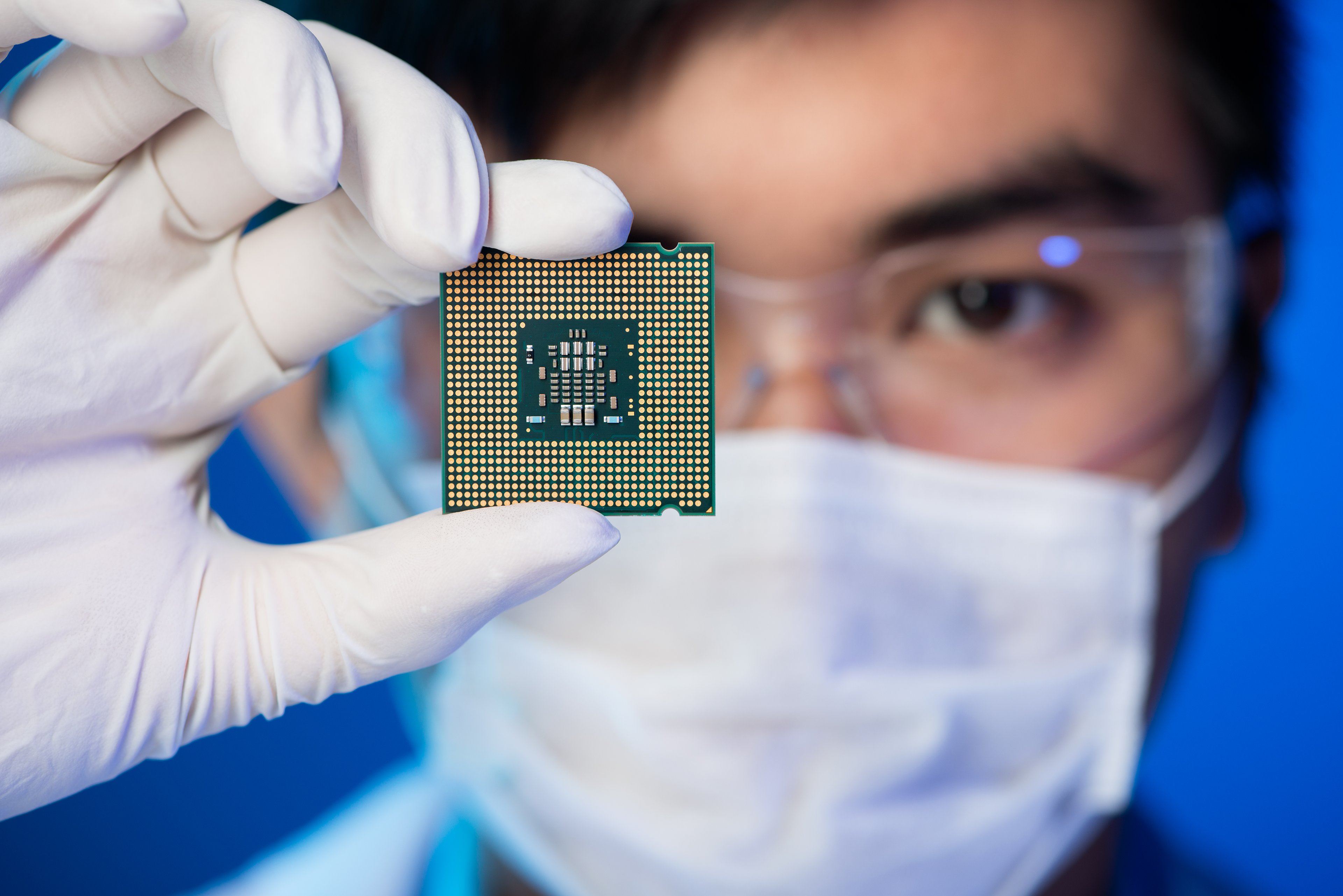
Taiwan Semiconductor (TSMC) is positioned as a core beneficiary of multi-year AI infrastructure spend, with roughly 68% market share in foundry services and broad exposure to customers including Nvidia, AMD, Qualcomm and Apple. Analysts cite hyperscaler AI capex potentially nearing $500 billion next year and multiple large multi‑year chip procurement deals (e.g., Nvidia ~$100B for OpenAI, Nvidia ~$10B with Anthropic, AMD 6‑gigawatt deal, Nebius/Microsoft $17.4B, Nebius/Meta $3B, Iren/Microsoft $9.7B), implying sustained GPU manufacturing demand that TSMC is likely to capture. Despite expanded valuation multiples and geopolitical Taiwan‑China risk, the company’s factory expansions in Arizona, Germany and Japan mitigate those concerns, and the author forecasts a potential TSMC breakout starting in 2026, recommending it as a long‑term buy.
Market structure: Hyperscaler-led multi-year GPU/data‑center orders push value to the foundry layer — TSM (68% global share) plus upstream tool suppliers (ASML, Tokyo Electron) are primary winners as they capture cross-customer volume and pricing power. Designers (NVDA/AMD) win on ASP expansion but face higher capital intensity and concentration risk; smaller fabless firms with single-customer exposure are vulnerable to allocation squeezes. Macro cross‑asset: sustained capex (~$400–$500bn+/yr cited for 2026) supports industrial commodity demand (copper, palladium), increases corporate issuance in IG/HY for suppliers, and should keep TWD and NOK/SEK stronger relative to CAD/JPY on export flows.
Risk assessment: Tail risks include a China-Taiwan military escalation, U.S. export-control escalation, or a coordinated slowdown in hyperscaler GPU orders — any could collapse visibility and cause >30% drawdowns in TSM/NVDA within days. Time horizons: expect headline-driven volatility in days, order-book adjustments over months, and potential re-rating/“breakout” in 2026 as capacity comes online; hidden dependencies are tool delivery schedules (EUV), water/energy constraints in fabs, and customer concentration (NVIDIA/Apple share of revenue). Key catalysts are quarterly HPC revenue beats, multi‑year supply contracts announced by hyperscalers, and ASML delivery confirmations; negative catalysts are any multi-quarter capex pauses.
Trade implications: Construct a core 2–3% long position in TSM (add to 5% by Jan‑2026 on confirmed hyperscaler order flow) and pair with trimming NVDA exposure if NVDA >8% portfolio — NVDA is priced for perfection. Use options to limit downside: buy TSM Jan‑2026 20% OTM call spreads sized to equal 1–2% notional, and hedge large NVDA longs with 3‑6 month puts or short near‑term covered calls. Rotate 3–5% from consumer electronics (AAPL supply chain exposure) into semicap/infra ETFs (SMH/SOX) and suppliers (AVGO selectively) over 3–12 months.
Contrarian angles: Consensus overlooks revenue-concentration and margin compression risks from onshoring — moving fabs to US/EU raises opex and could shave 200–400bp of gross margin over time versus island operations. The market may also be underestimating an inventory cycle if hyperscalers front‑load orders and then pause, creating a 12–18 month demand trough. Historical parallel: the late‑2000s fab cycles where overbuild led to multi-year pricing declines; if Samsung/Intel accelerate node parity, TSM’s premium could mean mean reversion risk rather than continued Nvidia‑style multiple expansion.
AI-powered research, real-time alerts, and portfolio analytics for institutional investors.
Request DemoOverall Sentiment
strongly positive
Sentiment Score
0.65
Ticker Sentiment
