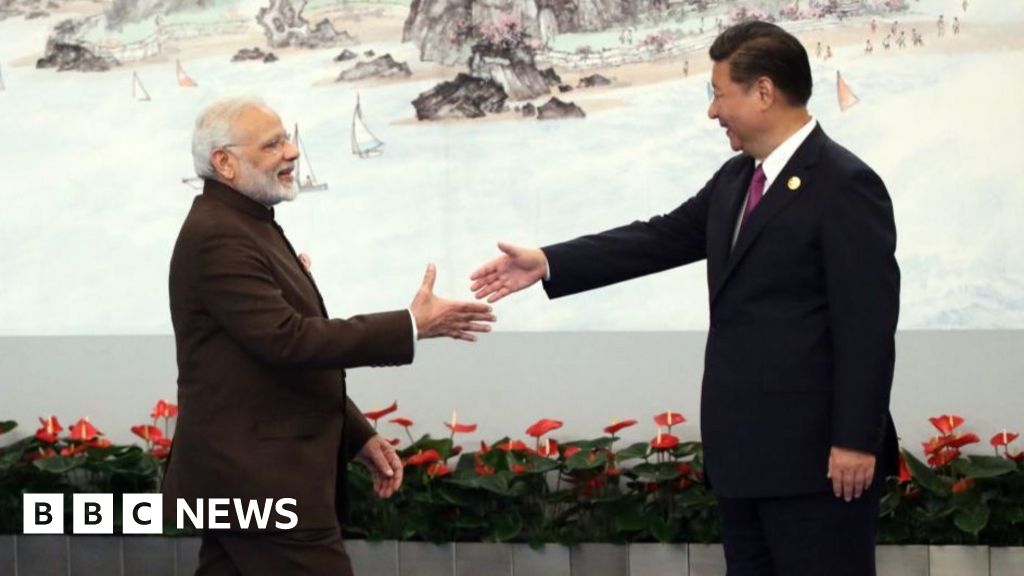
Indian Prime Minister Modi's visit to China highlights a strategic pivot by both nations, driven by significant US tariffs impacting their respective economies—India facing 50% levies on exports and China battling economic slowdowns. This rapprochement between the world's second and fifth-largest economies, despite deep-seated historical tensions, aims to reduce reliance on the US, diversify trade, and bolster a multipolar global order. While immediate outcomes like resumed direct flights and trade facilitations are anticipated, the visit primarily signals India's evolving geopolitical alignment and its exploration of alternative partnerships, potentially reshaping global trade dynamics and supply chains.
A strategic realignment between India and China appears to be underway, driven primarily by significant US tariffs that are hampering both economies. India is contending with 50% tariffs on key exports, while China's sluggish economy is further pressured by its own trade disputes with the US. This has prompted a rapprochement between the world's second and fifth-largest economies, signaling a mutual desire to reduce dependency on the United States and cultivate a multipolar global order, as evidenced by renewed engagement in frameworks like the Shanghai Cooperation Organisation (SCO). Despite India's robust economic outlook, with growth projected above 6% and its economy expected to reach third-largest globally by 2028, its manufacturing sector remains reliant on Chinese components. This meeting is therefore pragmatic, though it is an 'uncomfortable alliance' given deep-seated mistrust from historical border conflicts. Immediate outcomes are expected to be 'soft wins' such as resumed direct flights and visa relaxations, rather than major industrial partnerships. The visit's primary significance lies in its geopolitical signaling to Washington, demonstrating that India has strategic alternatives, which could have long-term implications for global supply chains and trade flows.
AI-powered research, real-time alerts, and portfolio analytics for institutional investors.
Overall Sentiment
mixed
Sentiment Score
0.10
Ticker Sentiment
