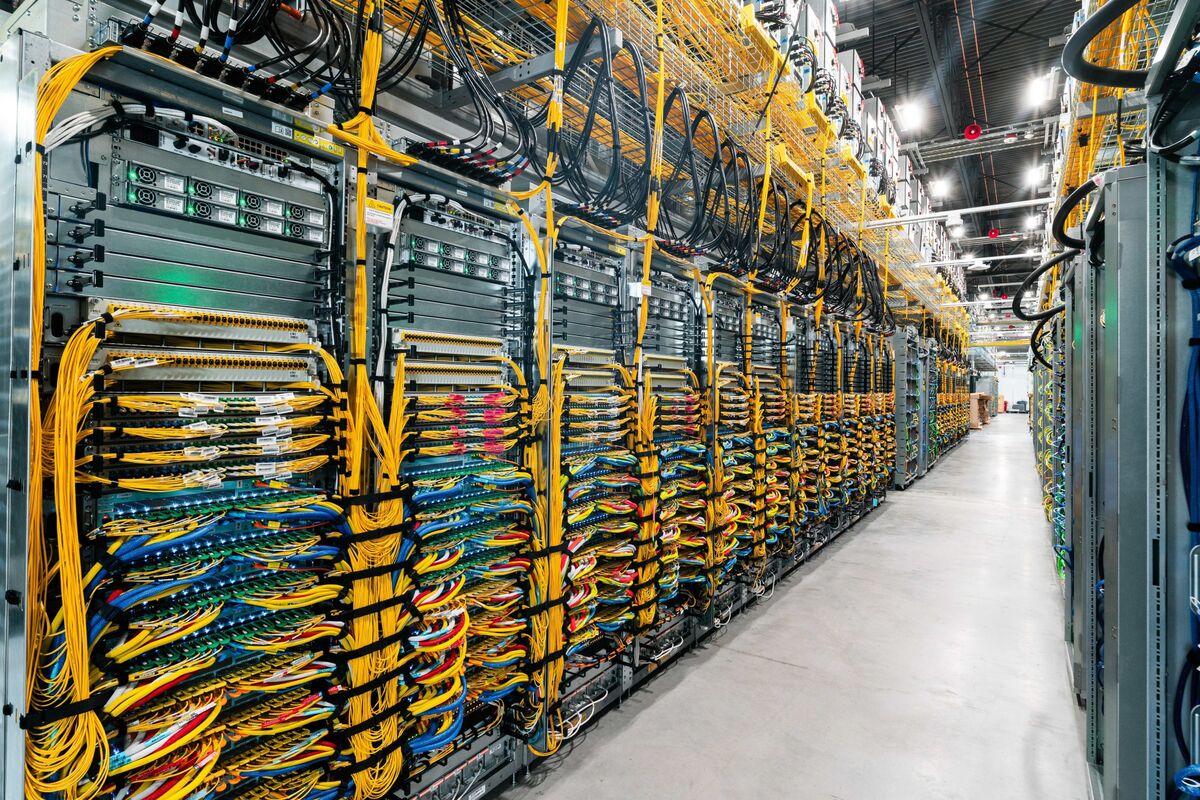
For roughly two decades large technology firms such as Alphabet, Amazon, Meta and Microsoft built outsized profits on a low-capital model, but the escalating race to develop generative AI is forcing much higher investment and threatens that capital-efficient profit profile. If sustained, increased AI-related capital spending could compress margins, change guidance dynamics and force investors to re-evaluate growth-to-capex trade-offs across major US tech platforms, with implications for valuations and portfolio positioning.
Market structure: AI shifts the economics from "asset-light scale + high FCF" toward a capital- and power-intensive moat. Winners in near term are GPU/silicon suppliers and hyperscale cloud providers that own data + models; losers are ad-dependent margin-exposed incumbents that must absorb multi-year capex and talent costs, pressuring free cash flow by 5-10%+ in stress scenarios. Supply-demand signals show tightening for datacenter power, GPUs and advanced-node wafers, which should lift suppliers' pricing power while increasing cyclical volatility for tech equities. Cross-asset: expect higher equity vol, modest widening of high-grade tech credit spreads if guidance weakens, upward pressure on industrial metals and power prices, and USD strength on risk-off flows.
Risk assessment: Tail risks include export-control shocks (GPU/wafer embargoes), aggressive AI regulation/antitrust, or a failed product launch that erases projected revenue — each could knock 20-40% off market caps of exposed firms. Immediate (days) risk: earnings/guidance surprises; short-term (weeks/months): capex/guidance revisions and supply shocks; long-term (2-5 years): margin reversion and oligopoly entrenchment. Hidden dependencies: reliance on TSMC/ASML, power contracts, and non-linear ad revenue elasticity to macro; second-order effects include wage inflation for AI talent and subcontractor concentration risk. Catalysts to watch: NVDA earnings, AWS/GCP pricing announcements, EU/US AI regulations, and major enterprise AI deals (next 3-6 months).
Trade implications: Favor capacity owners and silicon suppliers while underweight ad/margin-exposed platforms that can’t monetize AI at scale. Direct plays: overweight AMZN (AWS scale) and selective semis (NVDA/AMD) for 6-12 month appreciation; short/hedge META for 3-6 months as Reality Labs+AI capex likely compresses margins. Options: buy 90-day puts on META sized 1-2% portfolio or put spreads to cap premium; consider selling OTM calls on long AMZN positions to fund carry if implied vol falls. Sector rotation: reduce pure ad/consumer tech exposure by 5-10% and redeploy into cloud infra, semiconductors and power utilities over next 4-12 weeks.
Contrarian angles: The market may be understating that sustained capex raises barriers to entry and could increase pricing power for survivors — a temporary margin squeeze could precede stronger oligopolistic profits in 2-4 years. The negative reaction may be overdone for GOOGL given DeepMind/Ads integration and cash balance; a 10-20% pullback could be a buying opportunity. Historical parallel: the cloud transition saw multi-year capex then durable profits (AWS), implying patient capital can win here. Unintended consequence: GPU scarcity could accelerate alternative silicon and open windows for niche AI chipmakers, so avoid single-technology bets without supply-chain conviction.
AI-powered research, real-time alerts, and portfolio analytics for institutional investors.
Request DemoOverall Sentiment
moderately negative
Sentiment Score
-0.40
Ticker Sentiment
